
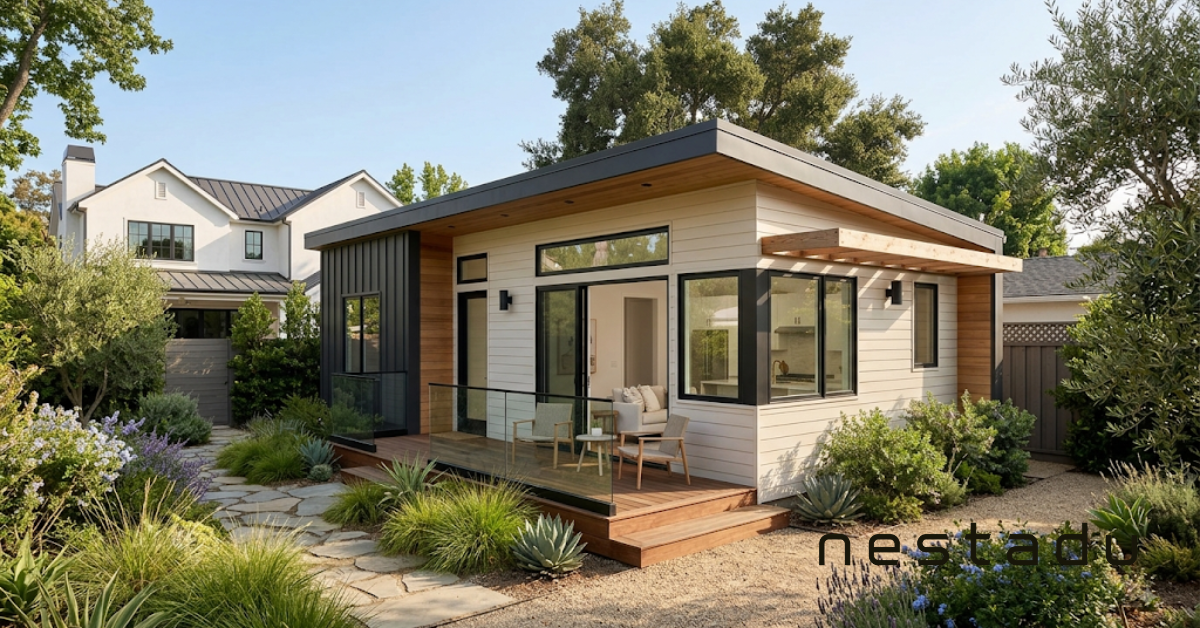
Yes, you can sell an ADU separately from your main house in California, but only if your city or county has passed its own ordinance allowing it. State law opened the door in 2024, and most local governments still have not walked through it.
That one detail is where nearly every online answer goes wrong. Homeowners read a headline saying California now permits separate ADU sales and assume it applies statewide.
The Short Answer
You can sell your ADU as a standalone property when two conditions are met. Your city or county must have adopted a local AB 1033 ordinance, and your ADU must be legally permitted and eligible for condominium conversion.
If either piece is missing, the ADU stays tied to your primary residence and can only change hands when the entire property sells. At Nestadu, this is the first thing we check before a client plans a build around future resale.
What AB 1033 Actually Changed
Before 2024, California law was blunt on this point. An ADU could not be sold or conveyed separately from the primary residence under any circumstance, leaving one parcel, one title, and one transaction.
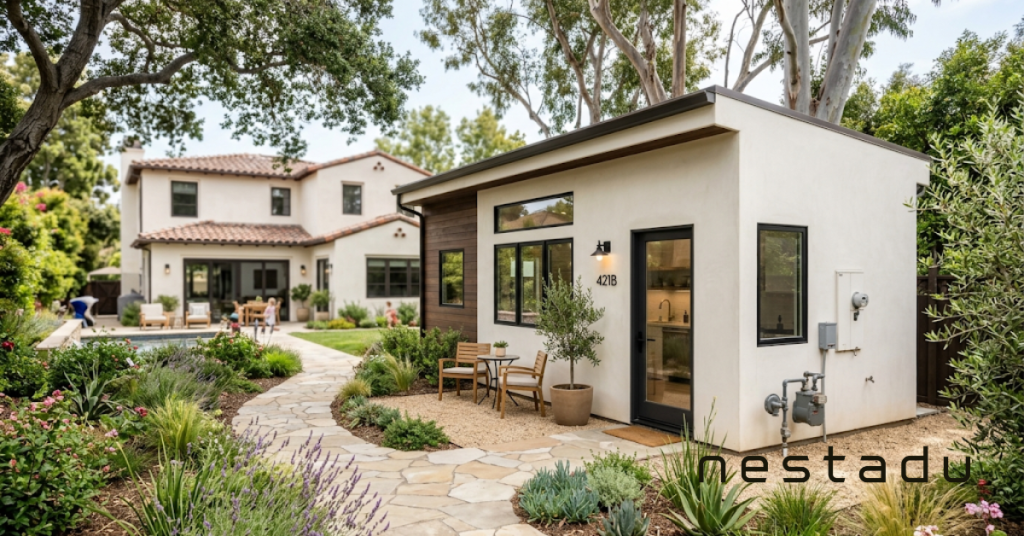
Assembly Bill 1033, authored by former Assemblymember Phil Ting and signed by Governor Newsom on October 11, 2023, changed the rule. It took effect January 1, 2024, amending Government Code Section 65852.2 and adding Section 65852.26.
Here is what the law does and does not do:
- Lets cities and counties pass ordinances permitting ADUs to be sold as condominium units
- Uses the existing condominium framework under the Davis-Stirling Common Interest Development Act
- Covers both ADUs and JADUs in jurisdictions that include them
- Keeps the parcel intact, so no lot split is needed
- Does not automatically legalize separate sales anywhere in the state
- Does not change size, setback, height, or parking requirements
- Does not override your local zoning code
The operative word is opt-in. The state granted the authority, and your city has to choose to use it.
Which California Cities Allow It Right Now: Sell ADU Separately Rule
Adoption has moved slowly but steadily since the law took effect. San Jose went first among major cities and recorded its earliest completed sales in August 2025, giving other jurisdictions a working template to study.
Jurisdictions with an adopted AB 1033 ordinance as of mid-2026:
- San Jose
- San Francisco
- City of San Diego (effective August 22, 2025)
- Unincorporated San Diego County (effective April 4, 2026)
- Santa Monica (city code 9.31.026)
- Santa Cruz
- Sebastopol
Berkeley, Napa, Mountain View, Oakland, Sacramento, and Long Beach are all studying or drafting ordinances. The City of Los Angeles, unincorporated Los Angeles County, Pasadena, and Glendale have not adopted anything, and neither has the large majority of California cities.
San Diego deserves a specific warning because it trips people up constantly. The city and the unincorporated county passed separate ordinances with different effective dates and different conditions, so your exact address decides which rules apply rather than the mailing city on your envelope.
How the Condominium Conversion Works
Converting an ADU into a sellable condominium is a real estate and legal process, not a construction task. The unit itself does not change, but the title structure underneath it does.
The typical sequence runs like this:
- Confirm your jurisdiction has an adopted ordinance that is actually in effect
- Verify the ADU is fully permitted, since unpermitted units must be legalized first
- Obtain written lender consent if the property carries a mortgage
- Prepare a condominium plan and map through a licensed surveyor and civil engineer
- Draft and record CC&Rs covering shared driveways, roofs, landscaping, and utilities
- Form a homeowners association, which is mandatory even for a two-unit property
- Notify water, sewer, gas, and electric providers in writing
- Record with the county so the Assessor issues a new parcel number
Once that final step clears, the ADU is assessed, taxed, and financed as its own home.
What the Process Costs and How Long It Takes
Plan on $15,000 to $30,000 for legal drafting, surveying, civil engineering, mapping, and county recording fees. That figure sits entirely separate from the construction cost of the ADU.
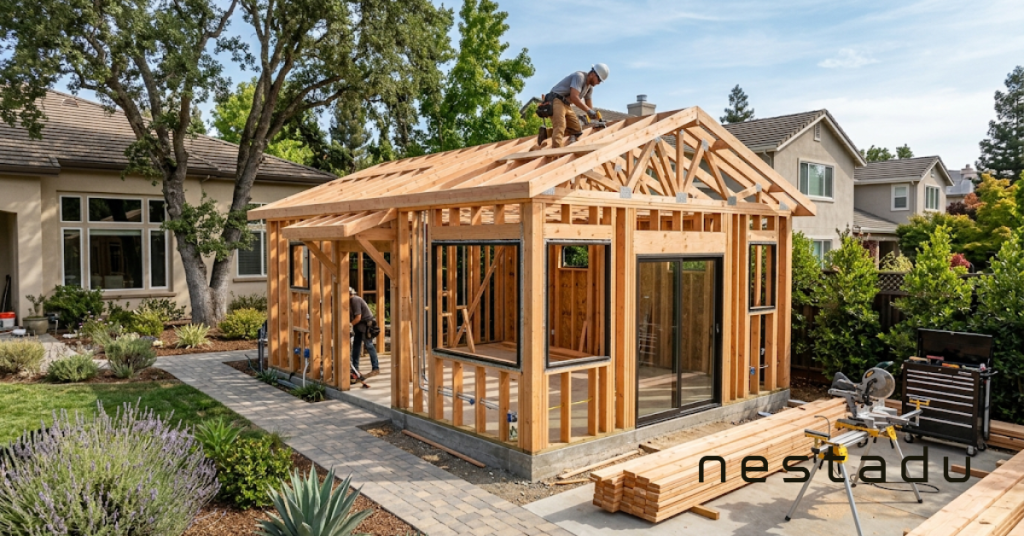
Realistic timelines run six months or longer. Surveying and legal work happen in parallel, but county recording queues, lender review, and any required public hearing add delays you cannot control.
Property Taxes After a Separate Sale
This is one of the genuine financial advantages, and it usually gets buried in other coverage. When the condominium plan records and the ADU sells, only the ADU is reassessed at its new market value.
Your primary residence keeps its original Proposition 13 assessed value. For a family that bought their home in 1998, that protection is worth far more than most homeowners realize when they first run the numbers.
The Catches Most Articles Skip
Nestadu would rather you hear the hard parts before you spend money than after. Separate ADU sale is a real option, but it comes with friction that marketing content tends to leave out.
- Your lender can refuse. Splitting title on a mortgaged property needs written consent, and nothing forces a lender to give it
- You create a permanent co-owner. Driveway disputes and roof repair cost splits become HOA matters, not neighborly conversations
- HOA administration never ends. Reserves, insurance, and compliance need managing, and on a two-unit property that job usually lands on you
- The resale market is still thin. Buyer awareness is low and some lenders remain cautious about financing converted units
- Local rules can tighten later. San Diego County moved to add owner-occupancy requirements and tenant right of first refusal after adopting its ordinance
None of these are dealbreakers on their own. Together they explain why the number of completed conversions statewide is still measured in the low hundreds rather than thousands.
If Your City Has Not Opted In Yet
An ADU still earns its keep without a separate sale attached to it. Most Nestadu clients build for income or family first, and treat the resale option as upside rather than the core reason for the project.
Your realistic paths in a non-participating jurisdiction:
- Long-term rental income that covers a meaningful share of your mortgage
- Mid-term rentals for travel nurses and relocating professionals at higher monthly rates
- Multigenerational living with genuine privacy for aging parents or adult children
- Stronger whole-property resale value, since documented rental income widens your buyer pool
Build Condominium-Ready Even If You Cannot Sell Yet
This is the practical takeaway for anyone planning an ADU in a city that has not adopted an ordinance. Retrofitting a finished unit for condominium eligibility is expensive, while building for it during construction adds modest cost.
The provisions that matter most:
- Separate water, sewer, gas, and electric laterals with independent meter locations
- Independent street or walkway access that avoids the main home’s private space
- Code-compliant fire separation between the two units
- A complete, self-contained layout with full kitchen and bathroom
- Clean, well-documented permit records from day one
None of this obligates you to sell. It simply keeps the door open if your city adopts an ordinance in 2027 or 2029, which matters given how many jurisdictions are currently reviewing adoption and the ongoing discussion in Sacramento about making AB 1033 mandatory statewide.
Frequently Asked Questions
Can I sell my ADU separately in Los Angeles?
No. Neither the City of Los Angeles nor unincorporated LA County has adopted an AB 1033 ordinance, and formal consideration is expected in late 2026 or 2027.
Do I need my lender’s approval?
Yes, if the property carries a mortgage. Lender consent is required to split title and is the most common point of failure in the entire process.
Does AB 1033 apply to JADUs?
Yes, in jurisdictions whose ordinance includes junior accessory dwelling units. Coverage varies city by city.
Can I sell an ADU built without permits?
No. The unit must be fully permitted and code compliant before any conversion can begin.
Will my main house be reassessed?
No. Only the ADU is reassessed after a separate sale, and your primary residence retains its existing Proposition 13 base.
How do I confirm my city’s status?
Call your local planning or community development department and ask whether an AB 1033 ordinance has been adopted and is currently in effect. Adopted and effective are not the same thing.
Plan the Sale Before You Pour the Slab
The decisions that make an ADU sellable later happen on the drawing board, not after the drywall goes up. Utility routing, access, and fire separation cost little to plan and a great deal to fix.
Nestadu builds accessory dwelling units across California with permit-ready documentation and condominium-ready construction options folded into the design phase. Tell our team early that resale matters to you, and we will design the unit accordingly.