
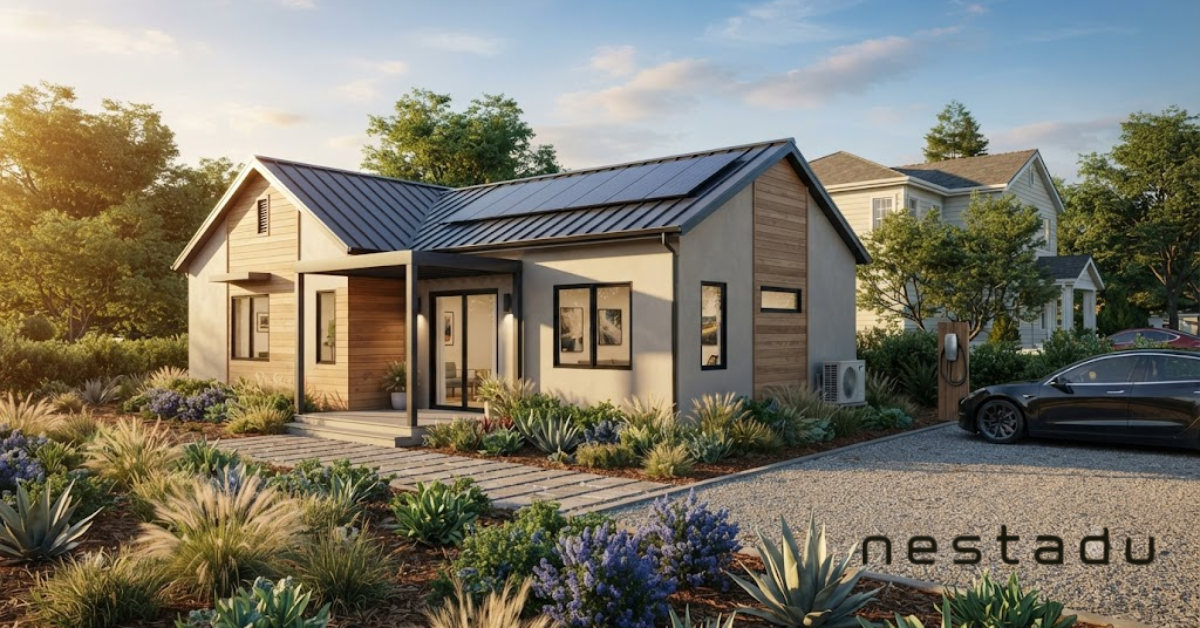
For most California homeowners, yes, but the answer depends far more on your specific property than on any national average. An ADU typically returns 6 to 12 percent annually through rental income while adding meaningful resale value, which puts it ahead of most passive investments available to a homeowner.
The honest version of this answer includes the cases where it does not work. Nestadu turns down projects where the numbers do not support the build, and knowing those failure conditions is more useful than another list of benefits.
What an ADU Actually Costs to Build in California
Costs vary widely by type and region, and the range you see quoted online is usually too optimistic. Detached new construction in California generally runs $250 to $500 per square foot once permits, utilities, and site work are included.
That means a 600 square foot detached unit realistically lands between $180,000 and $300,000 in most markets. Garage conversions come in considerably lower because the foundation, walls, and roof already exist.
- Junior ADU (JADU): $60,000 to $120,000
- Garage conversion: $100,000 to $200,000
- Attached ADU: $150,000 to $280,000
- Detached new build: $180,000 to $400,000
- Prefab or modular: $150,000 to $300,000 including site work
Budget an extra 10 to 15 percent for the items people forget: electrical panel upgrades, sewer lateral work, and permit fees that vary heavily by city.
The Rental Income Side of the Math
Rental income is where the return comes from, and California rents make the arithmetic work in a way they would not in most states. A one-bedroom ADU in the Bay Area commonly rents for $2,200 to $3,500, while Sacramento and Central Valley markets tend to run $1,300 to $1,900.
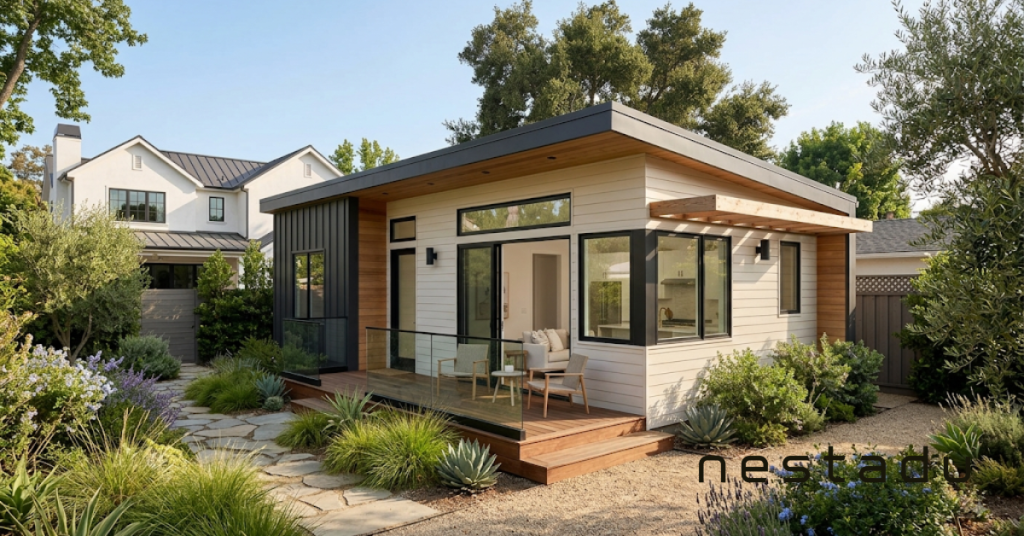
Run the numbers on your own market rather than a statewide figure. A $250,000 ADU earning $2,400 a month produces roughly $28,800 gross annually, or around 8 to 9 percent gross yield before vacancy, maintenance, and property tax adjustments.
How an ADU Affects Resale Value
Appraisers generally treat an ADU as an income-producing asset, so the value added tends to track closely with the rental income it generates rather than construction cost alone. In strong rental markets that often means the ADU appraises for more than it cost to build.
There is a real limitation worth knowing. In neighborhoods where few homes have ADUs, appraisers struggle to find comparable sales, and some homeowners see less credited value than expected on a refinance. This gap has been narrowing as ADUs become common across California, but it still comes up.
The Rule That Changed the Investment Case
AB 1033 took effect in 2024 and allows California cities to opt in to letting ADUs be sold separately from the main house as condominium units. This matters more than most homeowners realize.
Where a city has adopted it, an ADU stops being an amenity attached to your house and becomes a separately sellable asset. Adoption is still limited and uneven across the state, so check your specific city before building an exit strategy around it.
How Homeowners Are Financing ADUs
Financing is usually the deciding factor, not construction cost. Most homeowners fall into one of a few paths depending on how much equity they have and how comfortable they are touching their existing mortgage rate.
- HELOC, the most common route, flexible draws but variable rate
- Cash-out refinance, only worth it if your current rate is not far below market
- Construction loan, disburses in stages and converts to permanent financing
- Renovation loans like Fannie Mae HomeStyle, which can count projected ADU rental income toward qualifying
- Cash or retirement funds, which removes interest cost entirely
The renovation loan path deserves attention because counting future rental income toward qualification is what makes the project possible for many homeowners who would otherwise not qualify.
What Happens to Your Property Taxes
This is the concern that comes up in almost every consultation, and the answer is better than people expect. California does not reassess your entire property when you add an ADU.
Only the new construction gets assessed and added to your existing base. Your original Proposition 13 assessment stays intact, so the tax increase reflects the ADU’s value alone, typically a few thousand dollars per year on a mid-range build.
When an ADU Is Not a Good Investment
These are the situations where Nestadu advises homeowners to wait or reconsider, and they come up more often than the industry admits.
- Weak rental market, where local rents cannot support the build cost
- Short holding period, since you need several years for the return to compound
- Difficult lot conditions, where slope, soil, or utility upgrades add $50,000 or more
- Very small lots, where the ADU consumes yard space buyers actually value
- Overbuilt finishes, where luxury specs raise cost without raising achievable rent
- No appetite for landlording, unless you budget 8 to 10 percent for property management
The most expensive mistake is building a unit that costs like a custom home and rents like a studio apartment.
Comparing an ADU to Other Uses of the Same Money
A useful frame is asking what else that capital could do. Index funds have historically returned around 7 to 10 percent annually with no maintenance obligation and full liquidity, which is a fair benchmark to measure against.
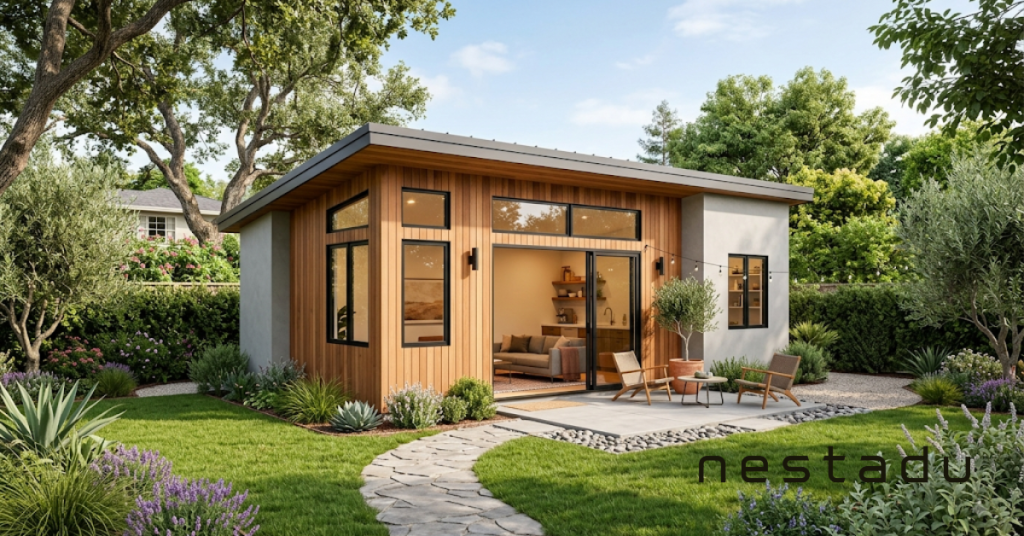
An ADU competes because it produces rental income, adds property value, and offers depreciation deductions on the rental portion at the same time. What it gives up is liquidity, since the money is locked into your property until you refinance or sell.
Non-Financial Returns That Still Count
Not every reason to build is on a spreadsheet, and for a large share of homeowners these motivations outweigh the yield calculation entirely.
Multigenerational housing is the most common. An ADU lets aging parents stay close without sharing a kitchen, or lets an adult child live independently while saving for a down payment.
Flexibility is the other draw. The same unit can serve as a home office this year, a rental next year, and a place for family after that, without any structural change.
A Realistic Return Example
Consider a $260,000 detached ADU in a market renting at $2,400 per month. Gross annual income comes to $28,800, and after vacancy, maintenance, insurance, and the added property tax, net income typically lands near $22,000.
That works out to roughly 8.5 percent on the build cost, before counting any appreciation or the value added at resale. Financed with a HELOC at current rates, cash flow tightens considerably in the early years but improves as rents rise against a fixed loan balance.
Frequently Asked Questions
How long until an ADU pays for itself?
Most California ADUs reach break-even on construction cost in 8 to 14 years through rental income, sooner in high-rent coastal markets.
Does an ADU increase property value?
Generally yes, often by an amount close to or above build cost in strong rental markets, though appraisal outcomes vary where comparable sales are scarce.
Can I rent my ADU on Airbnb?
Depends entirely on local rules. Many California cities restrict short-term rentals in ADUs, so verify before assuming nightly rates in your projections.
Do I need to live on the property?
Owner-occupancy requirements were suspended statewide for several years and rules have shifted since. Confirm your city’s current stance before planning.
Is a garage conversion a better investment than a detached build?
Often, on a return basis. It costs far less while renting for nearly as much, though it sacrifices the garage and usually appraises lower.
Run the Numbers on Your Property First
Every answer here changes with your lot, your city, and your local rent. A feasibility review that looks at your actual utilities, setbacks, permit costs, and comparable rents gives you a number worth making a decision on.
Nestadu builds accessory dwelling units across California, from in-law suites to backyard cottages, with transparent pricing from the first conversation. Reach out for a consultation and we will show you what the numbers look like on your property before you commit to anything.