
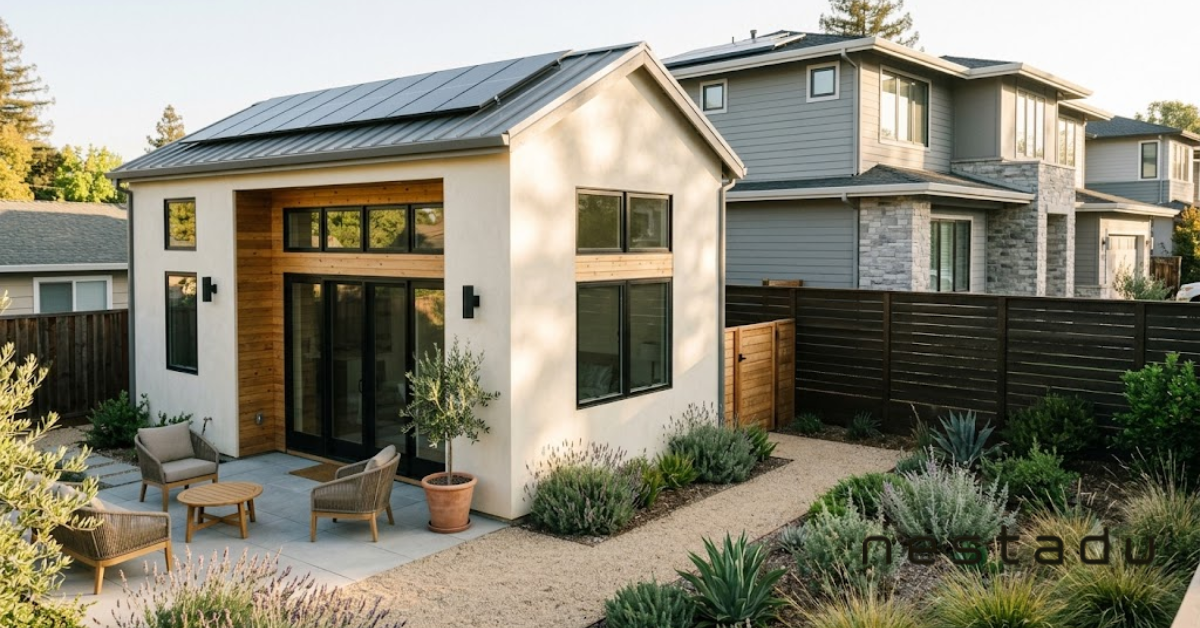
A home with an ADU sells into a different market than the house next door. It attracts investors, multigenerational families, and buyers who can now count the rental income toward their loan qualification.
It also invites a level of scrutiny that standard listings never face. Buyers and their lenders will ask questions about permits, income, and tenants that most sellers have not prepared answers for.
Why an ADU Changes the Sale
The presence of an ADU widens your buyer pool considerably. A single-family listing competes for one type of buyer, while an ADU property draws several at once.
That said, wider interest does not automatically mean a smoother transaction. The ADU introduces documentation requirements, appraisal complexity, and financing conditions that a plain single-family sale simply does not have.
Who an ADU property attracts:
- Multigenerational families needing separate space for parents or adult children
- Buyers using projected rental income to qualify for a larger loan
- Small investors looking for a primary residence with built-in cash flow
- Remote workers wanting a dedicated office or studio outside the main house
- House hackers offsetting a mortgage with tenant rent
The First Question Every Buyer Asks: Is It Permitted?
Permit status is the single most consequential detail in the entire transaction. A permitted ADU is an asset, and an unpermitted one is a liability the buyer inherits.

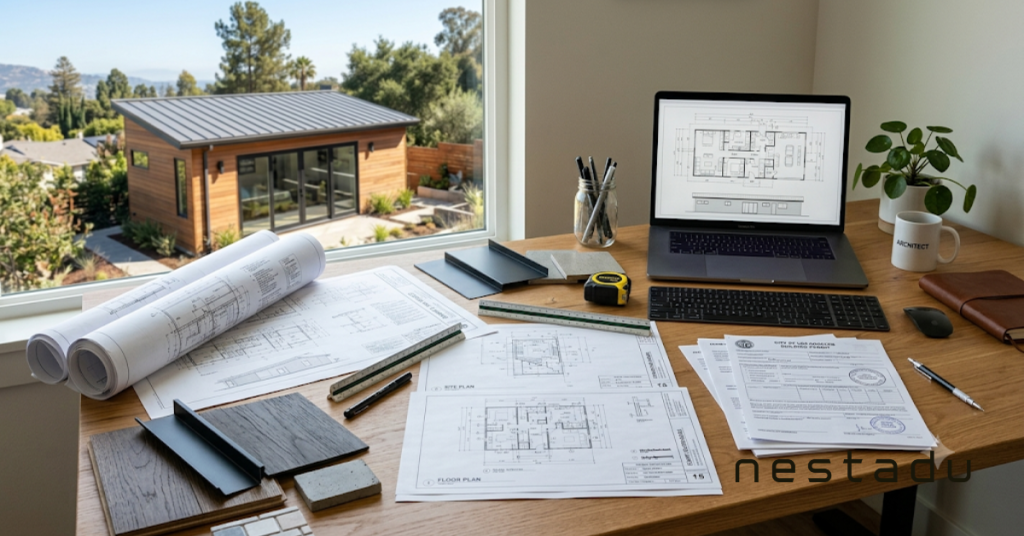
Lenders will not count rental income from an illegal or unpermitted unit under Freddie Mac guidelines, and appraisers treat unpermitted square footage very differently from legal living space. Nestadu recommends assembling the full permit file before the property is ever listed.
What sellers should have ready:
- The original building permit and final inspection sign-off
- Approved plan sets and any revisions
- Certificate of occupancy where the jurisdiction issues one
- Utility connection records and any separate meter documentation
- Contractor license number and any warranty documentation
How Appraisers Value an ADU
Appraisers do not simply add construction cost to the home value. They look for comparable sales of similar properties with accessory units in the same market, which can be scarce in areas where ADUs are still uncommon.
Where comparables exist, the ADU typically contributes meaningful value through both livable square footage and demonstrated rental potential. Where they do not, the appraiser makes adjustments that may fall short of what the unit cost to build.
Factors that raise appraised contribution:
- Full permit documentation and legal conforming status
- Complete kitchen with a permanent cooking appliance, not a hotplate or microwave
- Separate entrance, address, and ideally separate utility metering
- Documented rental history with signed leases
- Quality of construction matching the main dwelling
Financing Rules Buyers Should Understand
This is where the market shifted recently, and many agents and loan officers still work from outdated information. Fannie Mae’s Selling Guide update SEL-2025-08, published October 2025 and implemented in Desktop Underwriter version 12.1 in March 2026, allows ADU rental income to count toward borrower qualification.
The rules are specific rather than open-ended. Buyers should confirm their lender has actually underwritten an ADU income file recently, because many have not.
Key conditions under current agency guidelines:
- The property must be a one-unit principal residence
- Purchase or limited cash-out refinance transactions only
- Income may come from only one ADU, even when multiple exist
- A Form 1007 Single-Family Comparable Rent Schedule must accompany the appraisal
- Lenders typically count 75 percent of the lower of market rent or actual lease rent
- The counted amount generally cannot exceed 30 percent of total qualifying income
- Freddie Mac requires landlord education for buyers without prior management experience
Selling With a Tenant in Place
An occupied ADU cuts both ways. Documented rental income makes the property more attractive to investors, but an existing tenancy limits which buyers can actually close.
A buyer planning to house a parent in the unit cannot do so if a tenant holds a lease with eleven months remaining. California tenant protections also govern what a new owner can and cannot do after closing.
Decisions to make before listing:
- Whether to sell with the tenancy intact or with the unit vacant
- Whether the lease is month to month or fixed term
- What local just cause eviction rules apply in your city
- How security deposits transfer at closing
- Whether to provide rent rolls and payment history to serious buyers
Disclosure Obligations Sellers Cannot Skip
California disclosure requirements apply to the ADU exactly as they apply to the main house. Any known defect, permit irregularity, or unapproved work must be disclosed in writing.
Sellers sometimes assume an older unpermitted conversion is too far in the past to matter. It is not, and failing to disclose it creates liability that survives the closing.
- Unpermitted construction or conversions, including work done by prior owners
- Known defects in the ADU structure, roof, plumbing, or electrical
- Shared utility arrangements and how costs have historically been split
- Any open code enforcement case or unresolved permit
- Existing lease terms, security deposits held, and rent payment history
What Buyers Should Inspect in an ADU
Buyers should treat the ADU as a second home inspection rather than an accessory to the first. The systems are separate, and their condition often differs substantially from the main house.
Inspection priorities specific to accessory units:
- Whether utilities are shared or separately metered, and how that affects billing
- Sewer lateral capacity and whether the ADU ties into the main line
- Electrical panel capacity and whether a service upgrade was completed
- Fire separation between the ADU and the main dwelling or property line
- Foundation condition, particularly on garage conversions
- Insulation and Title 24 compliance if the unit was converted rather than built new
How to Price a Home With an ADU
Pricing is where sellers most often misjudge the market. The instinct is to add the full construction cost to the home value, and appraisals rarely support that math.
A more reliable approach starts with the income the unit produces and the comparable sales available in your area. Nestadu advises clients to gather this evidence before setting a number with their agent.
- Recent sales of ADU properties within a few miles of your address
- Current market rents for comparable units in your neighborhood
- Your own documented rental history and lease terms
- The appraised contributory value if you have refinanced recently
- Days on market for ADU listings versus standard listings locally
Frequently Asked Questions
Does an ADU increase home value in California?
Generally yes, though the amount depends on permit status, rental history, and available comparable sales rather than on construction cost alone.
Can I sell the ADU separately from the house?
Only in cities that have adopted an AB 1033 ordinance. Most California jurisdictions have not, so the property sells as one parcel.
Can a buyer use ADU rent to qualify for a mortgage?
Yes, under current Fannie Mae and Freddie Mac guidelines, subject to the property type, transaction type, and documentation conditions described above.
What if my ADU was never permitted?
Disclose it. You can also pursue permit legalization before listing, which usually recovers more value than selling the unit as unpermitted space.
Do I need to evict my tenant before selling?
No, and in many California cities you legally cannot without just cause. Selling with the tenancy in place is often the cleaner path.
Will the ADU be appraised as extra square footage?
Usually it is valued as a contributory improvement rather than simply added to the main house square footage, which is why comparable sales matter so much.
Should I renovate the ADU before selling?
Only if it has visible defects. Cosmetic upgrades rarely return their cost, while permit legalization and documentation almost always do.
Preparing the Property Before You List
Most of the value an ADU adds at resale comes from documentation rather than from finishes. A permitted unit with clean records, a signed lease, and separate utilities appraises and finances far more easily than an equally attractive unit without paperwork.
Nestadu builds accessory dwelling units across California with complete permit records and documentation handed over at project close, so the value is provable years later when you decide to sell. Reach out if you want your unit built with that eventual sale in mind.