
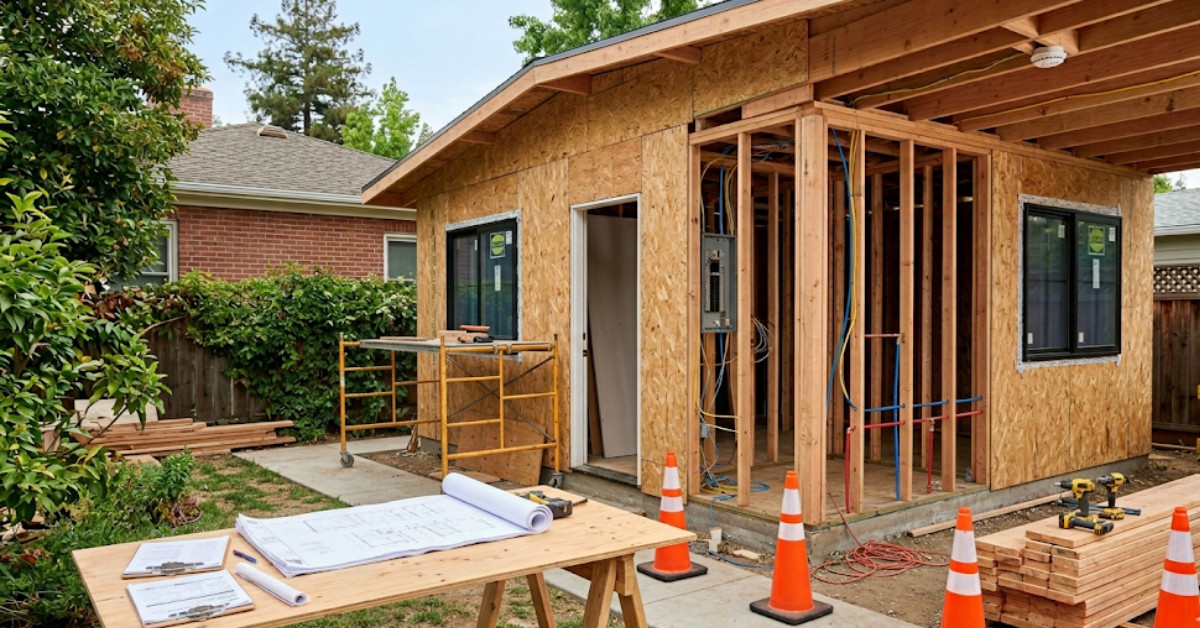
The most common code violations in ADU projects include setback errors, height limit breaches, fire safety failures, electrical mistakes, plumbing issues, missing permits, zoning conflicts, parking problems, and Title 24 non-compliance. Each one can trigger fines starting at $1,000 per day, demolition orders, or tenant lawsuits.
A Stanford satellite study found nearly 1,000 of 1,300 ADUs built in San Jose between 2016 and 2020 were unpermitted. At Nestadu, we have seen these patterns repeat across California, so here is a clear breakdown of every major violation and how to avoid it.
1. Setback and Property Line Violations
Setback rules decide how close your ADU can sit to property lines. In California, detached ADUs are generally allowed with 4-foot side and rear yard setbacks, but local rules can add more restrictions.
Common setback mistakes:
- Building on the property line without a survey
- Ignoring local setbacks that exceed state minimums
- Forgetting eaves or gutters that cross the line
- Skipping a site survey before pouring the foundation
2. Height Limit Breaches
Detached ADUs are usually capped at 16 feet, but units near major transit stops or on lots with multi-story homes may reach 18 feet. Attached ADUs can go up to 25 feet depending on local rules.
The most common mistake is measuring height from the slab instead of the natural grade. Roof pitch, parapets, and rooftop HVAC equipment can also push your design past the limit without you noticing.
3. Fire Safety and Egress Violations
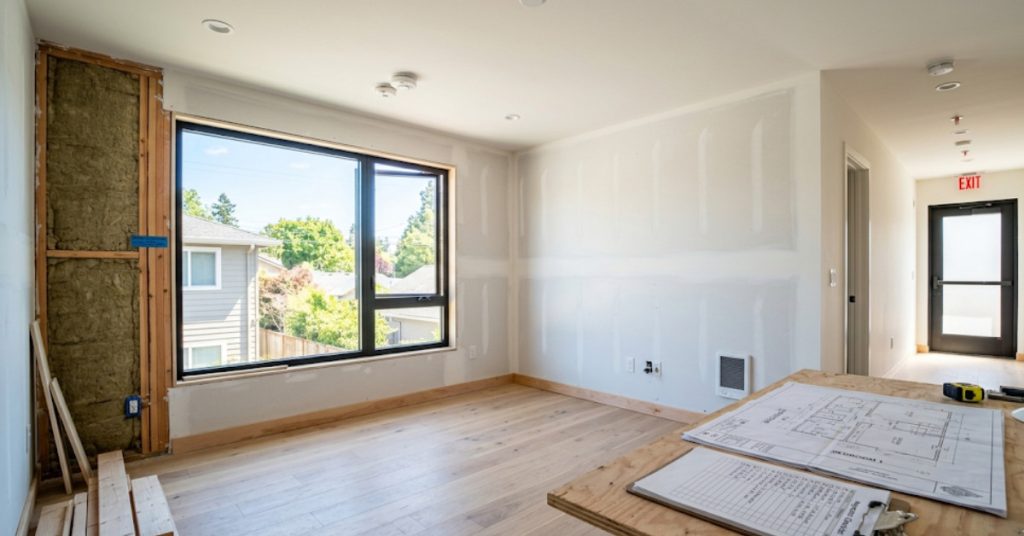
Fire safety is a top reason ADUs fail inspection. Every bedroom needs an operable window or door that meets egress size and sill height rules, and inspectors check this on every single project.
Frequent fire safety mistakes:
- Bedroom windows that fail egress dimensions
- Missing or wrongly placed smoke and CO detectors
- No fire-rated separation from the primary dwelling
- Skipping sprinklers when local code demands them
4. Electrical Code Violations
Electrical issues account for roughly 40 percent of all code compliance problems during ADU legalization in California. The National Electrical Code leaves very little room for error, and overloaded circuits will fail inspection right away.
Top electrical mistakes:
- Tapping into the main panel without a load calculation
- Missing GFCI protection in bathrooms, kitchens, and outdoor areas
- Wrong wire gauge for the circuit length
- Skipping AFCI protection in bedrooms
- Installing an undersized subpanel for the ADU load
5. Plumbing Code Violations
Plumbing problems hide behind finished walls, which makes them painful to fix once inspectors flag them. ADUs need their own plumbing systems that meet the International Plumbing Code and local amendments.
Common plumbing issues:
- Wrong pipe sizing for the fixture count
- Improper venting that traps sewer gases inside
- Sewer lateral that cannot handle the new load
- Water heater placed without proper clearances
- Missing exhaust fans or fans that do not vent outside
6. Permit and Inspection Failures
Skipping the ADU permit process is the costliest mistake a homeowner can make. California’s Contractors State License Board confirms that failing to obtain a required building permit exposes homeowners to extra liability and cost.
Permit-related problems:
- Starting construction before plans are approved
- Hiring unlicensed contractors who skip inspections
- Missing mid-construction inspections like framing or rough electrical
- Closing walls before inspectors verify the work behind them
7. Zoning and Land Use Violations
Even with state law protecting ADU rights, local zoning still controls architectural standards, lot coverage, and historic district rules. Detached ADUs are typically capped at 1,200 square feet, and HOA or CC&R rules around roof style or materials can still apply.
Junior ADUs follow separate rules. They must be 500 square feet or less and located within an existing single-family home, so building a JADU as a detached unit is an automatic violation.
8. Parking and Access Violations
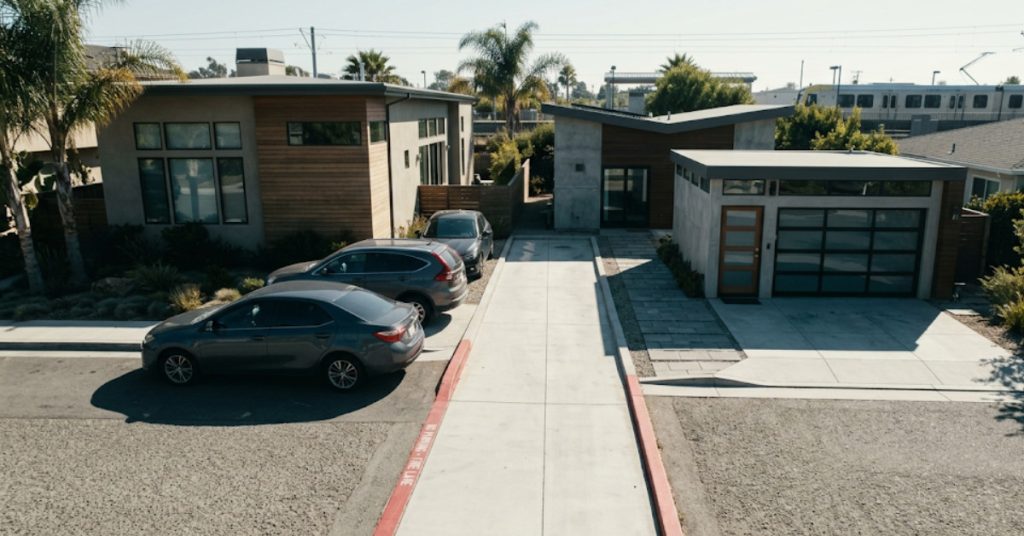
California law removes parking requirements for many ADUs, but not all. Issues come up when homeowners assume the exemption applies when it actually does not, especially for properties outside transit zones.
Watch out for:
- Building outside a half-mile transit zone where local parking still applies
- Removing garage parking without providing replacement spaces
- Driveway widths that block emergency vehicle access
- Pathways that fail fire department standards
9. Title 24 Energy Code Non-Compliance
California’s Title 24 energy code adds requirements beyond basic safety rules. ADUs must meet specific standards for insulation, windows, HVAC, lighting controls, and in some cases solar panels.
Skipping Title 24 documentation or installing non-compliant equipment will hold up final approval and add cost later in the project.
How Nestadu Keeps Your Project Compliant
At Nestadu, we handle the full ADU process from concept to completion, so you never face these violations alone. Our team includes licensed designers, contractors, and permit specialists who know California ADU law and local jurisdiction quirks across the state.
How Nestadu protects your build:
- Pre-construction code review against state and local rules
- In-house permit handling so paperwork never delays your build
- Licensed contractors and certified electricians on every project
- Coordinated inspection scheduling at each phase
- Title 24 energy compliance handled from day one
Frequently Asked Questions
What happens if my ADU has a code violation?
You may receive a notice of violation, fines from $500 to $2,000 per day, and in extreme cases a demolition order. Tenants in unpermitted units can also sue for refunded rent.
Can I fix a code violation after construction?
Yes, through a retroactive permit process. California’s SB 897 makes legalization easier for pre-2020 ADUs, but the unit still needs to meet current safety standards.
Who is responsible for code compliance?
The property owner carries final legal responsibility. Even if the contractor makes the mistake, the homeowner pays the fines.
How long does ADU permit approval take?
Local agencies must determine completeness within 15 business days and approve or deny within 60 days for standard applications.
Building a Code-Compliant ADU in California
Code violations on ADU projects are common, but every single one is preventable with the right team. Setbacks, heights, fire safety, electrical, plumbing, permits, zoning, parking, and Title 24 are where most homeowners stumble, and each carries real financial risk.
Working with an experienced builder who understands California law and local building departments is the safest way to protect your investment. Get in touch with Nestadu today for a transparent quote and a code-compliant ADU build from start to finish.