
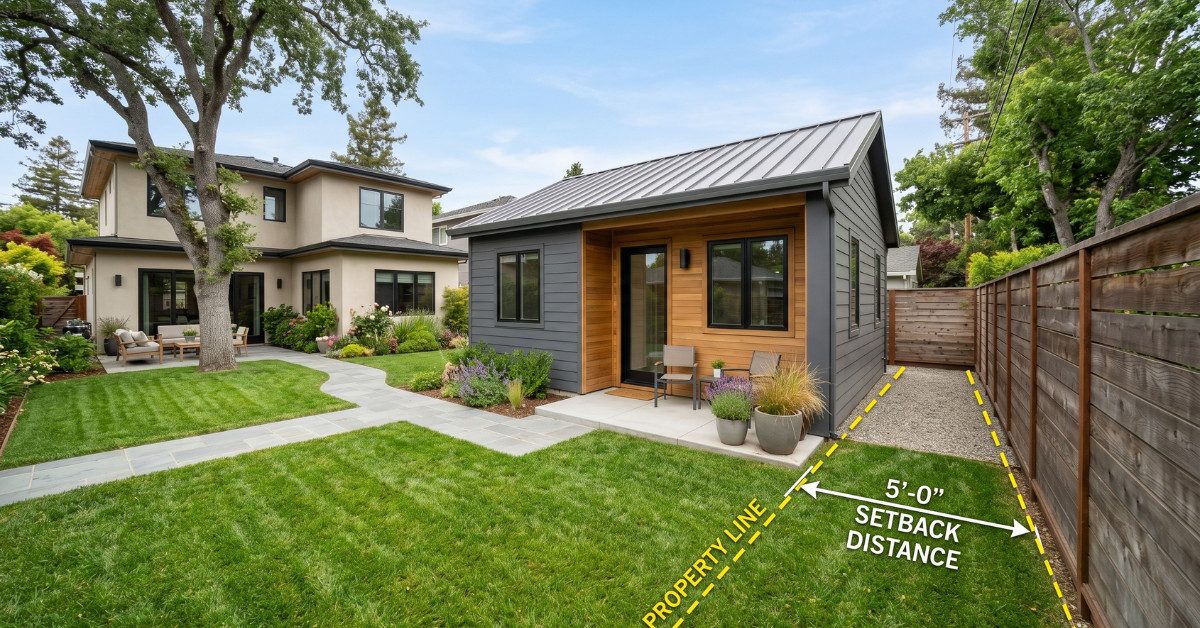
Planning to add an accessory dwelling unit to your California backyard? One of the first questions you’ll run into is this: how close to the property line can build an ADU?
It’s a fair question. Your property might not be massive, and every foot of space matters when you’re trying to fit a livable unit behind your home. The good news is that California has made ADU construction more accessible than ever, with setback rules that work in your favor. But there are still some details you need to get right before you break ground.
At Nestadu, we walk California homeowners through these exact questions every day. Here’s what you need to know about property line setbacks, local zoning, and how to plan your ADU project the right way.
Understanding Setback Requirements
A “setback” is simply the minimum distance your ADU must sit from your property line. Think of it as a buffer zone between your structure and the edge of your lot. These rules exist for practical reasons like fire safety, drainage, privacy, and making sure emergency crews can access your property if needed.
In California, the state has set clear guidelines for ADU setbacks that apply across most cities and counties:
- Side yard setback: 4 feet from the property line
- Rear yard setback: 4 feet from the property line
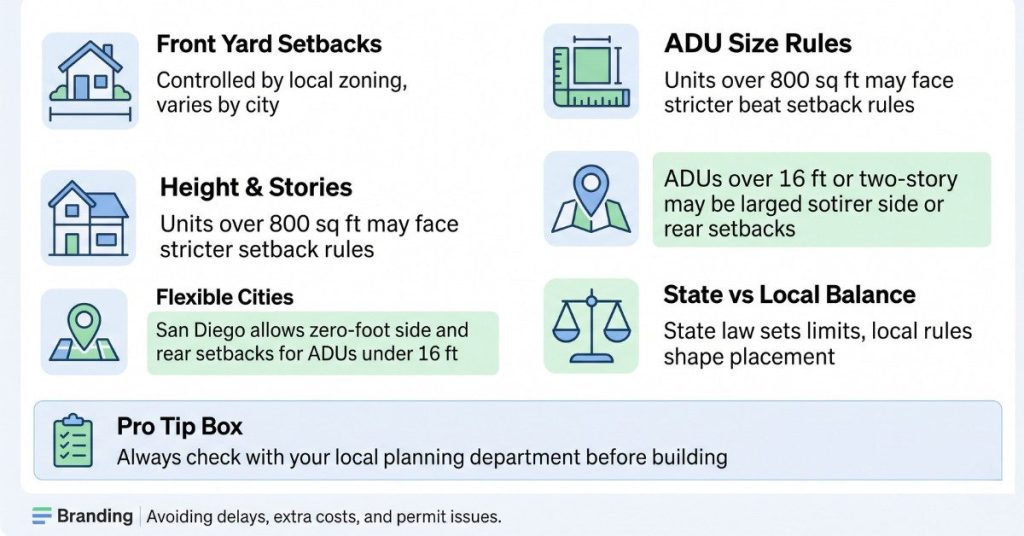
- Front yard setback: Determined by your local city or county zoning code
- Garage conversions: Typically zero setback required since the structure already exists
For most detached ADUs that are single-story and under 16 feet tall, you can build as close as 4 feet from the side and rear property lines. That’s a significant advantage compared to the setback rules for standard home construction, which are often much stricter.
One important detail many homeowners miss: if your ADU is 800 square feet or smaller, your city cannot impose setback requirements that would prevent you from building it. California state law is very clear on this. No local ordinance can block an 800 sq ft ADU as long as it meets the 4-foot side and rear setbacks.
Local Zoning Regulations
While the state sets the baseline rules, your city or county still has a say in certain aspects of ADU placement. This is where things can get a little tricky if you’re not careful.
Here’s how local regulations typically come into play:
- Front yard setbacks are entirely controlled by your local zoning code and can vary widely from one city to the next
- ADUs larger than 800 square feet may be subject to stricter local setback rules in some jurisdictions
- Two-story ADUs or units taller than 16 feet might face additional side or rear setback requirements depending on your city
- Some cities like San Diego have gone further than state law and allow zero-foot side and rear setbacks for ADUs under 16 feet in height
The bottom line is that state law prevents your city from being overly restrictive, but local rules still shape where and how your ADU sits on the lot. That’s why checking with your local planning department is always a smart first step.
At Nestadu, our team stays on top of local zoning changes across California so our clients never get blindsided during the permitting process. Every city interprets ADU rules slightly differently, and having a builder who understands those local nuances saves you time, money, and headaches.
Exceptions and Variances
Not every property fits neatly into standard setback rules. If your lot is small, oddly shaped, or already has structures close to the property line, you might qualify for certain exceptions.
Garage and existing structure conversions are one of the biggest exceptions. If you’re converting an existing detached garage, storage building, or similar structure into an ADU, setback rules generally don’t apply to it. Even if that garage sits right on the property line, you can still convert it into a legal living space without needing to move it.
Other situations where setback exceptions may come into play:
- Small or irregular lots where the standard 4-foot setback would make building an 800 sq ft ADU physically impossible. In these cases, the city must provide flexibility under state law.
- Attached ADUs that share a wall with the main house may follow the existing home’s setback footprint, even if it’s less than 4 feet from the property line.
- Variance requests can be filed with your local planning department if your project has unique circumstances. Variances are reviewed on a case-by-case basis and require showing that strict enforcement of the setback would create unnecessary hardship.
Keep in mind that building very close to the property line (under 6 feet) can trigger additional requirements like boundary surveys, building verification surveys, and restrictions on how many windows or doors you can place on the wall facing the property line. Walls between 3 and 5 feet from the boundary, for example, can only have openings covering 25% or less of the wall area.
Planning Your ADU Project
Understanding setbacks is just one piece of the puzzle. Smart ADU planning means looking at the full picture of your lot, your goals, and your budget before committing to a design.
Here are some practical tips to keep in mind:
- Get a site survey early. Knowing exactly where your property lines are prevents costly mistakes later. Many homeowners assume they know their boundaries, but fences and landscaping don’t always line up with the legal property line.
- Think about construction access. Building right at the 4-foot minimum is legal, but it can make construction more difficult. Tight spaces mean crews may need to do more work by hand, which can increase labor costs and extend your project timeline.
- Consider your neighbors. Just because you can build 4 feet from the property line doesn’t always mean you should. A little extra buffer space can help maintain good relationships and give you room for storage or landscaping behind the unit.
- Don’t forget utility connections. Your ADU will need water, sewer, electrical, and possibly gas connections. The placement of your unit affects how far those utility runs need to go, which directly impacts your budget.
Nestadu’s design and construction team helps homeowners think through all of these factors during the early planning stages. We evaluate your lot, run through the setback requirements for your specific city, and design an ADU that makes the best use of your available space without cutting corners on livability or compliance.

How Does an ADU Affect Property Taxes?
This is another question that comes up constantly, and it’s worth addressing here since setbacks and ADU size go hand in hand.
When you add an ADU to your property, the county assessor will reassess the value of the new construction only. Your existing home’s assessed value remains protected under Proposition 13. The new ADU will be assessed at its current market value and added to your property tax bill separately.
What this means in practice:
- A well-built ADU will increase your property taxes, but only based on the cost of the new construction
- The rental income potential from your ADU often more than covers the tax increase
- Smaller ADUs naturally result in a smaller tax bump, which is another reason why understanding setbacks and how they affect buildable size matters
At Nestadu, we help our clients understand the full financial picture of their ADU investment, not just the construction costs. From projected rental income to tax implications, our team makes sure you have all the information you need to make a confident decision.