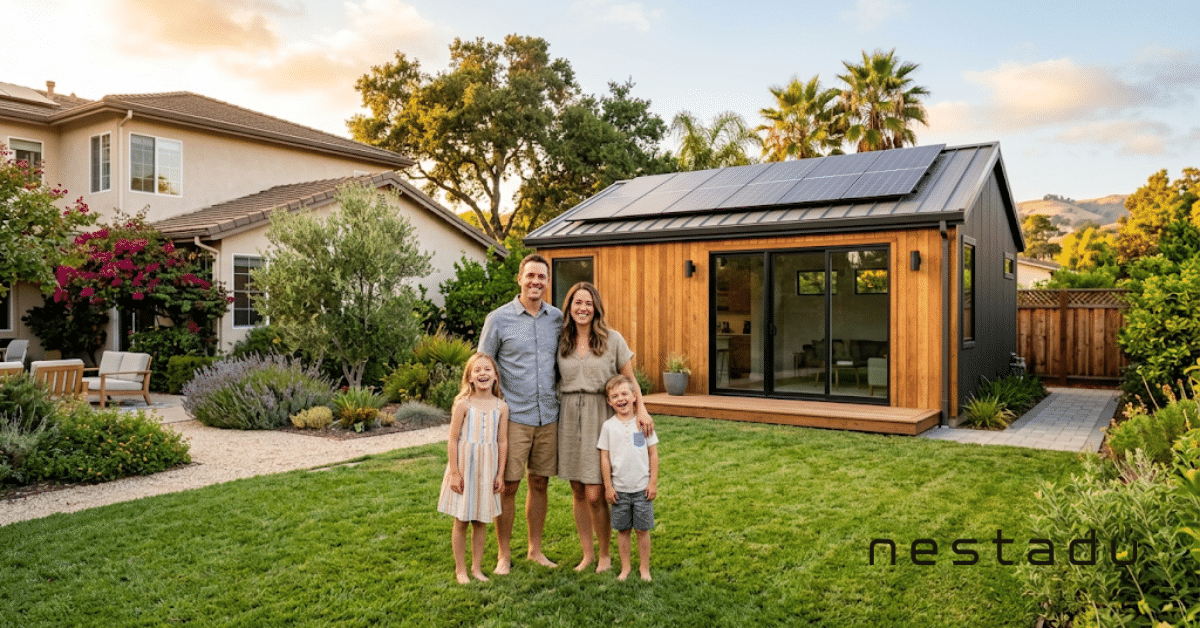
To live in an ADU is like having your own small, private home. You get a separate entrance, your own kitchen and bathroom, and often a patch of yard, usually with lower bills than a comparable apartment. The trade-off is less space and closer neighbors. Our ADU floor plans show how that square footage gets used.
Key Takeaways
- It feels like a real home. Private entrance, full kitchen and bath, and no shared hallways.
- Space is tight but usable. Most ADUs run from about 150 to 1,200 square feet, built to live larger than they measure.
- Bills are often lower. New, efficient construction means smaller utility costs than most older apartments.
- Privacy is the main trade-off. You live close to the main house, so boundaries matter.
- It suits many lives. Renters, aging parents, adult children, and remote workers all do well in one.
The Day-to-Day Feel of ADU Living
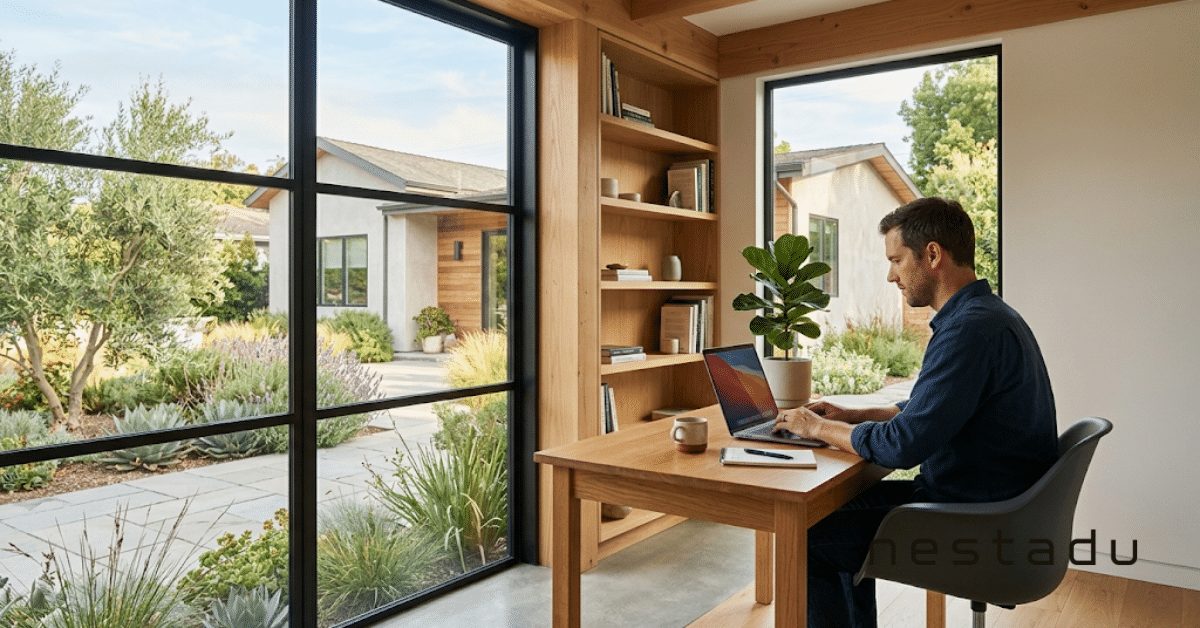
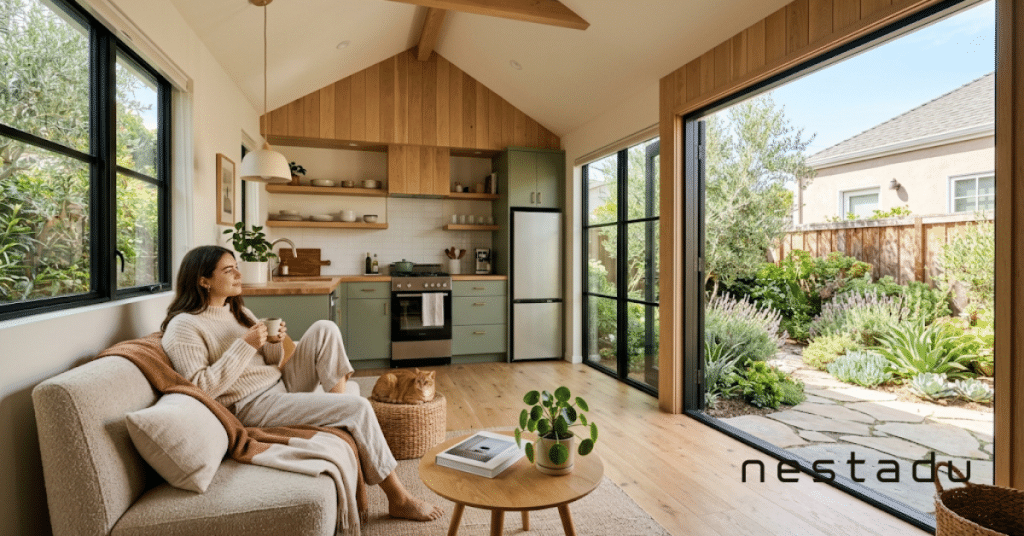
The first thing most people notice is how normal it feels. You open your own front door, not a shared lobby. You cook in your own kitchen and sleep in a quiet bedroom. It is a full home, just smaller.
Mornings are calmer than in an apartment block. There is no elevator to wait for and no neighbor stomping overhead, because a detached ADU has no shared walls. Many units open onto a yard, so you can step outside with coffee instead of looking at a parking lot.
The flip side is proximity. The main house is a few steps away. If you rent, your landlord may be the homeowner next door. That can be a comfort or a nuisance, depending on the people. Clear boundaries make it work.
Want to see how a layout would live on your lot? Call Nestadu at (888) 637-8238 and we will walk you through it.
How Much Space You Actually Get
ADUs range widely. A studio prefab can be around 200 square feet, while a custom build can reach 1,200. California law protects your right to build a unit of at least 800 square feet on most lots, according to California’s HCD handbook.
Smart design is what makes a small space work. Open-plan layouts, tall ceilings, big windows, and built-in storage make 500 square feet feel like far more. You lose the spare rooms you never used anyway, and you keep the rooms you live in every day.
For a couple or a single person, a one-bedroom ADU is plenty. For a small family, a two-bedroom build around 600 to 800 square feet is common. Our custom ADU designs are drawn around how you actually move through a day.
What It Costs to Live in an ADU vs an Apartment
Cost is usually the reason people look at an ADU in the first place. Rents vary by region, but the living-cost picture is often friendlier than a comparable apartment, mostly because the unit is new and efficient.
ADU vs Apartment: Everyday Living
| Factor | Living in an ADU | Living in an apartment |
| Space | About 150 to 1,200 sq ft, private | Varies, inside a shared building |
| Entrance | Your own private entry | Shared halls and stairs |
| Noise | Little to none, no shared walls (detached) | Neighbors above and beside you |
| Outdoor space | Often yard access | Rare or shared |
| Utilities | Usually lower, efficient build | Often higher in older buildings |
| Landlord | Often the homeowner on site | A property manager |
The utility savings are real. New ADUs are built to current energy codes with better insulation and efficient systems, so heating and cooling cost less. That monthly gap adds up over a lease.
The Good Parts of Living in an ADU
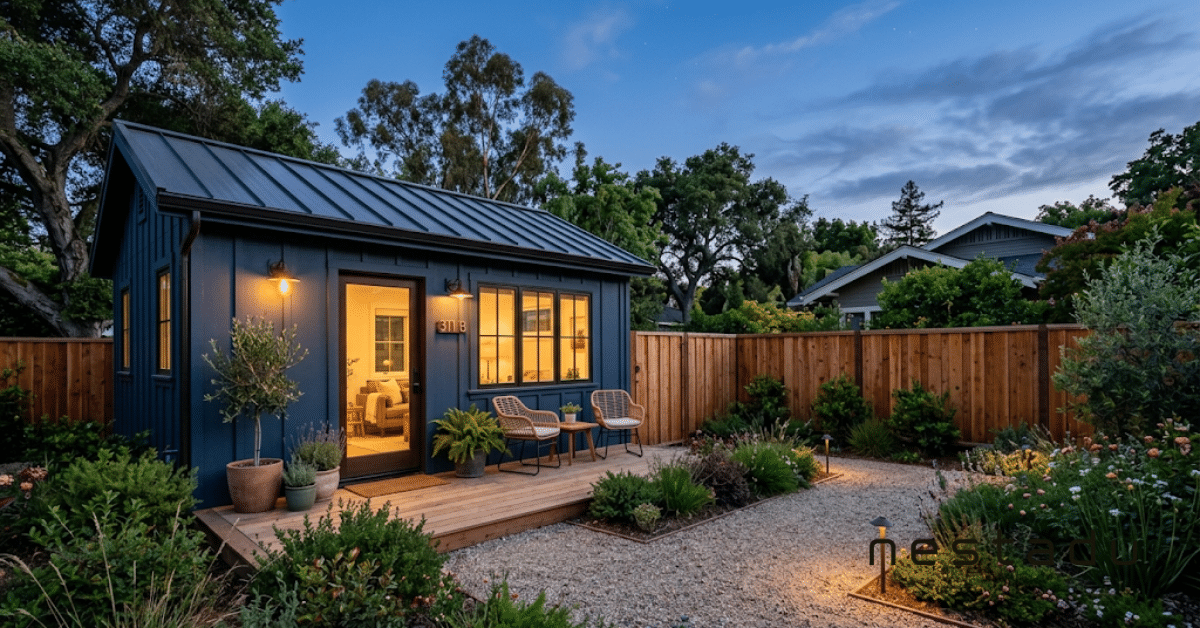
People who like ADU life tend to like the same things. The privacy of a standalone home without the price of one. Lower bills. A yard. And for many, being close to family without living on top of each other.
There is also the quiet. No thin shared walls, no footsteps from above. For remote workers, that calm is worth a lot. A small, well-lit unit makes a better home office than a spare corner of a crowded apartment, and the short walk from bed to desk beats any commute.
The Honest Downsides
No home is perfect, and ADUs have real trade-offs. Being honest about them helps you decide. We go deeper in our post on the common challenges of ADU living.
- Less storage. You will own less stuff, or rent a storage unit. Closets are smaller.
- Close neighbors. The main house is right there. Privacy depends on respect and clear rules.
- Limited control as a renter. You usually do not control the yard, parking, or shared systems.
- Entertaining is tighter. Big dinner parties are harder in a compact space.
- Not for big families. Four-plus people will feel squeezed in most ADUs.
None of these are dealbreakers for most residents. They are simply the reality of trading square footage for affordability and privacy.
Who ADU Living Suits Best
ADUs fit a lot of lives. Research from UC Berkeley’s Terner Center shows most are used as long-term housing, often for family or steady rental, not short stays.
The clearest fit is family. Aging parents who want to stay close but independent, and adult children saving for a first home, both thrive in one. Demand for this kind of setup keeps climbing, a trend AARP’s livable communities program ties to people wanting to age near loved ones.
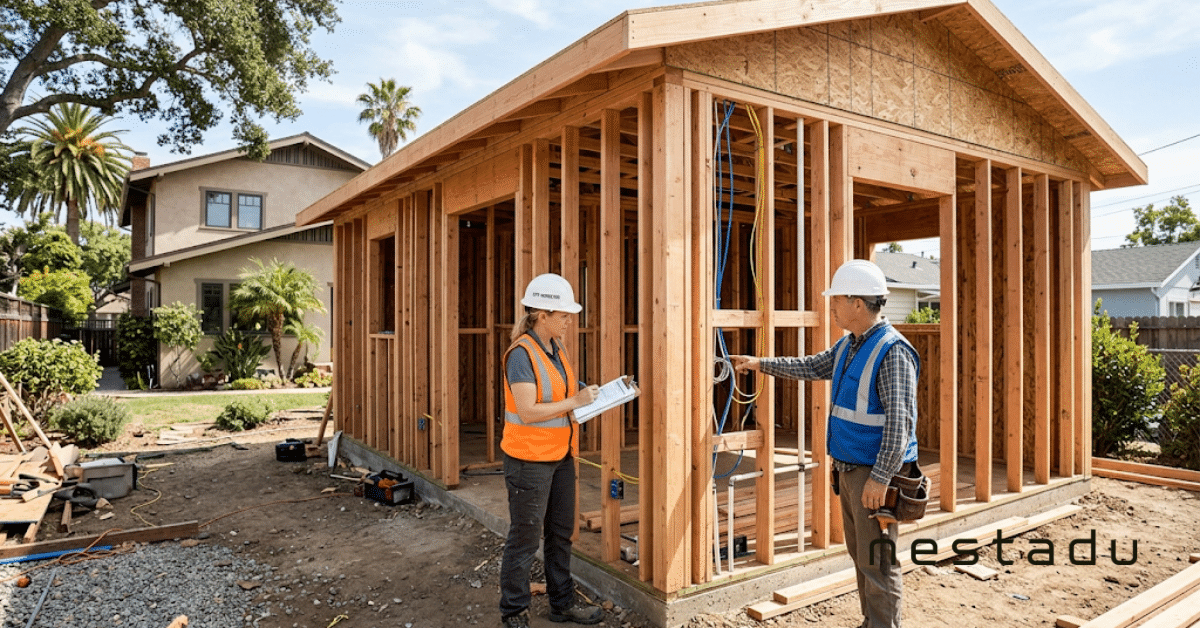
One family came to us so an aging grandmother could live beside them. Their backyard was narrow and steeply sloped, so a boxed prefab would not fit. We designed a custom 850-square-foot unit around the slope, and it passed permitting on the first try. The unit gives her a home a few steps from family, behind her own front door.
Frequently Asked Questions
Is living in an ADU worth it?
For most people, yes. You get a private, efficient home for less than a comparable apartment or house, often with a yard and lower bills. The main cost is space. If you value affordability, quiet, and being near family over square footage, an ADU is usually worth it.
What are the downsides of ADUs?
The main downsides are limited space, less storage, and close proximity to the main house. Renters also have little say over shared areas like the yard or parking. For most residents these trade-offs are minor next to the lower cost and added privacy of a standalone unit.
What is the cheapest option for an ADU?
A junior ADU or a converted garage is usually the cheapest to create, since it reuses existing structure. For a standalone unit, a small prefab studio is often the lowest-cost new build. The right choice depends on your lot, your budget, and how you plan to use the space.
Is it harder to sell a house with an ADU?
Usually no. A permitted ADU widens your buyer pool to investors and multi-generational families and often adds value. The key word is permitted. An unpermitted unit can slow a sale, so proper permits and code compliance matter from the start.
See If ADU Living Fits You
The best way to know what ADU life feels like is to picture a real unit on a real lot. That is where we start.
Call Nestadu at (888) 637-8238 for a free 15-minute consultation and we will match a layout to your property and your budget. You will talk with our team, not a call center. We serve the Bay Area, Sacramento, Los Angeles, and San Diego. You can also review our ADU financing options or request a free ADU consultation online.
Nestadu
100 Shoreline Hwy, Suite 100, Building B
Mill Valley, CA 94941-3645
Phone: (888) 637-8238
Email: info@nestadu.com
Hours: Mon to Fri 1:00 PM to 4:00 PM, Sat to Sun Closed
Service area: California (Bay Area, Sacramento, Los Angeles, San Diego)
License: CSLB 1117837 | HCD DL1611393
About the author: Bret Ashworth is the CEO of Nestadu, a licensed California general contractor building custom and prefab ADUs across the state. You can meet our team to learn more.