The future of ADU development in California points to more multi-family and junior units, faster prefab and modular builds, all-electric and solar-ready designs, and simpler financing. State law keeps loosening, permits keep climbing, and homeowners keep adding units for rental income, aging parents, and remote work. Our custom ADU builds reflect every one of these shifts.
Key Takeaways
- Permits keep rising. California ADU permits grew from about 1,000 a year in 2016 to more than 20,000 a year recently.
- Multi-family ADUs are next. New state rules let owners add units to duplex and apartment lots, not just single-family backyards.
- Prefab is speeding up builds. Factory-built units cut months off a traditional construction timeline.
- Green design is becoming standard. All-electric, solar-ready, heat-pump ADUs are moving from option to default.
- Financing is getting easier. More loan products are built specifically for ADU projects.
California ADU Permits Keep Climbing
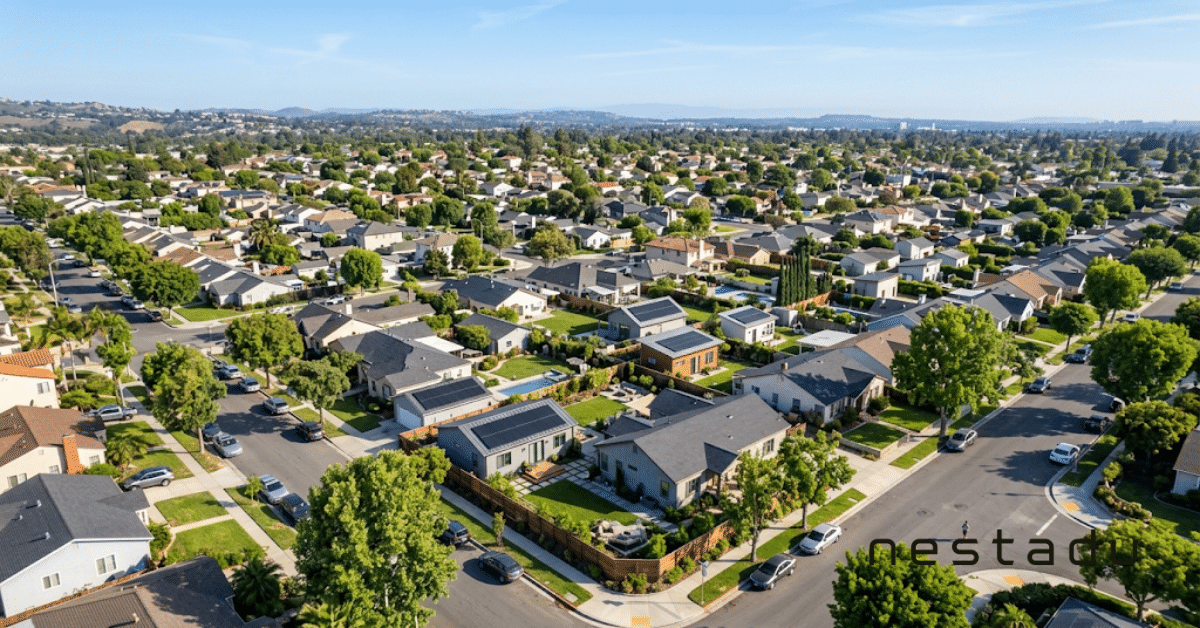
The biggest trend is simple. More people are building. California ADU permits rose from roughly 1,000 in 2016 to more than 20,000 a year in recent years, according to research from UC Berkeley’s Terner Center. ADUs now make up a large share of all new housing the state approves each year.
That growth started with a wave of state laws that stripped away local barriers. Cities can no longer require extra parking in many cases, and they must respond to permit applications on a fixed timeline. The direction set by California’s HCD guidelines is clear. The state wants ADUs built, and it keeps removing reasons to say no. Our guide to pre-approved ADU plans shows how cities are cutting review time.
ADU Permit Growth in California
| Year | Approximate annual ADU permits | What changed |
| 2016 | About 1,000 | First major state ADU laws passed |
| 2019 | About 15,000 | Parking and setback rules loosened |
| 2023 | More than 20,000 | Pre-approved plans and faster review spread |
Figures are rounded and drawn from Terner Center and state housing reports. The pattern matters more than any single number. The curve points up, and nothing in current policy suggests it will reverse.
Multi-Family and Junior ADUs Are the Next Wave
For years an ADU meant one unit in a single-family backyard. That is changing fast. State law now lets owners of duplexes and apartment buildings add units too. On some multi-family lots, owners can build several detached ADUs plus convert unused interior space.
Junior ADUs, or JADUs, are growing alongside them. A JADU is a small unit of up to 500 square feet carved out of an existing home, often with its own entrance and a small kitchen. It is one of the cheapest ways to add a rentable or family space, and more homeowners are starting there before committing to a full build.
If you own a property with more than one unit, your options are wider than they were even two years ago. A short call about your lot can tell you how many units the current rules allow.
Prefab and Modular ADUs Speed Up Construction
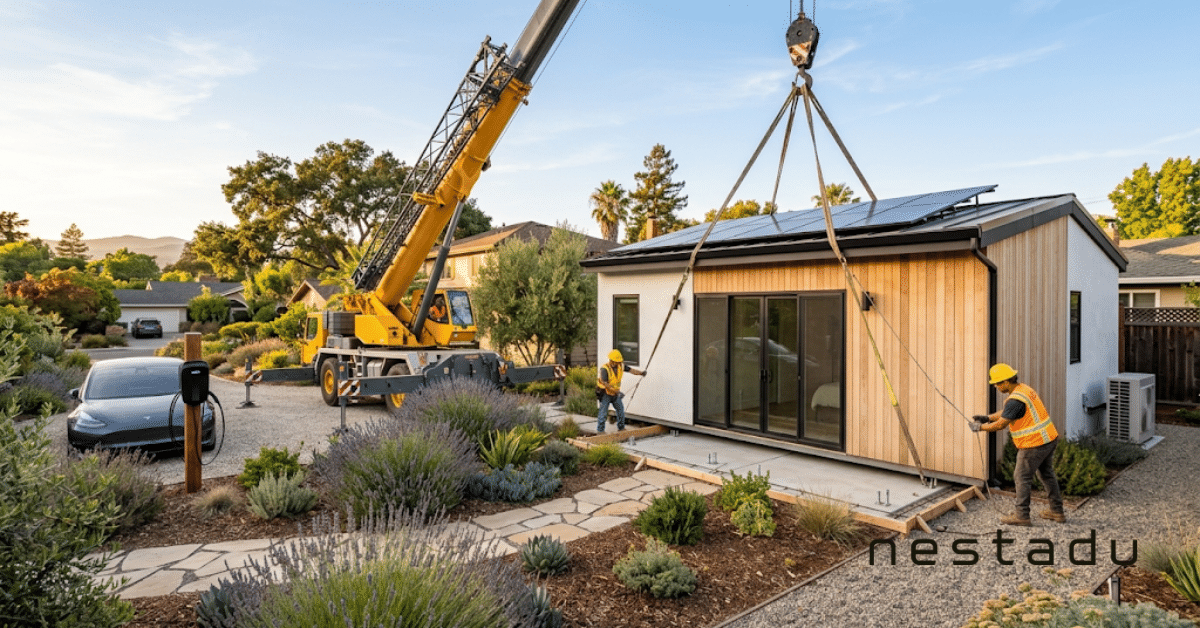
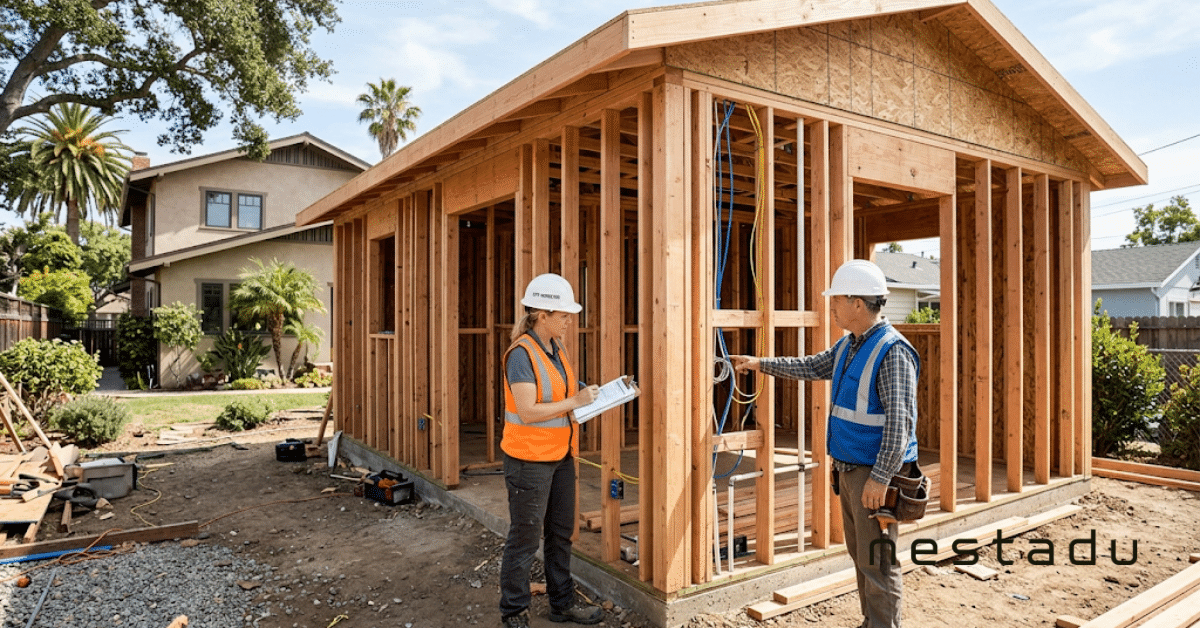
Construction time is the pain point most homeowners feel. Prefab and modular ADUs attack it directly. The unit is built in a factory while site work happens at your home, so the two timelines run at once instead of back to back.
The quality gap that used to worry buyers has closed. Factory conditions mean tighter tolerances, less weather damage, and more consistent finishes. Our prefab ADU options start around $115,000 and arrive largely complete, which cuts months off a site-built schedule.
This does not mean custom is going away. Narrow lots, steep slopes, and strict design rules still call for a site-built unit. The trend is choice. You can pick the path that fits your yard and your budget instead of accepting one method for every project.
Energy Rules Push All-Electric, Solar-Ready ADUs
California keeps tightening its building energy code, and ADUs feel it first because they are new construction. The standards set by the California Energy Commission standards now favor heat-pump heating and cooling, heat-pump water heaters, and induction cooking over gas.
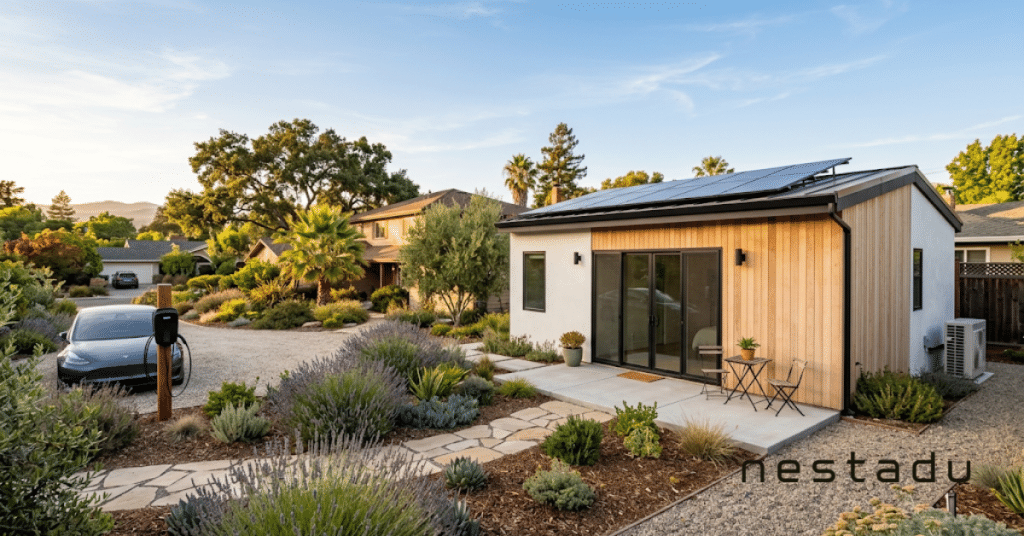
Solar-ready wiring and EV charger circuits are becoming routine. Many new ADUs are designed so a solar system or battery can be added later without tearing into finished walls. These choices lower monthly bills and make the unit easier to rent, since tenants notice lower utility costs.
Expect this to become the baseline, not a premium upgrade. Building all-electric from the start is cheaper than retrofitting later, and it keeps your ADU compliant as the code moves further in that direction.
Not sure which trend fits your property? Call Nestadu at (888) 637-8238 and we will walk your lot through the current rules in a few minutes.
ADUs Built for Aging in Place and Multi-Generational Living
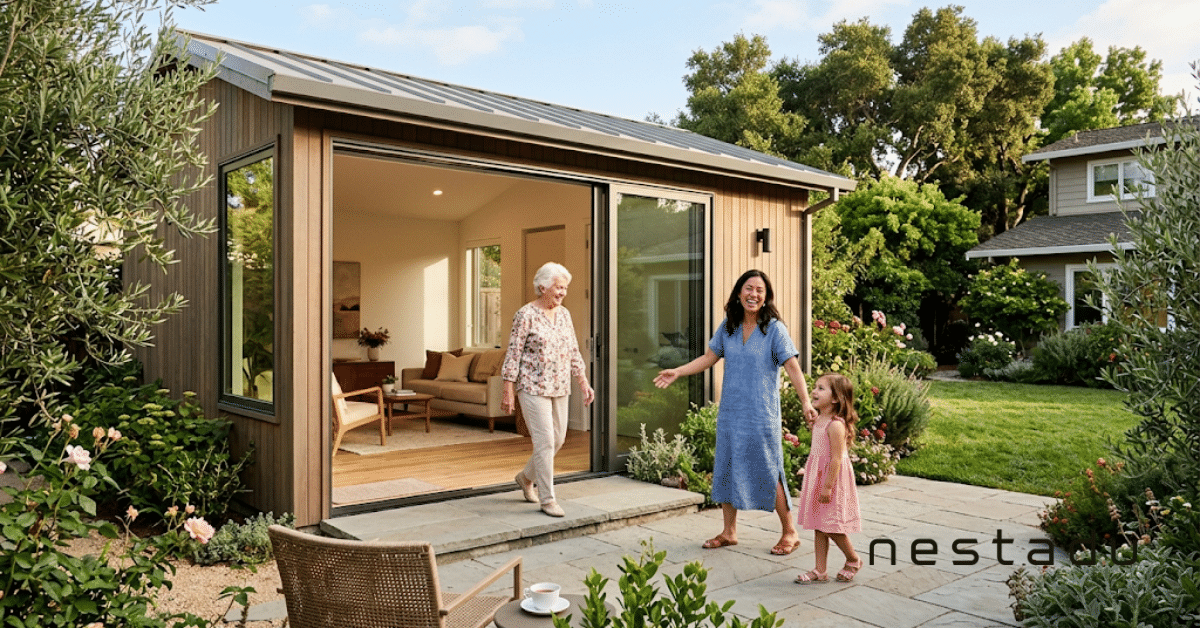
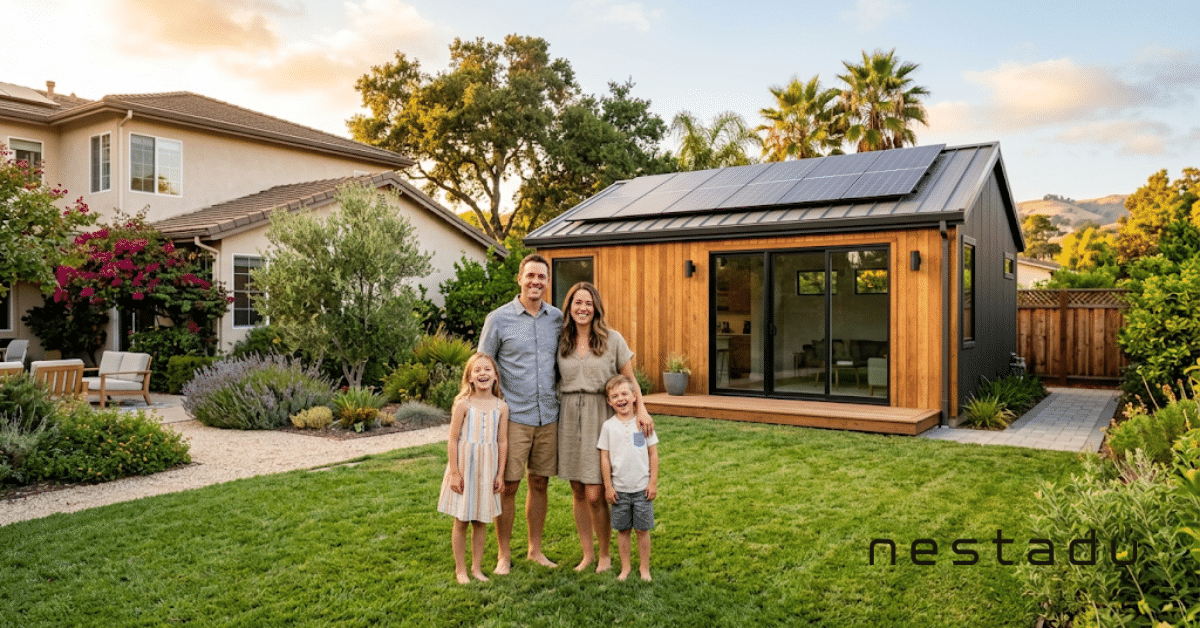
A large share of California ADUs are not rentals at all. They house family. Parents move closer to grandchildren, adult children get a first step toward independence, and aging relatives stay near help without moving into a facility.
Design is following that demand. Step-free entries, wider doorways, curbless showers, and single-level layouts are showing up in more floor plans. One homeowner came to us with a narrow, steeply sloped backyard and needed a custom 850-square-foot unit for an aging grandmother. We designed around the slope and the family’s needs, and the project earned its permit on the first submittal. A drop-ship prefab unit would not have fit that lot.
The flexibility is the point. A unit built for a grandparent today can become a rental, a home office, or a guest house later. Browse our ADU floor plans to see layouts that adapt over time.
Financing an ADU Is Getting Simpler
Paying for an ADU used to mean a home equity loan and a lot of paperwork. The market has caught up to demand. Lenders now offer renovation loans and ADU-specific products that count the future rental income toward what you can borrow.
This is a real shift. When a lender factors in projected rent, a project that looked out of reach can pencil out. Review our ADU financing options before you assume the cost rules you out. The right loan structure often decides whether a build happens this year or stays on the wish list.
Frequently Asked Questions
Is there a California ADU program in 2026?
California does not run a single statewide ADU program, but it enforces strong laws that require cities to approve qualifying ADUs. Some grants and pre-approved plan programs exist at the state and local level. Rules shift each year, so confirm current options for your city before you design.
Does adding an ADU increase property taxes in California?
Yes, but only partly. The county reassesses the value of the new ADU and adds it to your tax bill. Your existing home is not reassessed. So you pay tax on the added structure, not on the full market value of the whole property.
What are the downsides of ADUs?
The main drawbacks are upfront cost, construction disruption, and a higher property tax bill. You also take on landlord duties if you rent it. For most owners, the rental income, added value, and family flexibility outweigh these over time, but the first-year cost is real.
Will an ADU increase property value?
In most California markets, yes. A well-built ADU adds usable square footage and a potential income stream, both of which buyers pay more for. The exact gain depends on your location, the quality of the build, and local demand for rental or multi-generational space.
Is it harder to sell a house with an ADU?
Usually no. An ADU widens your buyer pool to include investors, multi-generational families, and remote workers. The key is that the unit is permitted and built to code. An unpermitted ADU can slow a sale, which is why proper permitting matters from day one.
Plan Your California ADU with Nestadu
Every trend above points the same way. ADUs are getting easier to permit, faster to build, and smarter to own. The homeowners who move now lock in rental income and family space before costs and demand climb further.
Call Nestadu at (888) 637-8238 and book a free 15-minute consultation to see which ADU fits your lot and budget. You will talk with our team, not a call center. We serve the Bay Area, Sacramento, Los Angeles, and San Diego. Prefer to start online? Request a free ADU consultation and we will assess your property.
Nestadu
100 Shoreline Hwy, Suite 100, Building B
Mill Valley, CA 94941-3645
Phone: (888) 637-8238
Email: info@nestadu.com
Hours: Mon to Fri 1:00 PM to 4:00 PM, Sat to Sun Closed
Service area: California (Bay Area, Sacramento, Los Angeles, San Diego)
License: CSLB 1117837 | HCD DL1611393
About the author: Bret Ashworth is the CEO of Nestadu, a licensed California general contractor building custom and prefab ADUs across the state. Learn more about our team.