
Most homeowners start their ADU project with a quote in hand and a clear budget. Then construction begins, and the surprises start rolling in. Industry data shows ADU projects often run 10 to 25% over budget, and regulatory fees alone can add 20 to 30% to total costs.
Unexpected Expenses in ADU Construction
This guide breaks down the most common hidden costs in California ADU construction so you can plan smart and avoid mid-project shock.
Why ADU Projects Go Over Budget
The gap between the initial quote and the final invoice usually comes down to site-specific surprises. A standard estimate covers labor and materials, but every property has its own soil, slope, and utility quirks that only show up once digging starts.
That’s why experienced builders recommend a 10 to 20% contingency buffer on top of your base budget. It’s not pessimism, it’s smart planning.
Site Preparation and Excavation Costs
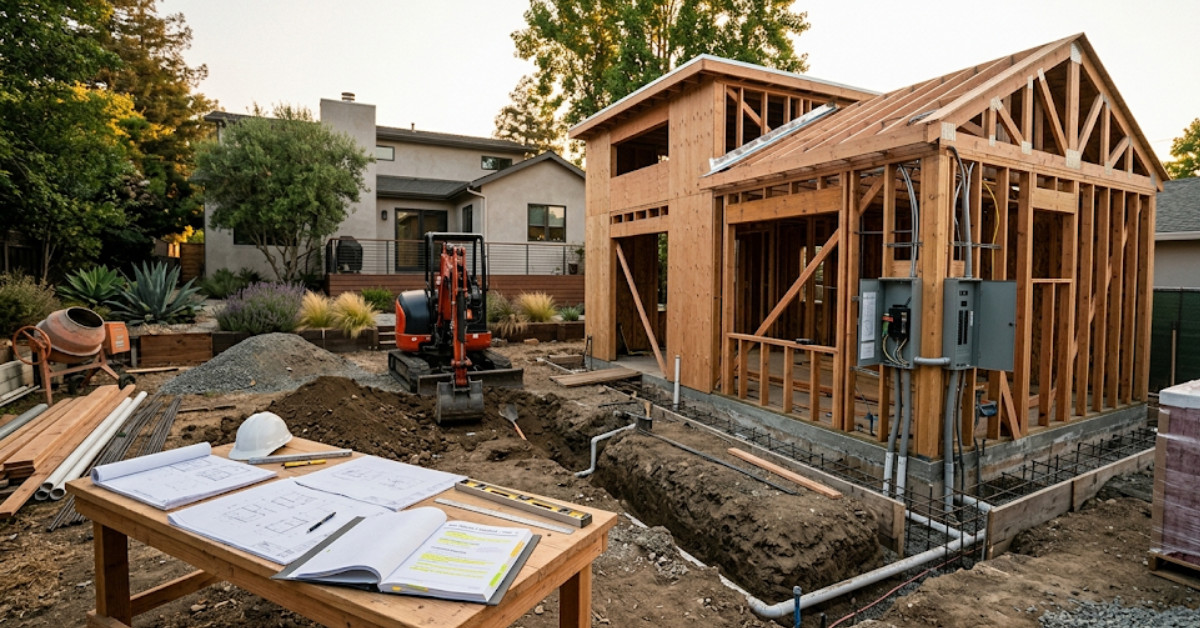
Site prep is one of the biggest sources of unexpected expense, especially on older or sloped California lots. What looks like a flat backyard can hide rocky soil, drainage issues, or buried debris from past structures.
Common site prep surprises include:
- Soil testing and grading work
- Rock removal or hard soil conditions ($5,000 to $20,000)
- Tree removal and root system clearing
- Sloped lot adjustments and retaining walls
- Demolition of old sheds, patios, or concrete pads
Utility Connection and Upgrade Surprises
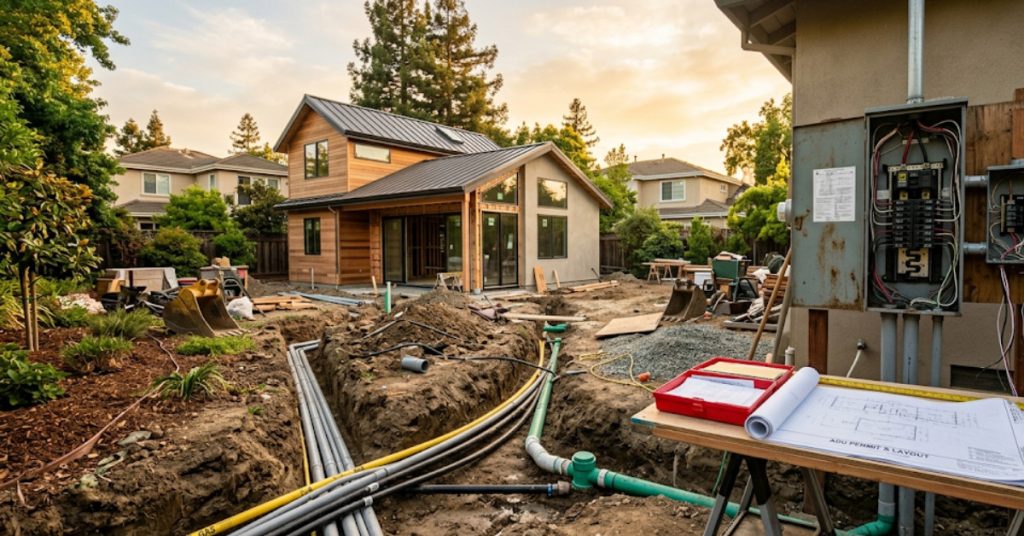
Utility work is where many ADU budgets fall apart. If your main home’s electrical panel can’t support a new unit, you’re looking at a costly 200-amp service upgrade. If your sewer line sits far from the new build site, trenching alone runs thousands.
Typical utility cost surprises in California ADU projects:
- Electrical panel upgrades to 200-amp service
- Sewer line extensions or new connections
- Water meter upsizing
- Gas line installation
- Separate utility metering setup
- Total utility upgrades often run $5,000 to $15,000
Permit and Impact Fees You Didn’t See Coming
California’s SB 13 waives many impact fees for ADUs under 750 square feet, but bigger units still get hit with stacked fees from multiple agencies. Some cities charge school district fees, park fees, plan check fees, and inspection fees on top of the base building permit.
In Los Angeles County, total permit fees run $4,000 to $6,000. In San Diego, they range from $6,500 to $21,000 depending on size. Always ask your city for a full itemized fee breakdown before signing anything.
Foundation and Structural Surprises
Your soil report can change everything. If testing shows expansive clay, poor compaction, or seismic concerns, your foundation design may need to be reworked entirely.
Foundation-related expenses that catch homeowners off guard:
- Deeper or reinforced foundations from soil reports
- Seismic retrofitting requirements
- Foundation type changes (slab vs raised)
- Drainage and waterproofing systems
- Additional structural engineering revisions
Design Changes and Upgrades Mid-Project
This category is usually on the homeowner, not the builder. Once framing goes up and you can walk the space, the temptation to upgrade finishes, change the layout, or add features hits hard. Every change order adds cost and time.
Common mid-project upgrade traps include premium flooring swaps, custom cabinetry, smart home systems, and layout tweaks after walls are already framed. Locking in design decisions before construction starts is the single best way to avoid this trap.
Code Compliance and Inspection Surprises
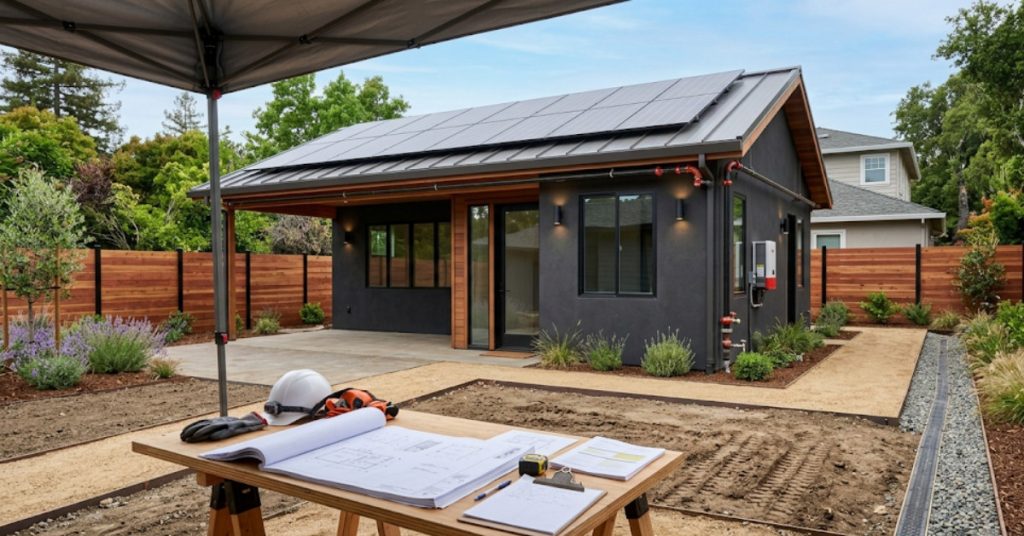
California has some of the strictest building codes in the country, and ADU projects must meet all of them. Title 24 energy compliance, fire sprinkler rules, and solar mandates all add costs that aren’t always clear in early quotes.
Compliance costs that frequently surprise homeowners:
- Fire sprinkler systems ($3,000 to $8,000)
- Title 24 energy compliance reports and upgrades
- Solar panel requirements for new builds
- Accessibility upgrades for certain ADU types
- Re-inspections after failed initial checks
Landscaping and Exterior Work
Most ADU quotes stop at the building itself. But once construction wraps, you still need pathways, fencing, drainage, and yard restoration. Heavy equipment tears up landscaping, and you’ll likely need to replant, regrade, or repair what got damaged.
Exterior work that often falls outside the original quote:
- Pathways, walkways, and driveways
- Privacy fencing
- Drainage and erosion control
- Yard restoration after construction
- Outdoor lighting and exterior finishes
Insurance, Financing, and Soft Costs
Soft costs typically account for 10 to 20% of your total ADU budget, but they don’t always show up clearly in early estimates. Construction loan interest, builder’s risk insurance, and engineering revisions add up fast.
Property tax reassessment is another one to watch. Adding an ADU doesn’t trigger reassessment of your main home, but the ADU itself gets assessed at market value, raising your annual tax bill.
How to Budget for the Unexpected
Smart ADU planning starts with the right contingency buffer. The industry standard is 10 to 20% on top of your base construction cost, and experienced California builders often suggest 15 to 25% for projects with challenging sites.
Ways to keep your ADU budget on track:
- Get a full site survey and soil report before signing
- Ask for an itemized fee breakdown from your city
- Lock in design decisions before framing starts
- Work with a builder offering transparent, fixed-price contracts
- Keep a 10 to 20% contingency reserve in cash, not in financing
At Nestadu, we believe homeowners deserve clarity from day one. Our concept-to-completion approach includes detailed site assessments and upfront pricing, so Nestadu clients know exactly what to expect at every phase.
Frequently Asked Questions
How much should I budget for unexpected ADU costs?
Plan for 10 to 20% above your base construction estimate. For challenging sites, bump that to 15 to 25%.
What is the most common hidden cost in ADU construction?
Utility upgrades. Electrical panel upgrades, sewer extensions, and water meter changes regularly catch homeowners off guard, often totaling $5,000 to $15,000.
Can I avoid impact fees on my ADU?
California’s SB 13 waives most development impact fees for ADUs under 750 square feet. Larger ADUs still face fees, so size matters when budgeting.
How long does it take to handle unexpected issues?
Most surprises add 2 to 6 weeks to your timeline. Major issues like failed soil tests or permit revisions can extend that further.
Planning Your ADU Budget the Right Way
Hidden costs are a normal part of California ADU construction, not a sign that something went wrong. The homeowners who finish on budget plan for surprises before they happen, work with experienced builders, and keep a healthy contingency reserve.
If you’re starting your ADU journey and want a clear, transparent estimate from a team that has built ADUs across California, Nestadu is here to help. Get a free consultation today and start your project with a realistic budget and zero surprises.