
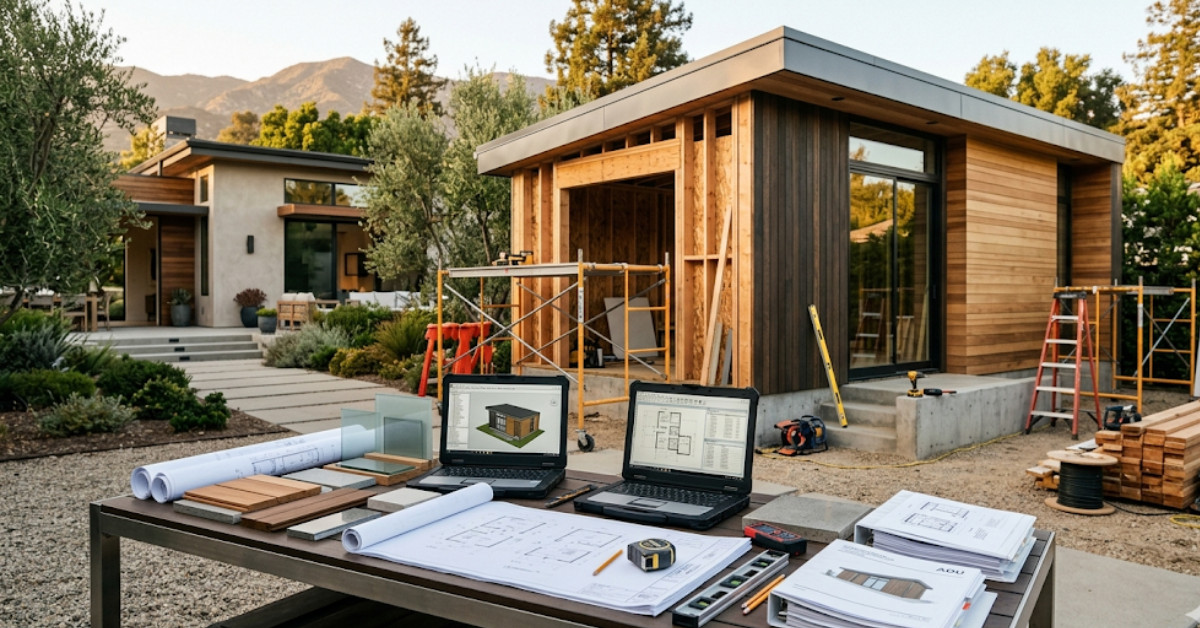
The wrong ADU team can turn a 6-month project into an 18-month nightmare. A great team gets it right because they bring four things together:
- Licensed construction with active CSLB credentials
- Strong in-house design paired with build experience
- Transparent itemized pricing, no hidden allowances
- Deep knowledge of California’s 2026 ADU laws
This Nestadu guide covers the signs of a real ADU team, the red flags, and the questions to ask before signing any contract.
Why the ADU Contractor-Designer Team Matters More Than You Think
Most ADU horror stories start the same way. A homeowner hires a designer first, then shops for a contractor months later, and the two never coordinate. Plans get redrawn, permits get rejected, and the budget grows 20% or more.
A unified team avoids this. When designers and contractors work under one roof, decisions happen faster and one person stays accountable from concept to keys.
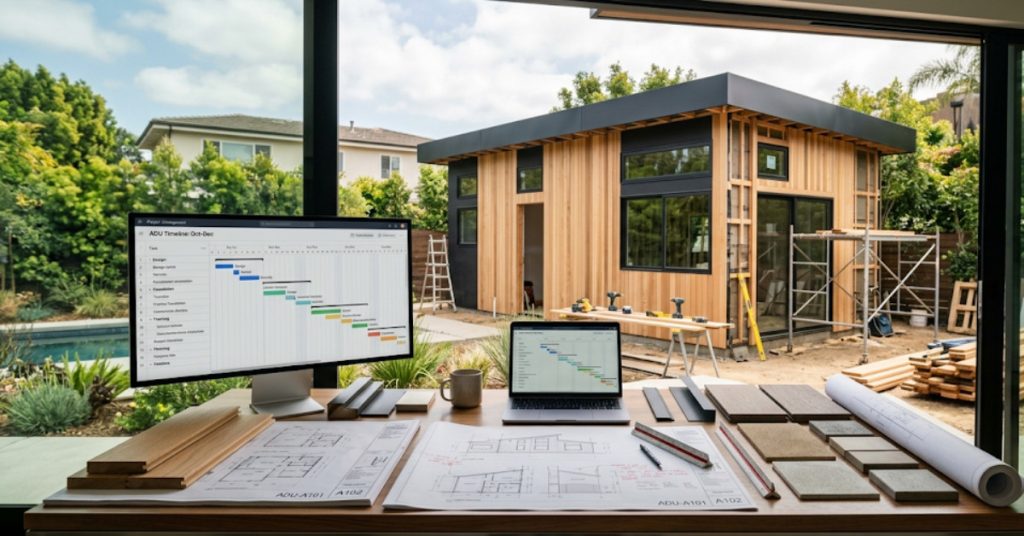
8 Signs of a Great ADU Contractor Designer Team
Not every builder calling themselves an “ADU specialist” is the real thing. Here are eight signs that separate serious teams from contractors just adding ADUs to their service list.
1. Proper California Licensing and Insurance
Every contractor must hold an active CSLB license matching the business name. Workers’ compensation and general liability insurance are non-negotiable.
Verify the basics before anything else:
- Active CSLB license (Class B General Building is most common)
- Workers’ comp coverage for all crew
- General liability insurance of at least $1 million
- License confirmed on the official CSLB website
2. Deep ADU-Specific Experience
A general remodeler who has built two ADUs is not the same as a team that has finished 50. ADU projects involve specific zoning rules and permit pathways that general contractors often miss.
Ask for real numbers, not vague claims. A strong team shares project counts, city-specific permit experience, and references you can visit.
3. Integrated Design and Build Workflow
Design-build teams reduce the most common cause of ADU delays: the disconnect between what gets drawn and what gets built. One team, one contract, one point of contact.
- Faster decisions when site conditions change
- Fewer change orders during construction
- Plans drawn with construction reality in mind
- Single warranty for both design and build
4. Transparent Pricing With No Hidden Fees
A real ADU team gives you an itemized quote that covers site work, utilities, permits, and finishes. Vague allowances or missing line items are warning signs that the final bill will surprise you.
What a solid quote should include:
- Fixed prices for known scope and clear allowances for variables
- Payment schedule tied to milestones, not arbitrary dates
- Itemized site work, foundation, framing, and finishes
- Permit fees, utility hookups, and inspection costs
5. Permit Handling and City Coordination
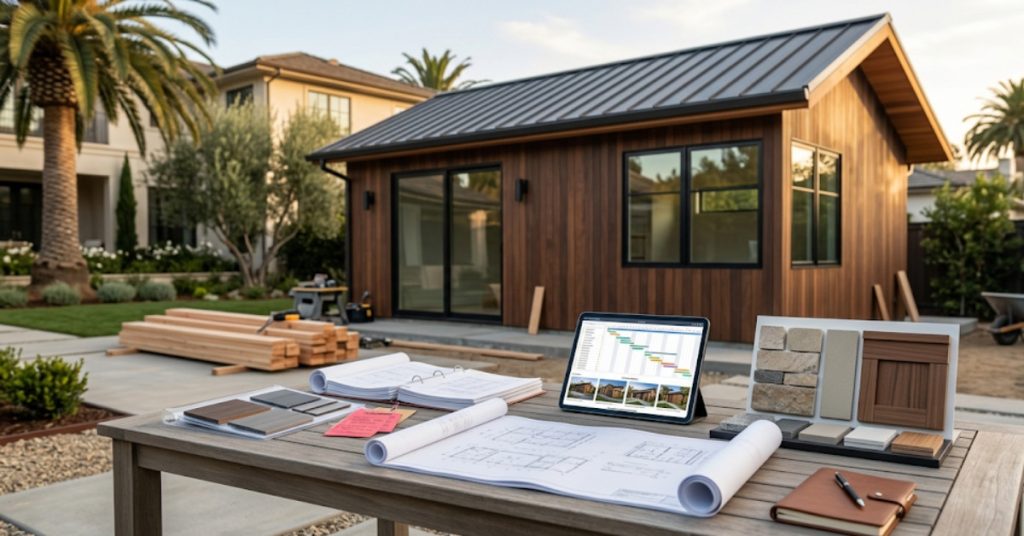
California’s 2026 ADU laws require local agencies to determine application completeness within 15 business days under SB 543. A good team uses these timelines and pushes back when cities miss deadlines.
The right team handles drawings, plan check corrections, and final inspection. They also know which cities use pre-approved plans, cutting permit time to 30 days.
6. Quality Craftsmanship and Material Standards
Quality shows up in details homeowners miss until move-in. Subcontractor vetting, materials, and warranty coverage signal a team built for the long term.
- Minimum 1-year workmanship warranty
- 10-year structural warranty where offered
- In-house or long-term subcontractor crews
- Reference projects you can visit in person
7. Clear Communication and Project Management
ADU construction takes 4 to 14 months. Without clear updates, you’ll spend half that time wondering what’s happening on your own property. Good teams use project portals, weekly updates, or scheduled check-ins so you always know what’s next.
8. Strong Reviews and a Real Portfolio
Reviews on Google, Yelp, and BBB tell you what working with the team feels like. Patterns matter more than any single review.
Look at a few sources together:
- Recent Google reviews from the past 12 months
- Photos of completed projects on the company website
- Permit records on city databases if available
- Direct referrals from past clients
Red Flags to Watch For
Some warning signs show up before you sign a contract. If you see any of these, walk away:
- No CSLB license number on quotes or contracts
- Verbal quotes only or refusal to itemize
- Pressure to sign within 24 to 48 hours
- Large upfront deposits before any work starts
- No designer on staff, everything subcontracted out
- Vague answers about permit timelines
Questions to Ask Before You Hire
A short list of the right questions reveals more than hours of research. Use these in your first meeting:
- How many ADUs have you completed in my city?
- Are design and construction handled by the same team?
- What’s included in your base price versus an allowance?
- Who pulls the permit and handles plan check corrections?
- What’s your average timeline, and what causes delays?
- What warranty do you offer on workmanship and structure?
How Nestadu Operates as a True Contractor-Designer Team
At Nestadu, design and construction live under one roof. Our licensed contractors and in-house designers work together from site visit through final inspection.
Every Nestadu project includes:
- Licensed California contractors and in-house designers
- Transparent itemized pricing with no hidden allowances
- Full permit handling under 2026 California ADU laws
- Single point of contact from concept to completion
- Warranty on workmanship and structural elements
Frequently Asked Questions
Do I need to hire an architect separately for an ADU?
Not if you work with a design-build team. Most ADU projects use in-house designers, which saves time and cost.
What license should an ADU contractor have in California?
A Class B General Building Contractor license is standard. Verify it on the CSLB website before signing.
How long should an ADU project take with a good team?
Most custom builds run 6 to 9 months from contract to move-in. Prefab units run 3 to 6 months.
Is design-build cheaper than hiring separate firms?
Usually yes. Design-build cuts coordination costs, reduces change orders, and shortens timelines.
Choosing the Right Team for Your ADU Project
The right ADU team makes the difference between a smooth project and a stressful one. Licensed, experienced, transparent, and communicative are the four traits that matter most. Reach out to Nestadu for a free consultation when you’re ready.