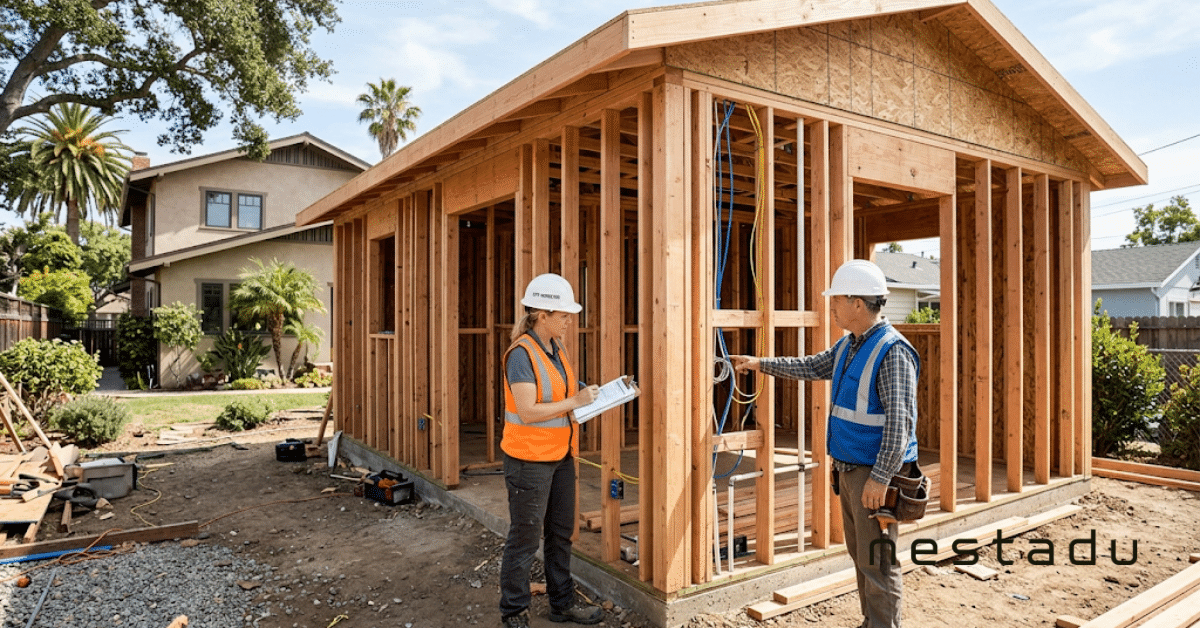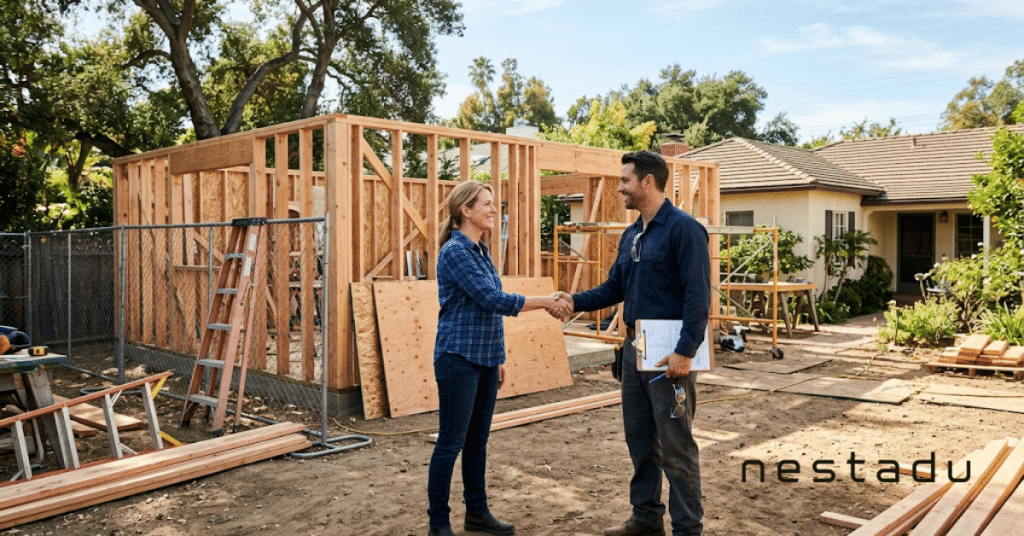
To vet an ADU builder, verify their contractor license on the CSLB website, confirm they carry insurance and a bond, and check they have actually built ADUs, not just general projects. Then review real finished units, compare written bids, and read the contract closely before you sign. Our custom ADU builds are handled by a licensed, insured California team.
Key Takeaways
- Start with the license. Confirm it is active on the CSLB site before anything else.
- Insurance protects you. Check for workers compensation and a contractor bond.
- ADU experience is different. A builder who has done many ADUs knows the permit traps.
- Get everything in writing. California caps your deposit and requires clear contract terms.
- Red flags are loud. Big cash deposits and verbal-only quotes mean walk away.
Start With the License
Every legitimate ADU builder in California holds a contractor license. You can confirm it yourself in two minutes. Use the Check a License tool on the CSLB website and search the builder’s name or license number. Our guide on how to verify a builder’s license goes into more detail.
Look for three things. The license must say Active, not expired or suspended. It should carry a Class B general building classification, which covers ADU construction. And the record should show no serious disciplinary actions. If a builder cannot or will not give you a license number, stop there.
Nestadu holds CSLB license 1117837 and HCD registration DL1611393. A real builder lists these openly, because they want you to check.
Check Insurance and Bonding
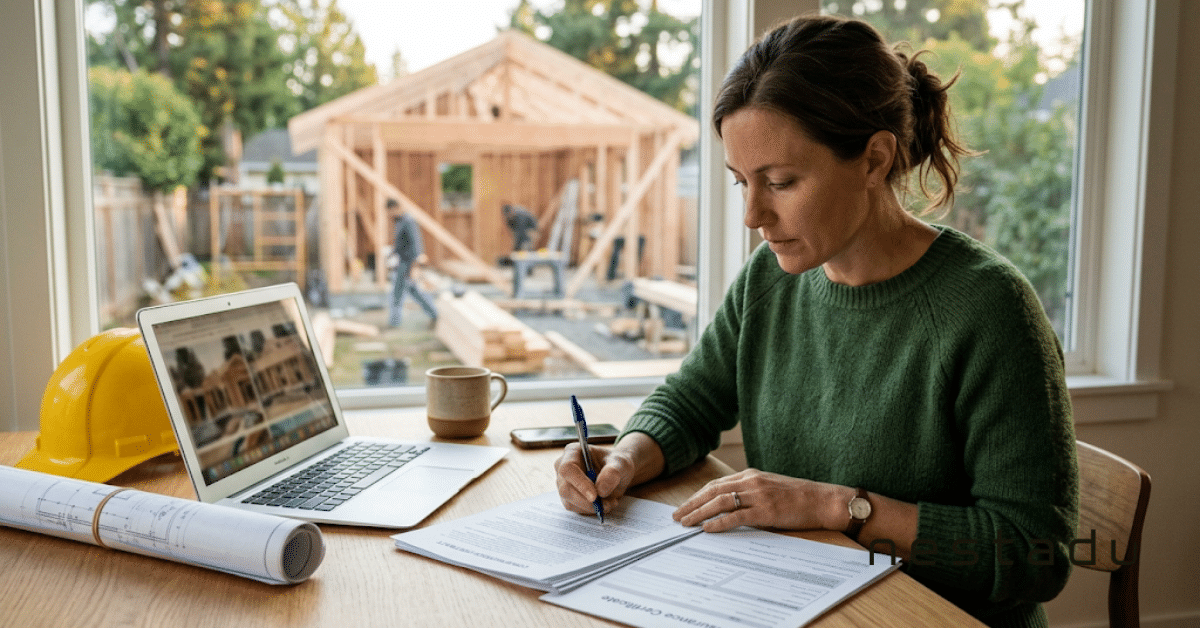
A license is the floor, not the ceiling. Next, confirm the builder is insured and bonded. This is what protects your money and your property if something goes wrong on your lot.
California requires licensed contractors to carry a contractor bond, currently $25,000, and the CSLB record shows whether it is in place. You also want proof of workers compensation and general liability insurance. If a worker is hurt on your property and the builder has no workers comp, you can be the one left paying. Ask for current certificates, not promises.
Look at ADU-Specific Experience
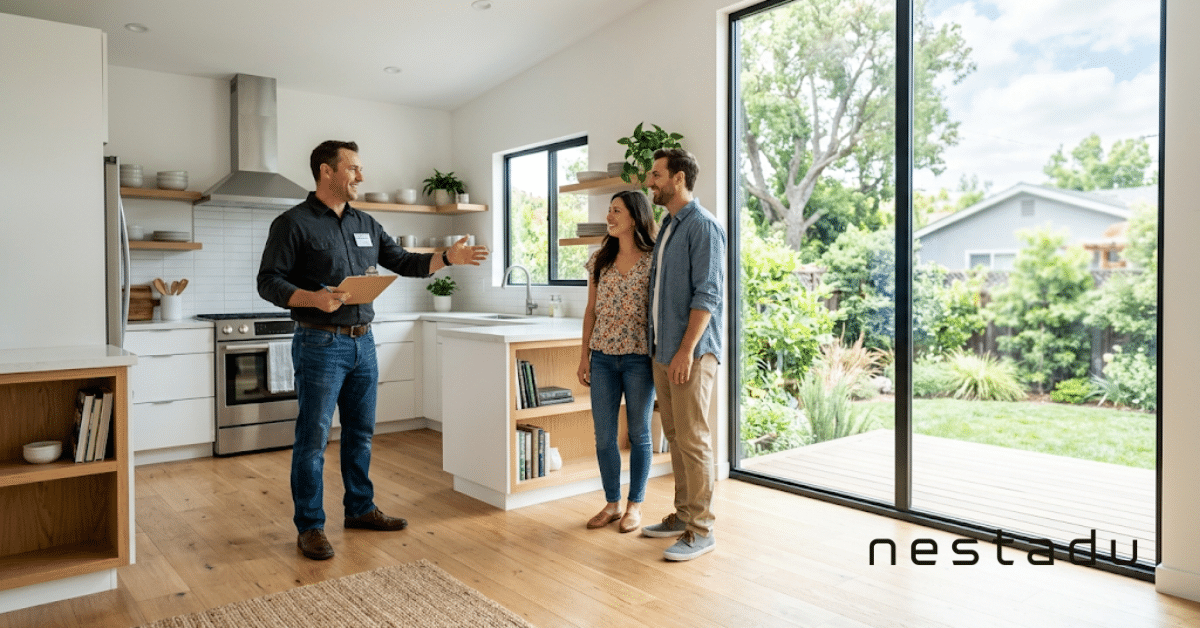
An ADU is not just a small house. It has its own permit rules, setback limits, and utility connections, and the rules keep changing under California’s HCD rules. A builder who frames houses but has never done an ADU will learn on your dime.
Ask how many ADUs they have completed, and specifically in your city, since local permit offices differ. Deep experience shows up in results. One of our custom builds sat on a narrow, steeply sloped lot, and it still cleared permitting on the first submittal. That only happens when a team has done it many times before.
If you are weighing a specialist against a generalist, our guide on ADU builder vs contractor breaks down the difference.
A Step-by-Step Vetting Checklist
Work through these in order. Each step narrows your list to builders you can trust.
- Verify the license. Search the CSLB site and confirm it is active with a clean record.
- Confirm insurance and bond. Ask for current workers comp, liability, and bond certificates.
- Count their ADU builds. Ask for the number of finished ADUs, not total projects.
- Review permits and local work. Confirm they have built in your city and pulled the permits themselves.
- See a finished unit. Visit a completed ADU and talk to that homeowner if you can.
- Compare written bids. Get detailed, itemized quotes from at least three builders.
- Read the contract. Check the timeline, payment schedule, and warranty before you sign.
What to Verify and Where
| What to check | Where to check it | Why it matters |
| Contractor license | CSLB (cslb.ca.gov) | Confirms they can legally build |
| Workers comp and bond | CSLB license record | Protects you if a worker is hurt |
| ADU experience | Past projects and references | ADUs have their own permit rules |
| Reviews and complaints | Google, BBB, CSLB record | Shows the real track record |
| Contract terms | Your own careful review | California caps deposits by law |
Red Flags to Walk Away From
Some warning signs should end the conversation. The state’s own CSLB hiring tips line up with what we see in the field.
- A large upfront deposit. California law caps a home improvement deposit at 10 percent or $1,000, whichever is less.
- No license number. Missing from their site, truck, or paperwork, or expired when you check.
- Verbal-only quotes. No itemized written bid means no accountability.
- No proof of past ADUs. They cannot name a single finished unit or owner.
- High-pressure sales. Today-only pricing or a push to sign fast.
- Dodging permits. Any suggestion to build without pulling permits.
Not sure if a quote looks right? Call Nestadu at (888) 637-8238 and we will tell you honestly, even if the answer is to keep looking.
Questions to Ask Before You Sign
The right questions reveal a lot fast. Ask every builder the same list and compare the answers.
- How many ADUs have you completed in my city?
- Can I visit a unit you built and speak with that owner?
- Who handles the permits and inspections, you or me?
- What is your written timeline and payment schedule?
- What warranty do you offer, and for how long?
A confident, experienced builder answers these easily. Hesitation or vague answers tell you what you need to know. You can see how we handle each of these in our build process.
Frequently Asked Questions
What are red flags when hiring a contractor?
The biggest red flags are a large cash deposit, no verifiable license, verbal-only quotes, and pressure to sign fast. In California, a home improvement deposit is capped at 10 percent or $1,000. Any builder asking for more, or dodging permits, is one to avoid.
How do I verify a California contractor’s license?
Go to the CSLB website and use the Check a License tool. Search by name or license number. Confirm the status says Active, note the classification, and review any disciplinary history. The record also shows whether the bond and workers compensation are current.
How many ADUs should a builder have completed?
There is no magic number, but you want a builder who has finished several ADUs, ideally in your city. ADUs have unique permit and utility rules, so real ADU experience matters more than total years in general construction.
Should I hire an ADU specialist or a general contractor?
Both can work if they are licensed and experienced with ADUs. A specialist usually knows the permit process and design limits better, which can save time and money. A general contractor can be fine for a simple build. The track record matters more than the title.
Choose an ADU Builder You Can Trust
Vetting a builder takes an afternoon, and it protects the largest investment many homeowners ever make in their backyard. Check the license, confirm the insurance, demand real ADU experience, and read the contract. Do that, and you avoid the stories that fill the online forums.
Call Nestadu at (888) 637-8238 for a free 15-minute consultation. We are happy to show you our license, our finished units, and our contract up front. You will talk with our team, not a call center. We serve the Bay Area, Sacramento, Los Angeles, and San Diego. You can also request a free ADU consultation online.
Nestadu
100 Shoreline Hwy, Suite 100, Building B
Mill Valley, CA 94941-3645
Phone: (888) 637-8238
Email: info@nestadu.com
Hours: Mon to Fri 1:00 PM to 4:00 PM, Sat to Sun Closed
Service area: California (Bay Area, Sacramento, Los Angeles, San Diego)
License: CSLB 1117837 | HCD DL1611393
About the author: Bret Ashworth is the CEO of Nestadu, a licensed California general contractor building custom and prefab ADUs across the state. You can meet our team to learn more.