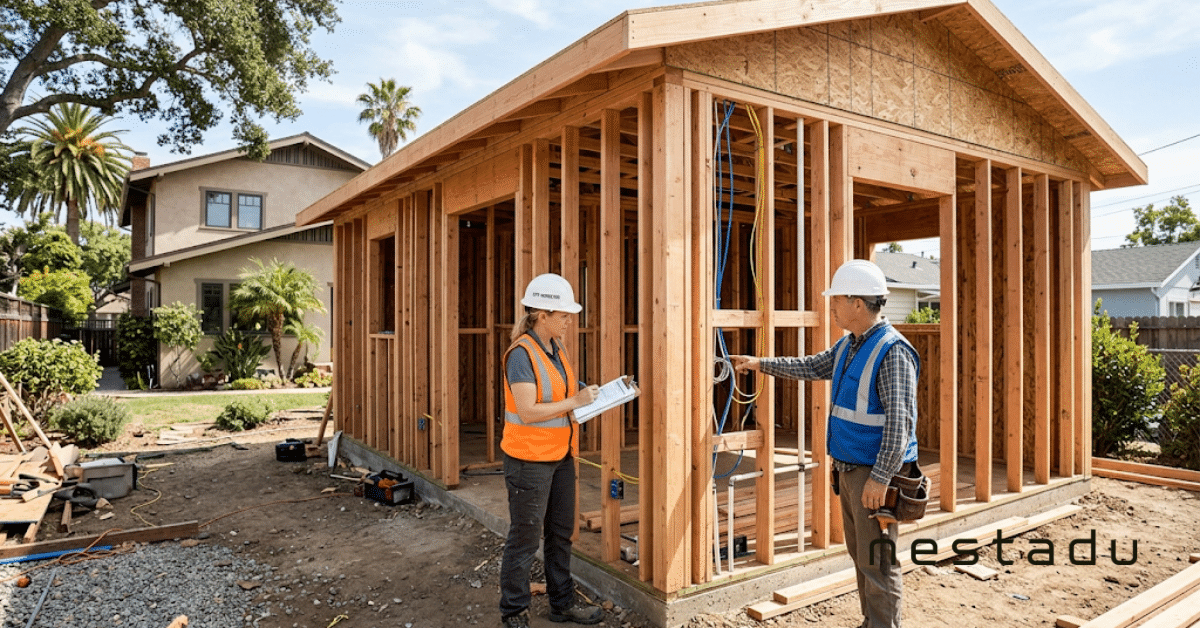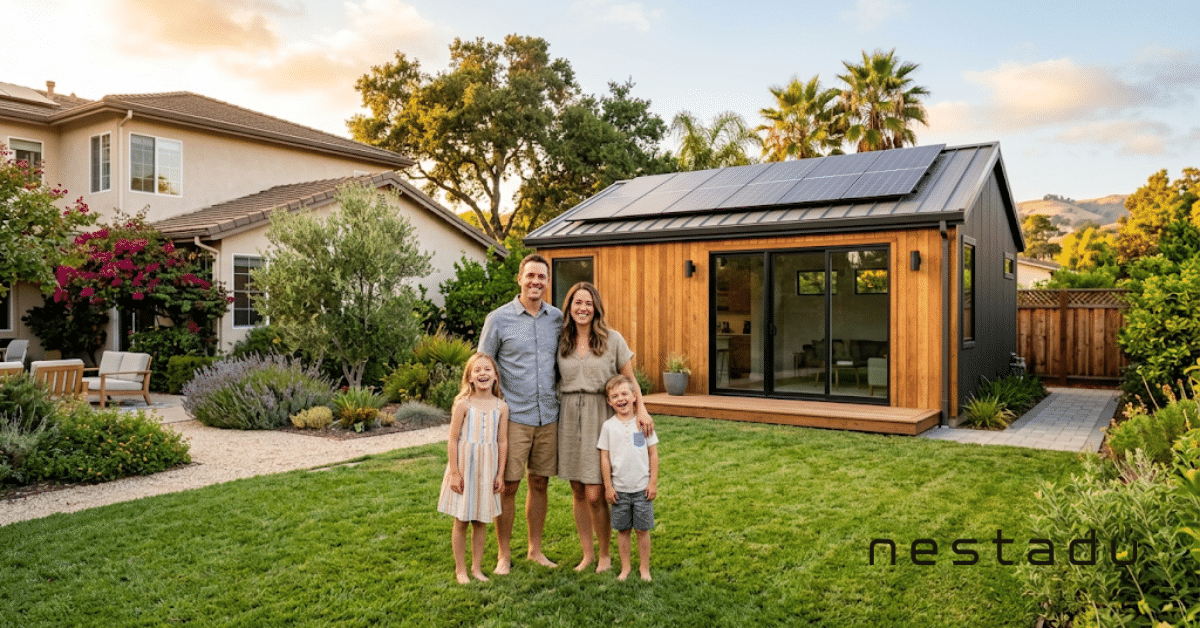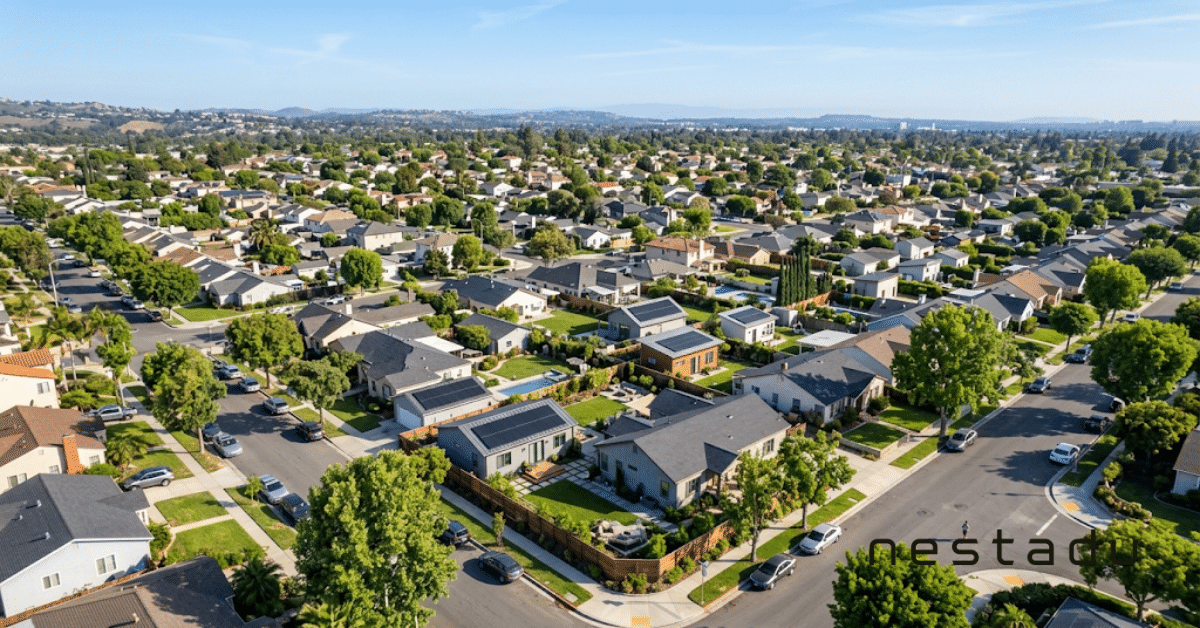
ADUs benefit homeowners in four big ways. They raise your property value, bring in rental income, let you house family for far less than assisted living, and give you flexible space on land you already own. They also carry real tax advantages. Our custom ADU designs are built to deliver all of it.
Key Takeaways
- Value goes up. An ADU adds square footage and income appeal that buyers pay more for.
- Rent pays you back. A monthly check can cover the loan on the unit itself.
- Family stays close. Housing relatives at home costs far less than assisted living.
- Taxes work in your favor. Only the ADU is reassessed, and rentals earn deductions.
- The space flexes. One unit changes use as your life changes.
Your Property Value Goes Up
The clearest benefit is value. An ADU adds permanent, livable square footage to your property, and it adds something a bedroom cannot: a built-in income stream. Both make your home worth more and easier to sell. See what changed for homeowners who built ADUs in our earlier post.
Buyers now actively search for homes with a legal second unit. It opens the door to investors, multi-generational families, and remote workers at once. Research from UC Berkeley’s Terner Center ties the ADU boom directly to this demand, as ADUs now make up a large share of new housing the state approves.
The key word is permitted. A legal, code-compliant ADU adds value and widens your buyer pool. An unpermitted one can do the opposite, which is why the build quality and the paperwork both matter.
A New Stream of Rental Income
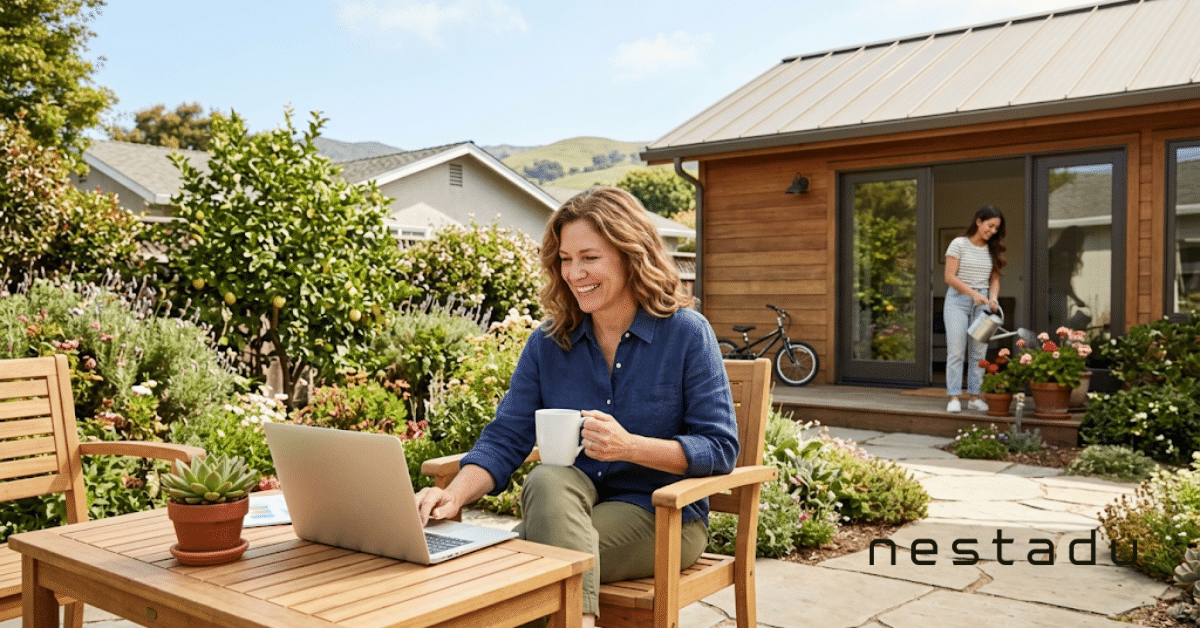
For many homeowners, the rent is the whole point. A well-placed ADU in a strong California market can bring in a meaningful monthly check that offsets your mortgage and often repays the loan on the unit over time.
You also control how you rent. A long-term tenant gives you steady, predictable income. A mid-term rental to a traveling nurse or student can pay more. Or you can pause renting entirely and keep the space for family. That flexibility is a benefit in itself. Pairing the income with the right loan is where it comes together, and our ADU financing options are built around exactly that.
Because the income is predictable, it also strengthens your overall financial position. It is a second asset working for you on property you already own.
Housing Family Without the Cost of Moving
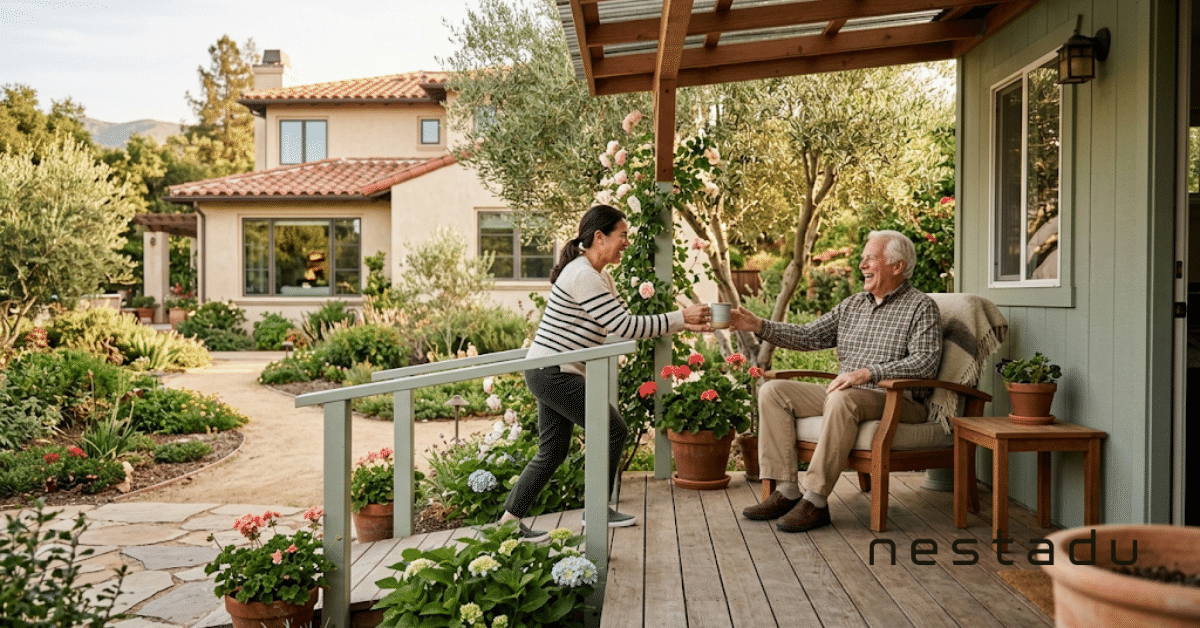
Not every benefit shows up on a spreadsheet. An ADU lets you keep family close while everyone keeps their own front door. Aging parents stay near help without moving into a facility, and adult children get an affordable first step while they save.
The savings here are real. Assisted living in California often runs several thousand dollars a month. Housing a parent in an ADU replaces that recurring cost with a one-time build that you still own afterward. State guidance in California’s HCD guide even highlights ADUs as homes for relatives who need care or a live-in aide.
One family came to us so an aging grandmother could live beside them on a narrow, sloped lot. We designed a custom unit that fit the slope, giving her a home steps from family in her own space. That is a benefit no rental figure captures.
Real Tax Advantages
Taxes are kinder to ADU owners than most people expect. Under California’s Prop 13 rules, the county adds only the value of the new unit to your assessment. The house you already own keeps its current tax base.
If you rent the unit, it also becomes an income property. That lets you deduct many costs, including repairs, insurance, depreciation, and a share of utilities, under IRS rental property rules. Over the life of a rental, those deductions add up.
Every tax situation is different, so check the details with a tax professional. In short, renting the unit turns it into an income property with real write-offs.
Flexible, Low-Maintenance Space You Already Own
An ADU uses land you already have, so you skip the biggest cost in real estate: buying more property. You add a home without a new lot, a new street, or a new commute.
New construction is also easier to own. A modern ADU is built to current energy codes with efficient systems, good insulation, and new appliances, so upkeep and utility bills stay low. And because the unit is self-contained, it can shift from office to guest suite to rental with little more than new furniture.
ADU Benefits at a Glance
| Benefit | What it means for you |
| Higher property value | Added square footage and income appeal to buyers |
| Rental income | A monthly check that can cover the loan |
| Family housing | Keep relatives close for far less than assisted living |
| Tax advantages | Only the ADU is reassessed; rentals earn deductions |
| Flexible space | One unit that changes use as life changes |
| Lower upkeep | New, efficient build with modern systems |
Curious what these benefits add up to on your property? Call Nestadu at (888) 637-8238 and we will run the numbers with you.
The Honest Trade-Offs
No upgrade is all upside, and being honest helps you plan. The main trade-off is the upfront cost. Building a full unit is a real investment, and it takes months from design to move-in.
You also take on landlord duties if you rent, and your property tax bill rises by the value of the new unit. For most homeowners, the rental income, added value, and family flexibility outweigh these over time. But the first-year cost is real, and you should plan for it rather than be surprised by it.
Frequently Asked Questions
What is the ROI on an ADU?
It varies by market, but many homeowners recover their investment through rental income over several years, then keep earning. On top of that, the unit raises your property value. Between monthly rent and resale value, a well-built ADU in a strong California market is usually a sound long-term return.
What are the tax benefits of an ADU?
Only the new ADU is reassessed for property tax, not your whole home. If you rent the unit, you can deduct many expenses, including repairs, insurance, and depreciation. Confirm the specifics with a tax professional, since the benefits depend on how you use the space.
How do you generate income with an ADU?
Most owners rent to a long-term tenant for steady monthly income. You can also offer mid-term rentals to traveling workers or students, which often pay more. Some owners move into the ADU and rent the larger main house. The right choice depends on your goals and your market.
Is it harder to sell a house with an ADU?
Usually not. Many buyers see a legal second unit as a bonus, whether for rent, family, or a home office. The unit must be permitted and built to code, though. An unpermitted ADU can scare off buyers and lenders.
What are the downsides of an ADU?
The main downsides are upfront cost, several months of construction, and a higher property tax bill. You also take on landlord duties if you rent it. For most homeowners these trade-offs are outweighed by the income, value, and flexibility an ADU adds over time.
Turn Your Backyard Into an Asset
An ADU is one of the few home projects that pays you back, houses the people you love, and gives you options for years. Value, income, family, and flexibility all come from one build on land you already own.
Call Nestadu at (888) 637-8238 for a free 15-minute consultation and we will show you what an ADU could do for your property and your budget. You will talk with our team, not a call center. We serve the Bay Area, Sacramento, Los Angeles, and San Diego. You can also request a free ADU consultation or browse our ADU floor plans online.
Nestadu
100 Shoreline Hwy, Suite 100, Building B
Mill Valley, CA 94941-3645
Phone: (888) 637-8238
Email: info@nestadu.com
Hours: Mon to Fri 1:00 PM to 4:00 PM, Sat to Sun Closed
Service area: California (Bay Area, Sacramento, Los Angeles, San Diego)
License: CSLB 1117837 | HCD DL1611393
About the author: Bret Ashworth is the CEO of Nestadu, a licensed California general contractor building custom and prefab ADUs across the state. You can meet our team to learn more. This article is general information, not tax or financial advice.