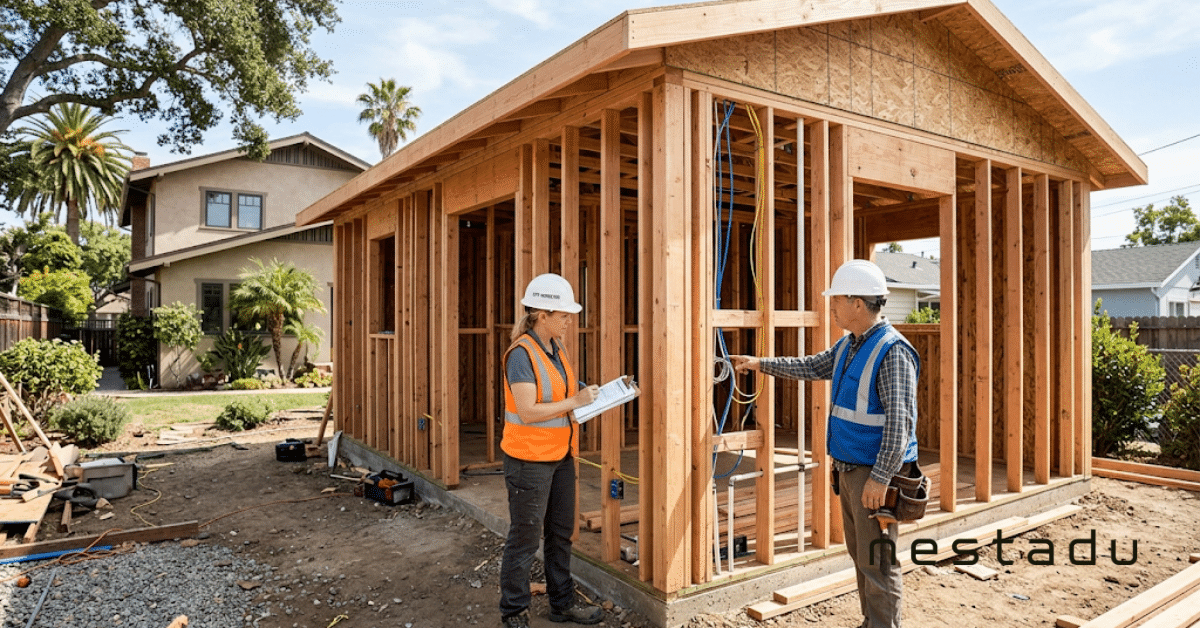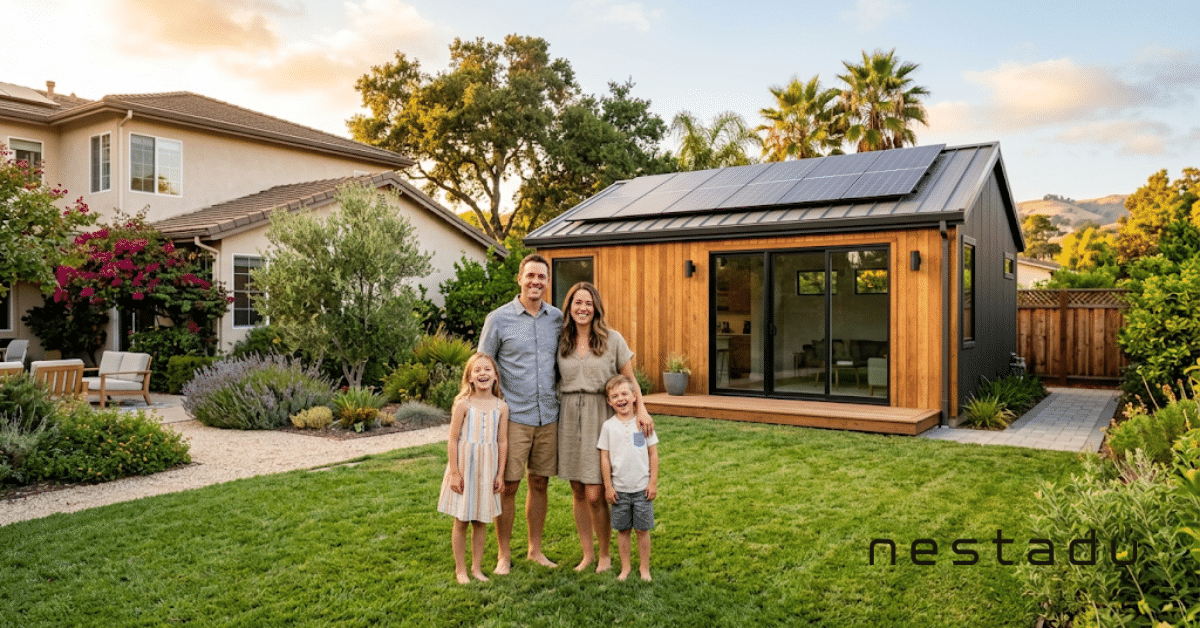
Zoning laws affect ADU construction by setting where and how big your ADU can be, but in California state law now limits how much cities can restrict you. Local rules on setbacks, height, and lot coverage still apply, yet cities cannot ban ADUs on most residential lots. Our build process handles the zoning and permits for you.
Key Takeaways
- State law comes first. California cities can regulate ADUs but cannot prohibit them on most residential lots.
- Setbacks shrank. The state caps required side and rear setbacks at about 4 feet.
- Size is protected. You can build at least 800 square feet by right on most lots.
- Approval is faster. ADU permits get ministerial review, often within 60 days.
- Local details still matter. Height, lot coverage, and fees vary by city, so confirm yours.
State Law Overrides Local Zoning
This is the biggest shift in ADU rules. For years, local zoning could block an ADU outright. Now California state law sets a floor that cities must follow. Cities can still regulate the details, but they cannot prohibit ADUs on most residential property. Our overview of California ADU zoning rules lists the main limits in one place.
The rules come from the state ADU statute, summarized in California’s HCD guidelines. ADU applications get ministerial review, which means no public hearing and no discretionary denial. Cities generally must approve or deny within 60 days.
That matters because it takes the guesswork out. If your project meets the state standards, a city usually cannot stop it with a zoning rule it invented. You can read the actual law in California’s ADU statute.
Why did this change? California faces a severe housing shortage, and ADUs add homes without new land or new roads. The state decided that local zoning was slowing a cheap, fast source of housing, so it stepped in and set clear statewide limits on what cities can require.
The Zoning Rules That Still Apply
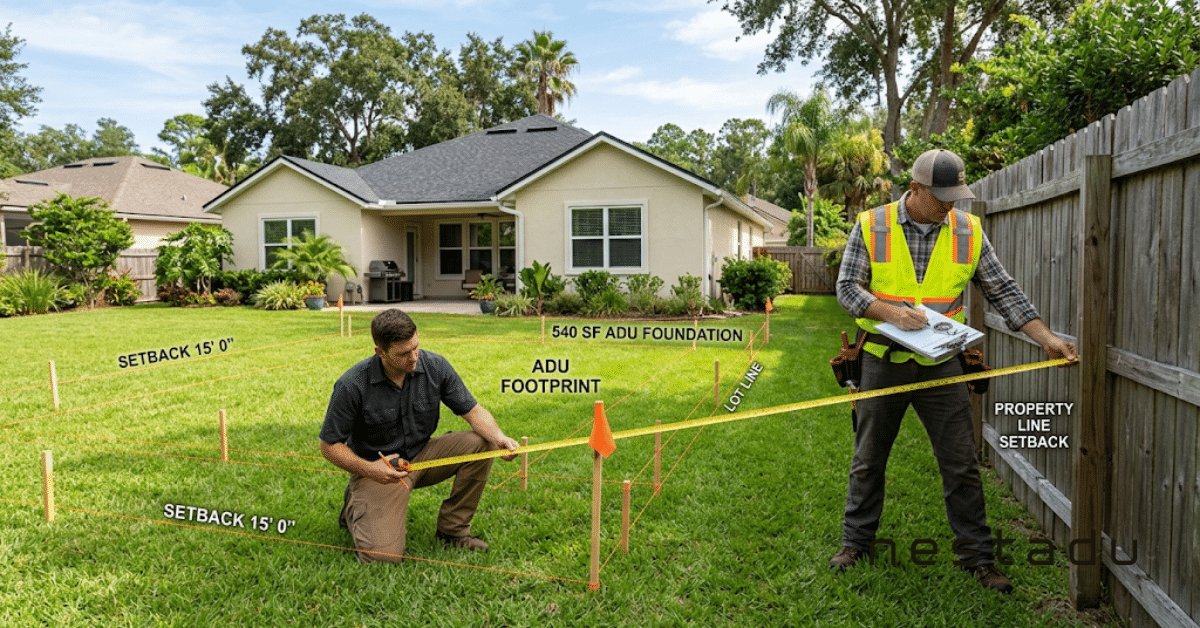
State preemption does not mean zoning disappears. Several rules still shape what you can build. They are just capped so a city cannot use them to say no.
Key California ADU Zoning Rules
| Rule | What the state allows |
| Minimum lot size | No minimum required for an ADU |
| Side and rear setbacks | As little as 4 feet |
| Height | Commonly 16 to 25 feet, by type and location |
| Size by right | At least 800 square feet on most lots |
| Impact fees | None for ADUs under 750 square feet |
| Approval | Ministerial, usually within 60 days |
These figures are the statewide baseline. Exact height limits, lot coverage caps, and design rules still vary by city and change over time, so always confirm the current numbers with your local planning department before you design.
Lot coverage is the rule that surprises people most. It limits how much of your lot can be covered by buildings. Even here, the state protects you. A city cannot use a lot coverage limit to block an ADU of at least 800 square feet, even if your yard is already close to the cap.
Where You Can Build an ADU
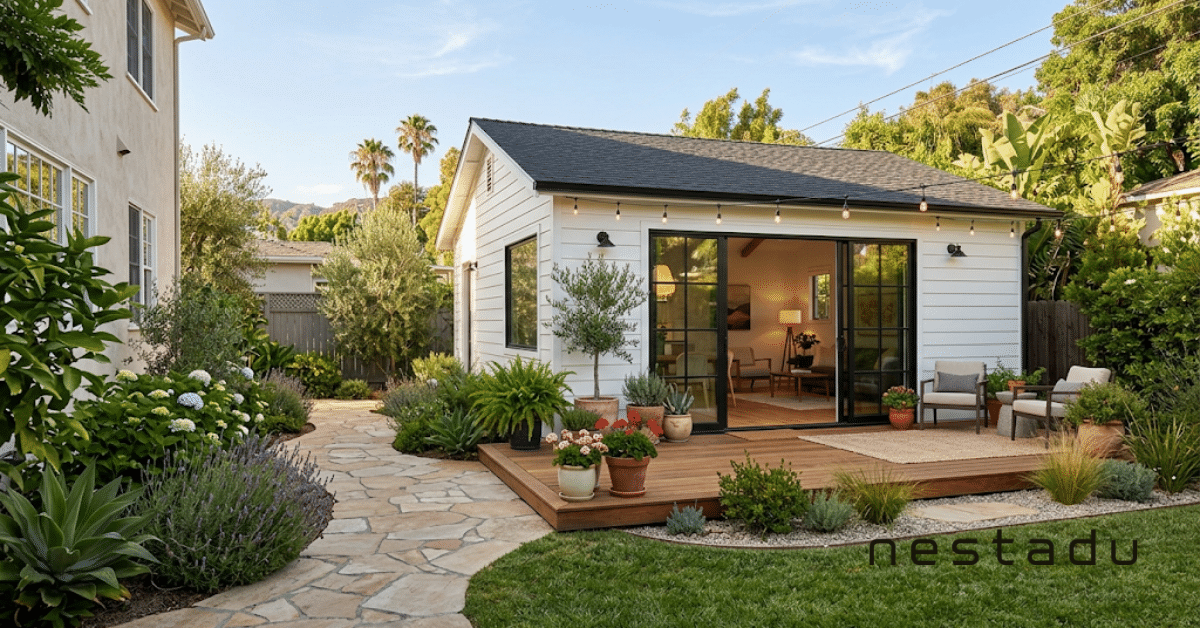
Most homeowners on a residential lot can build. If your property has a single-family home, state law generally lets you add one ADU plus one junior ADU. Lots with existing multi-family buildings can often add several units.
Zoning still decides the fine print, like where on the lot the unit sits and how tall it can be. Research from UC Berkeley’s Terner Center links the surge in ADU permits directly to the state loosening these zoning barriers. In practice, the question is rarely whether you can build, but how big and exactly where.
You also have more than one path to build. You can add a new detached unit in the backyard, attach one to the main house, or convert an existing structure like a garage. Garage conversions often face the easiest zoning path, since the footprint already exists and state law requires no added setback for a conversion in the same space.
A tight or oddly shaped lot is not a dealbreaker either. One property we worked on was narrow and steeply sloped, which would stop a standard plan. We designed the unit around the setbacks and the slope, and it cleared permitting on the first submittal.
Parking, Owner-Occupancy, and Other Limits
A few zoning rules used to kill ADU projects. State law has softened most of them.
Parking is the big one. Cities cannot require extra parking for an ADU within half a mile of public transit. For many urban and suburban lots, that wipes out the parking demand that once blocked a build. Owner-occupancy rules, which once forced you to live on-site, have been permanently removed for ADUs, so you can rent both the main house and the unit. Junior ADUs are the exception and still require the owner to live on site.
What remains are health and safety basics, like fire access, utility connections, and building code compliance. Those are not zoning tricks. They keep the unit safe, and a good builder plans for them from day one so they never become a surprise.
Common Zoning Mistakes to Avoid
Most zoning problems are self-inflicted. These are the ones we see trip up homeowners most often.
- Assuming the old rules apply. Many homeowners still think a city can simply say no. The state floor changed that.
- Designing before checking setbacks. Draw the plan to fit the rules, not the other way around.
- Ignoring height near the property line. Height limits often tighten close to a neighbor’s lot.
- Oversizing past the fee line. Crossing 750 square feet can trigger impact fees.
- Skipping the local ADU page. Every city publishes its own specifics, and they differ.
How to Check Your Property’s Zoning
Before you design, confirm what your lot allows. Work through these steps in order.
- Find your zoning designation. Look up your parcel on your city or county planning website.
- Confirm it is residential. Single-family and multi-family zones almost always qualify for an ADU.
- Check the local ADU page. Most California cities publish their own ADU rules and size limits.
- Note the constraints. Write down setbacks, height limits, and any lot coverage cap.
- Verify fees. Confirm whether impact fees apply based on your planned size.
- Ask a builder to review. An experienced ADU builder reads these rules every day.
Not sure how your zoning reads? Call Nestadu at (888) 637-8238 and we will check your parcel with you.
Frequently Asked Questions
Can I build an ADU on my property in California?
In most cases, yes. State law lets homeowners on residential lots add an ADU, and usually a junior ADU too, even if local zoning once said no. The details depend on your setbacks, height limits, and lot size, but an outright ban on most residential property is no longer allowed.
Do zoning laws set a minimum lot size for an ADU?
No. California state law bars cities from imposing a minimum lot size for an ADU. Your lot still has to fit the unit within the required setbacks and any lot coverage limit, but a small lot alone cannot be used to deny your project.
How close to the property line can an ADU be?
State law allows side and rear setbacks as small as 4 feet for an ADU. If you convert an existing garage in the same footprint, no added setback is required. Front setbacks and other rules still apply, so confirm the exact numbers for your parcel with your local planning department.
What zoning is needed for a tiny home versus an ADU?
An ADU is a permitted permanent structure on a foundation, allowed under state ADU law on most residential lots. A tiny home on wheels is usually treated as a vehicle or temporary structure, which many cities restrict. If you want a permanent, legal backyard home, an ADU is the clearer path.
Does zoning approval take a long time?
Usually not anymore. ADU applications get ministerial review, meaning no public hearing. Cities generally must approve or deny a complete application within 60 days. Delays usually come from incomplete plans, which is why working with an experienced ADU builder speeds things up.
Build Within the Rules, Without the Headache
Zoning still shapes every ADU, but in California it rarely stops one anymore. The key is knowing which rules are fixed, which are capped by the state, and how your specific lot reads. Get that right and the permit follows.
Call Nestadu at (888) 637-8238 for a free 15-minute consultation and we will walk your zoning and design options together. You will talk with our team, not a call center. We serve the Bay Area, Sacramento, Los Angeles, and San Diego. You can also request a free ADU consultation or browse our ADU floor plans online.
Nestadu
100 Shoreline Hwy, Suite 100, Building B
Mill Valley, CA 94941-3645
Phone: (888) 637-8238
Email: info@nestadu.com
Hours: Mon to Fri 1:00 PM to 4:00 PM, Sat to Sun Closed
Service area: California (Bay Area, Sacramento, Los Angeles, San Diego)
License: CSLB 1117837 | HCD DL1611393
About the author: Bret Ashworth is the CEO of Nestadu, a licensed California general contractor building custom and prefab ADUs across the state. You can meet our team to learn more. This article is general information, not legal advice. Confirm current rules with your local planning department.