
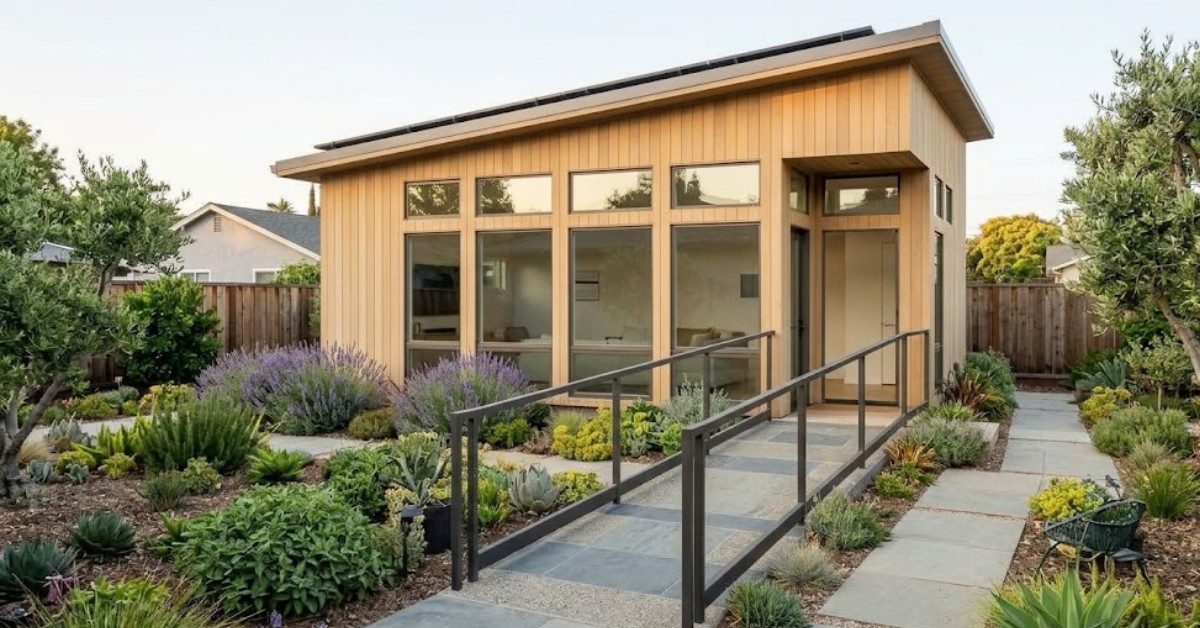
For many California families, building an ADU is not just about rental income or added square footage. It is about keeping aging parents or disabled family members close, comfortable, and genuinely independent. That goal requires a different kind of planning conversation than a standard ADU build.
ADU accessibility features for seniors and disabled residents are most effective and least expensive when built into the design from the start. Adding these same features as renovations after construction costs significantly more and often requires tearing out completed work.
Why ADU Accessibility Features Planning Belongs in the Design Phase
Accessibility features that are built to correct dimensions during construction add relatively little to the overall project cost. The same features retrofitted into a completed unit can cost two to three times more and produce a compromised result.
There is also a broader appeal worth noting. An accessible ADU attracts a wider pool of potential tenants, holds stronger resale value, and serves the occupant through changing needs over time. At Nestadu, accessibility requirements are part of the initial design consultation for every project where multigenerational or disability needs are involved.
Entrances and Exterior Access
The path from the driveway or primary home to the ADU entrance is the first accessibility challenge to solve. A zero-step entry is the foundational requirement for anyone using a wheelchair, walker, or mobility aid. If your lot requires a grade change, a properly designed ramp is the right solution.
Key considerations for accessible ADU entrances:
- Ramp slope following ADA guidelines with a maximum 1:12 rise-to-run ratio for comfortable use
- Non-slip surface materials on ramps and pathways for wet weather conditions
- Handrails on both sides of any ramp for bilateral support
- Pathway width of at least 36 inches from the parking area to the ADU entrance
- Motion-activated exterior lighting for safe nighttime navigation
- Covered entry area to protect residents while managing access in all weather conditions
Doorways and Interior Circulation
Standard residential door widths are too narrow for wheelchairs, walkers, and many mobility aids. This is one of the simplest changes to make during construction and one of the most disruptive to correct afterward.
Recommended dimensions for accessible ADU circulation:
- Minimum 32 inches clear doorway width, with 36 inches preferred for daily ease of use
- Hallway widths of at least 42 inches throughout the entire unit
- Lever-style door handles rather than round knobs for residents with limited grip strength
- Pocket or barn doors in tight spaces to eliminate swing clearance problems
- Turning radius of at least 60 inches in the bedroom and bathroom for wheelchair users
Accessible Bathroom Design
The bathroom is the highest-risk area in any home for seniors and disabled residents. It is also where accessibility decisions have the greatest impact on daily quality of life, and where getting the design right from the start matters most.
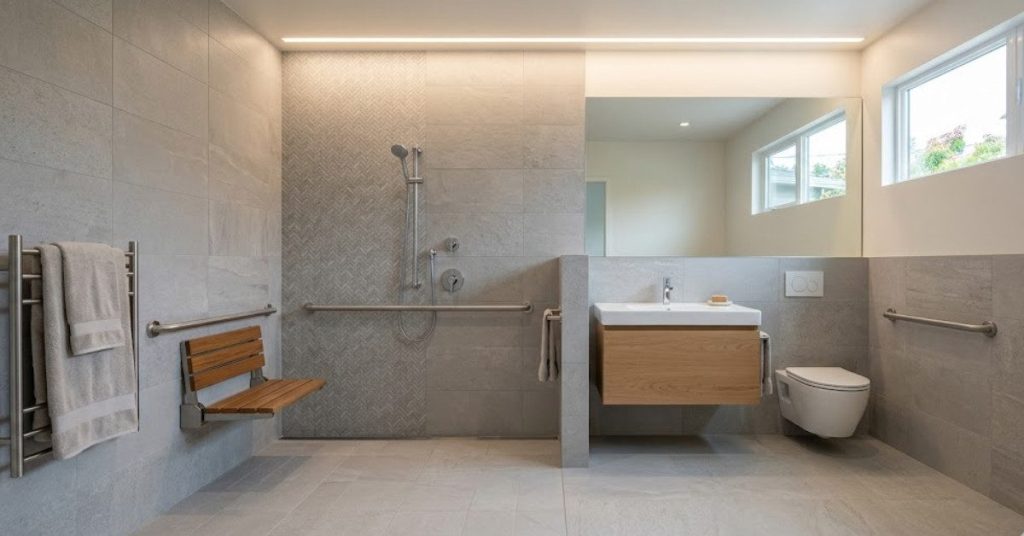
A roll-in shower is the preferred bathing solution for accessible ADUs. A curbless threshold eliminates the tripping hazard of a traditional shower curb and allows wheelchair access without difficult transfers. Inside the shower, a fold-down bench and handheld showerhead on an adjustable slide bar give the occupant full control over their bathing routine.
Critical bathroom accessibility features to include:
- Grab bars beside the toilet on both sides and inside the shower on the entry and back walls
- Reinforced wall blocking installed during construction to support future grab bar additions
- Comfort-height toilet at 17 to 19 inches for easier transfers
- Open knee clearance under the sink vanity for seated users with a single-lever faucet
- Non-slip flooring throughout the entire bathroom, not just the shower floor
- Minimum 60-inch turning radius between fixtures for wheelchair users
Kitchen Accessibility Considerations
Kitchen accessibility is frequently overlooked in ADU planning but matters significantly for independent daily living. A resident who can prepare their own meals maintains a level of independence that has real quality-of-life value beyond just convenience.
Countertop height adjustments for seated users, pull-out shelving instead of deep upper cabinets, and adequate floor space for a wheelchair turning radius at the primary work zone are all decisions made during the design phase. Single-lever or touchless faucets, under-counter knee clearance at the main work area, and side-opening or drawer-style appliances round out a kitchen layout that genuinely works for the occupant.
Bedroom Design for Independent Living
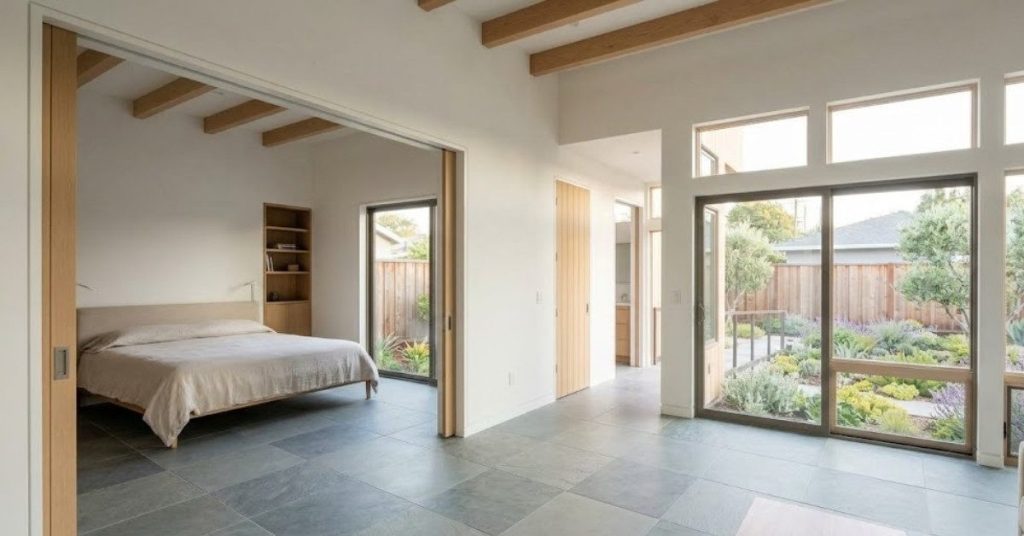
Bedroom layout decisions that support accessibility are easy to accommodate during construction and difficult to change once walls and closets are built out. The primary consideration is clear floor space around the bed for wheelchair transfers and caregiver assistance.
Bedroom accessibility features worth building in from the start:
- Minimum 36 inches of clear floor space on both sides of the bed for safe transfers
- Lowered closet hanging rods and shelving at accessible reach heights
- Sliding or pocket closet doors to prevent obstruction during use
- Electrical outlets placed at accessible heights to avoid excessive bending
- Light switches consistently positioned at 42 to 48 inches for wheelchair-accessible reach
Flooring and Lighting for Safety
Flooring and lighting choices carry real safety implications for seniors and residents with limited vision or mobility. Low-pile or no carpet in main circulation areas, smooth transitions between flooring types, and slip-resistant surfaces in bathrooms and kitchens all meaningfully reduce fall risk.
Lighting for accessible ADUs should exceed standard residential levels in kitchens and bathrooms. Night lighting in hallways and bathrooms supports safe navigation after dark, and rocker-style switches at consistent accessible heights throughout the unit help residents with low vision move through the space confidently.
California Grants for Accessible ADU Construction
California offers meaningful financial support for homeowners building accessible ADUs. The CalHFA ADU Grant Program has provided up to $40,000 to eligible homeowners specifically for creating or modifying ADUs to include accessibility features for seniors or people with disabilities. The CalHome Program administered by California’s Department of Housing and Community Development offers additional assistance for low-income homeowners making accessibility improvements.
Local city programs, utility rebates, and state eldercare housing initiatives continue to expand as California addresses both its housing shortage and the growing needs of its aging population at the same time.
How Nestadu Designs Accessible ADUs for California Families
At Nestadu, accessibility is treated as a core design consideration, not a checkbox added at the end of the process. Our in-house team of ADU contractors and designers brings the accessibility conversation into the first consultation so that every structural, layout, and finish decision supports the person who will actually be living in the space.
We build ADUs that work for the people living in them today and can adapt to changing needs over time without requiring a full renovation down the road.
Ready to design an accessible ADU for your family? Contact Nestadu today for a free consultation.