

California’s housing demand continues to rise, and homeowners are increasingly turning to Accessory Dwelling Units (ADUs) as a practical solution. Prefabricated ADUs, or prefab ADUs, have gained popularity because they offer a quicker and more cost-friendly way to add living space without the complexity of traditional construction.
Whether you’re thinking about creating a backyard rental, an in-law suite, or a home office, prefab ADUs provide flexibility while meeting strict state housing guidelines.
This 2025 guide covers the key aspects every homeowner in California should know before starting a prefab ADU project. We’ll go through permits, utility requirements, and cost details so you can plan with confidence.
What is a Prefab ADU?
A prefab ADU is a factory-built living unit that is delivered to your property in sections and assembled on-site. Unlike conventional construction, where the entire home is built piece by piece on the lot, prefab ADUs are largely completed in a controlled environment before being transported.
There are three main types:
- Modular ADUs – built in large sections that are transported and placed by crane.
- Panelized ADUs – wall panels and framing are manufactured and then assembled on site.
- Manufactured ADUs – built on a steel chassis and delivered as nearly complete units.
Prefab construction has grown in demand because it reduces build time, avoids many weather-related delays, and allows for quality control during the manufacturing stage.
Permit Requirements for Prefab ADUs in California (2025)
California has passed several housing laws in recent years to make ADUs easier to build. In 2025, statewide rules continue to favor homeowners who want to add a prefab ADU.
State-Level Guidelines
- Cities and counties must allow ADUs on single-family lots and most multi-family lots.
- ADUs up to 1,200 square feet are generally permitted, though some areas have additional restrictions.
- Parking requirements are reduced or waived in many cases.
- Owner occupancy rules have been relaxed in most areas.
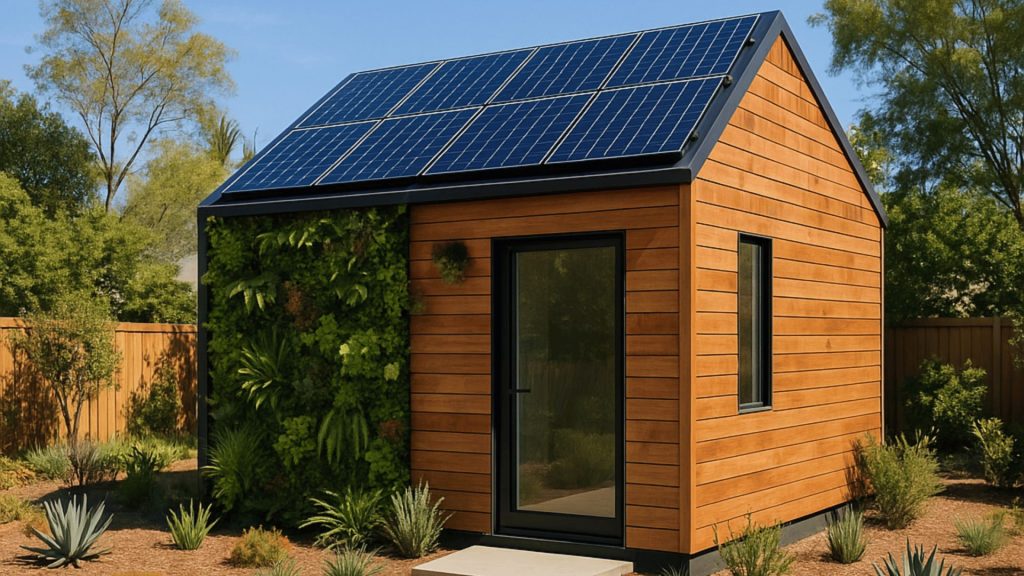
Steps in the Permit Process
- Site evaluation – Confirm setbacks, lot size, and zoning.
- Design submission – Provide floor plans, elevations, and engineering details.
- Plan review – Local building department checks for compliance with state codes.
- Permit approval – Issued once all requirements are met.
- Construction and inspection – Inspections are scheduled as utilities and final assembly are completed.
Timeline
On average, securing permits for a prefab ADU can take 2–4 months, depending on the city. Working with an experienced ADU contractor like Nestadu helps homeowners avoid delays and costly re-submissions.
Utility Connections for Prefab ADUs
Adding an ADU is not just about placing a unit in your backyard. Proper utility connections are essential to make the new space fully functional.
Key Utility Considerations
- Water Supply
- Can be connected to the main house line or set up with a separate connection depending on local rules.
- Can be connected to the main house line or set up with a separate connection depending on local rules.
- Sewer and Drainage
- In urban areas, ADUs usually connect to the city sewer system.
- For rural properties, septic system evaluations may be required.
- In urban areas, ADUs usually connect to the city sewer system.
- Electricity
- Homeowners can choose between a shared meter or a new, separate meter for the ADU.
- Electrical upgrades may be required if the main panel cannot handle the extra load.
- Homeowners can choose between a shared meter or a new, separate meter for the ADU.
- Gas
- Some prefab ADUs run fully on electric systems, while others may require gas hookups.
- Some prefab ADUs run fully on electric systems, while others may require gas hookups.
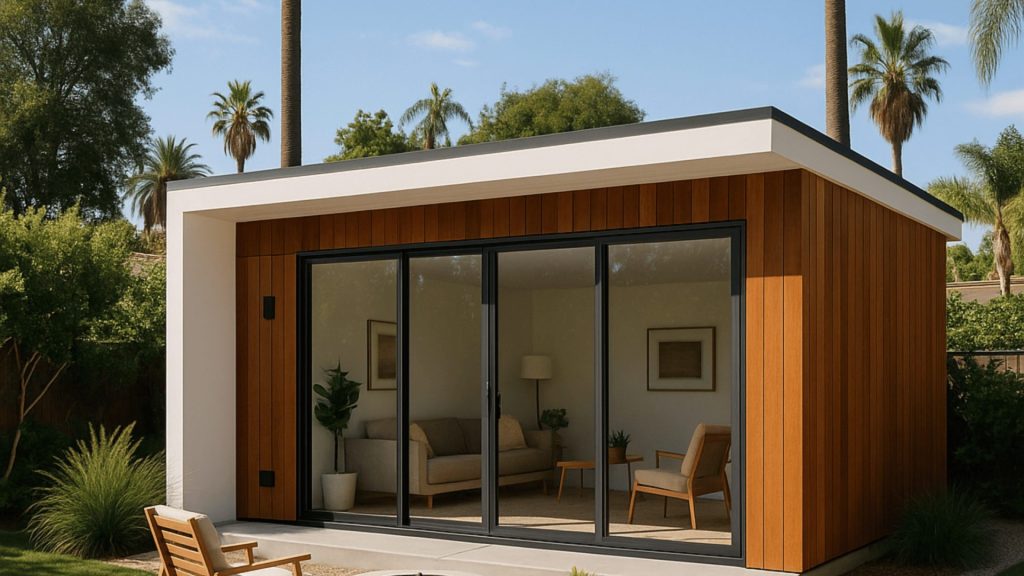
Common Challenges
Older homes may need upgrades to support additional utility connections. Narrow or sloped lots can also increase costs and complexity.
Professional Support
Nestadu assists homeowners by coordinating with utility companies and city inspectors, ensuring that connections are planned and executed properly. This reduces the risk of unexpected costs during installation.
Prefab ADU Costs in California (2025)
The cost of a prefab ADU varies widely, but understanding the breakdown helps homeowners budget accurately.
Average Price Range
- Studio prefab ADUs: $150,000 – $180,000
- One-bedroom prefab ADUs: $180,000 – $220,000
- Two-bedroom prefab ADUs: $220,000 – $300,000+
Cost Breakdown
- Prefab unit: $120,000 – $200,000 depending on size and finishes
- Site preparation: $10,000 – $40,000 (grading, foundation, crane access)
- Utility hookups: $15,000 – $30,000
- Permit and city fees: $5,000 – $15,000
- Installation and finishing: $20,000 – $40,000
Factors That Affect Prefab ADU Costs
Not all projects are the same. Several variables influence the final price tag.
- Location – Costs in Los Angeles or the Bay Area tend to be higher than in smaller cities.
- Unit Size – Larger floor plans require more material and higher delivery costs.
- Custom Finishes – Premium flooring, cabinetry, and fixtures raise the total investment.
- Lot Conditions – Sloped or narrow lots may require grading or crane access.
- Utility Upgrades – Electrical panel replacements or sewer line extensions can add thousands to the budget.
Benefits of Choosing a Prefab ADU with Nestadu
Building an ADU in California can feel overwhelming, but working with an experienced team makes the process much smoother. Nestadu offers:
- Transparent pricing with no hidden costs.
- Faster construction compared to traditional builds.
- High-quality craftsmanship that blends with existing homes.
- In-house design and permitting assistance.
- A dedicated team that manages the project from start to finish.
Nestadu specializes in making the ADU journey stress-free for homeowners while ensuring every detail meets California standards.

Conclusion
Prefab ADUs provide California homeowners with a flexible and reliable way to add living space, rental income, or multigenerational housing. With clear regulations, advancing construction methods, and growing demand, 2025 is an excellent time to consider this investment.
Understanding permits, utilities, and costs ahead of time helps avoid surprises and ensures a smooth process. By working with a trusted ADU builder like Nestadu, homeowners gain expert guidance and dependable results from concept to completion.
Whether you’re envisioning a cozy studio or a spacious two-bedroom unit, a prefab ADU can enrich your property and provide long-term value.
Frequently Asked Questions
How long does it take to build a prefab ADU in California?
Typically, 6–9 months from initial consultation to move-in, including permits and installation.
Do all California cities allow prefab ADUs?
Yes, under state law most residential lots are eligible, but design standards can vary by city.
Can I rent out my prefab ADU?
Yes, most homeowners use ADUs for long-term rentals, though short-term rental rules depend on city regulations.
Are prefab ADUs cheaper than traditional builds?
In many cases yes, because construction time is shorter and labor costs are lower.
What’s the expected lifespan of a prefab ADU?
With proper maintenance, a prefab ADU can last 40–60 years or more, comparable to a site-built home.