
Planning an ADU in California comes with a long checklist, and utility connections are one of the most misunderstood items on that list. Many homeowners only think about it after construction begins, which leads to costly delays and budget surprises.
At Nestadu, we walk every client through utility planning from day one because the decisions made early in the process directly affect your rental income, your tenant experience, and your long-term property value.
Shared vs. Separate Utility Connections: What Is the Difference?
When setting up utilities for your ADU, you have two fundamental options. A shared connection means your ADU runs off the same utility lines and meters as the primary home. A separate connection gives the ADU its own independent metering for electricity, water, or gas.
Neither option is universally right. The best choice depends on your goals, your local utility provider’s rules, and how you plan to use the ADU.
Shared utilities work well when:
- The ADU is for a family member and you manage billing yourself
- Your local jurisdiction does not require separate meters
- You are working with a tight construction budget
- The unit is small with low utility consumption
Separate meters make more sense when:
- You plan to rent the ADU to a tenant
- You want independent billing with no usage disputes
- You may eventually rent both the main house and ADU separately
- You want to increase the property’s resale appeal
What California Law Actually Says
This is where many homeowners run into confusion because state law and local utility rules do not always say the same thing.
Under California Government Code Section 65852.2, local agencies cannot require a new ADU to install a separate utility connection or pay related connection fees, unless the ADU is being built alongside a brand-new single-family home. This was designed to reduce construction costs and encourage more ADU development across California.
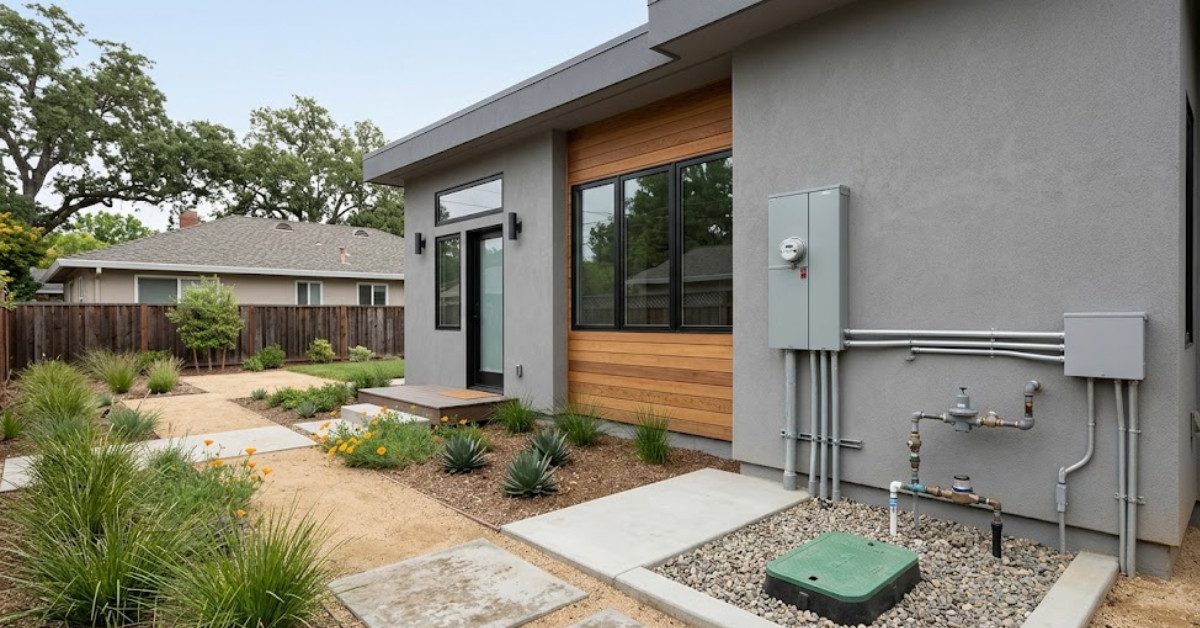
However, there is an important distinction between a utility connection and a utility meter. A connection refers to the physical infrastructure linking your property to the grid. A meter is simply the device that measures usage per unit. Some utility providers, like SDG&E in San Diego County, require separate meters for all new ADU construction even when a new full connection is not required. Always check with both your city planning department and your local utility company before finalizing your plans.
Breaking Down Each Utility Type
Electricity
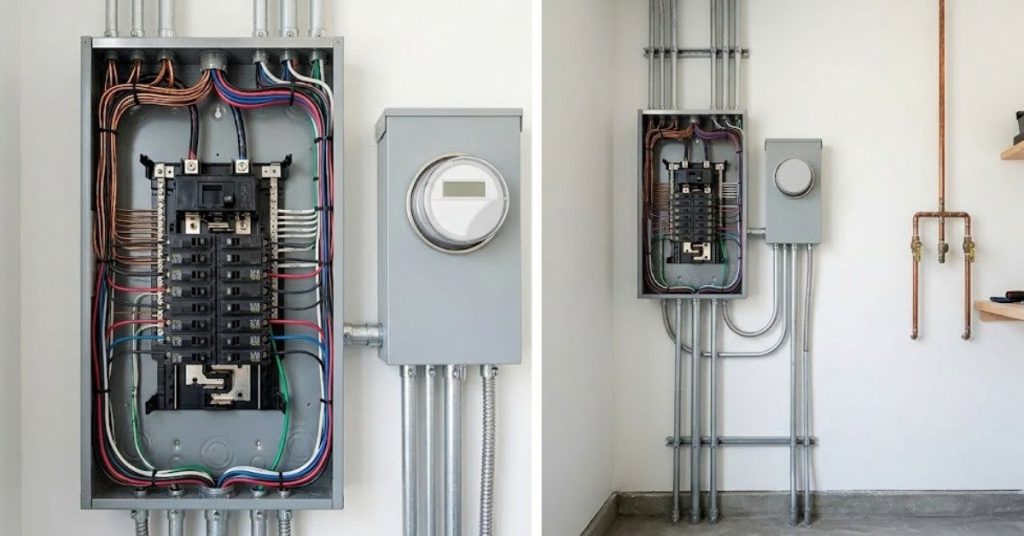
Electricity is the most frequently discussed utility for ADUs. Most California ADUs require a 100 to 200 amp electrical panel, depending on the unit’s size and appliances. Larger units with HVAC, full kitchens, and laundry will need more capacity.
Your electric meter options typically include:
- Standalone separate meter: The ADU gets its own service from the utility provider. The tenant receives a direct bill, which is the cleanest solution for rentals.
- Sub-meter: The ADU draws from the main home’s service but has a monitoring device installed so you can track and bill the tenant based on actual usage.
Water
Water connections tend to be the most expensive to separate because they involve tapping into municipal supply lines. Many California cities allow shared water connections for ADUs to keep costs down.
- Shared water meter: One bill for the whole property, homeowner handles cost allocation
- Separate water meter: Independent billing, ideal for rental properties
- Sub-meter on existing line: A middle-ground option that tracks ADU usage without a full new connection
Gas
With California pushing all-electric construction through Title 24 energy standards, many new ADUs skip gas entirely. Building all-electric removes the gas meter question, simplifies permitting, and can qualify your project for energy rebates.
If your ADU does include gas appliances, your utility provider may require a separate gas meter, particularly when vented gas appliances are installed. The City of Oakland, for example, mandates a separate gas meter in these situations.
Real Cost Ranges to Plan For
Separating utilities during construction is significantly cheaper than retrofitting after the build is complete. Here are general cost ranges in California:
- Separate electric meter installation: $2,000 to $5,000
- Electrical panel upgrade: $1,500 to $5,000
- Separate water meter: $2,000 to $8,000
- Separate gas meter: $1,000 to $4,000
For a rental ADU generating $1,500 to $2,500 per month, these costs recover quickly. Homeowners who included utilities in rent during periods of high usage, like remote work surges, ended up absorbing those increases directly. Separate meters eliminate that risk entirely.
Common Mistakes to Avoid
Nestadu has seen the same utility planning mistakes come up repeatedly on ADU projects across California.
- Waiting too long to contact utility providers. Utility company timelines can run several weeks. Starting early prevents delays in your construction schedule.
- Assuming shared is always cheaper long-term. Upfront savings can disappear quickly if you are covering a tenant’s energy usage each month.
- Skipping the sub-meter option. If full separate metering exceeds your budget, a sub-meter is a practical alternative that still gives you accurate usage data.
- Not going all-electric from the start. A fully electric ADU simplifies Title 24 compliance, eliminates gas coordination, and speeds up the overall build.
How Nestadu Manages Utility Planning for You
Utility coordination is built into Nestadu’s construction process from the very beginning. Our team works directly with California utility providers, local permit offices, and city planning departments so you are not left deciphering technical bulletins on your own.
We help you evaluate your options based on whether you are building for rental income, family housing, or long-term property investment. Transparent planning at the start saves our clients significant time and money before a single shovel hits the ground.
Ready to plan your ADU? Contact Nestadu today and let our team guide you through every step, from utility decisions to your completed build.
Final Thoughts
Utility connections and separate meters for ADUs are not complicated once you understand your options and California’s rules. The key is making these decisions early, working with experienced professionals, and choosing a setup that matches your long-term goals.
Whether you are building a backyard cottage for rental income or an in-law suite for family, Nestadu is ready to help you get it right from the start.