
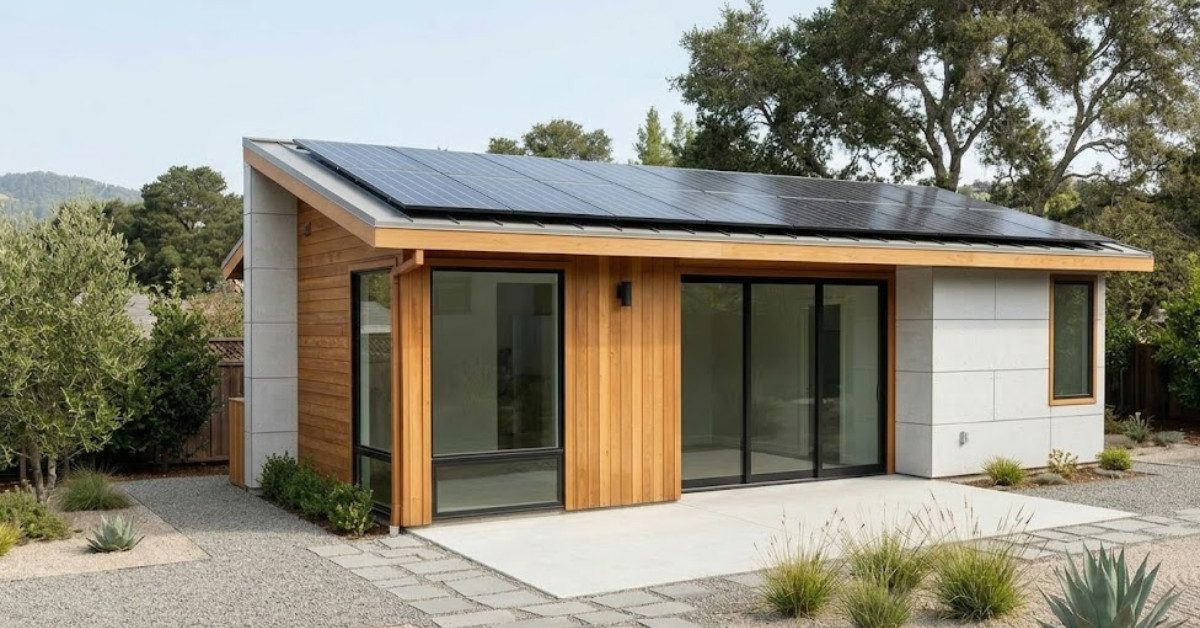
Building an ADU is already a smart investment. Building one with sustainability in mind makes it an even smarter one. Eco friendly ADU design reduces long-term energy costs, creates a healthier living environment, and adds meaningful value to your property.
California’s energy costs, drought conditions, and building code requirements all create a strong case for going green from day one. This guide covers the most practical sustainability tips to consider before breaking ground.
Start With Orientation and Passive Design
One of the most cost-effective sustainability decisions you can make costs nothing extra. How your ADU is positioned on your lot directly affects natural light, passive heating, and how hard your mechanical systems have to work year-round.
Positioning south-facing windows allows sunlight to warm the interior during cooler months. Overhangs and shade structures block that same sun in summer. These passive design choices are made at the design phase and cannot easily be corrected once construction begins.
Insulation and Air Sealing
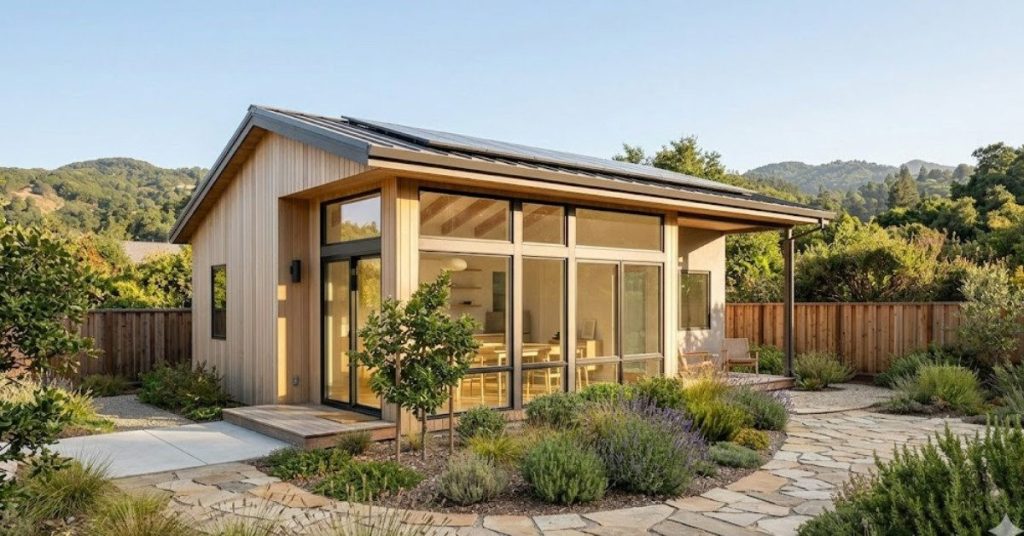
In a compact space like an ADU, insulation quality has an outsized impact. A well-insulated, properly air-sealed unit holds temperature consistently, reduces reliance on heating and cooling systems, and lowers utility bills for whoever lives there.
Key insulation choices worth discussing with your builder:
- Spray foam insulation for high-performance air sealing and thermal resistance in walls and rim joists
- Mineral wool for fire resistance, soundproofing, and moisture management
- Cellulose or recycled denim insulation for a lower environmental footprint without sacrificing performance
- Blower door testing after construction to identify and seal any remaining air leakage points
At Nestadu, insulation and air sealing decisions are built into the design phase, not treated as an afterthought on the job site.
Energy-Efficient Windows and Doors
Windows and doors are where a significant portion of heating and cooling energy is lost. Choosing the right glazing from the start reduces that loss without compromising natural light or ventilation.
Double or triple-pane windows with low-emissivity coatings reduce heat transfer in both directions. Properly sealed door frames and weather stripping complete the building envelope and prevent conditioned air from escaping year-round.
Solar Panels and All-Electric Systems
California’s Title 24 energy code already mandates solar panels on most new detached ADUs. Beyond compliance, designing your ADU as an all-electric unit from the start opens up significant long-term advantages for the homeowner and the occupant.
An all-electric ADU eliminates the need for gas line installation and works with solar and battery storage systems over time. Key systems worth including:
- Heat pump HVAC systems as a highly efficient alternative to traditional forced-air heating and cooling
- Heat pump water heaters that use significantly less electricity than conventional electric models
- Solar-ready roof design with proper orientation and minimal obstructions for future panel installation
- EV charging rough-in added during construction at minimal cost, which becomes far more expensive to add later
Sustainable Building Materials
The materials used to build your ADU affect both the environment and the indoor air quality for whoever lives there. Choosing materials with low chemical off-gassing creates a healthier space from the first day someone moves in.
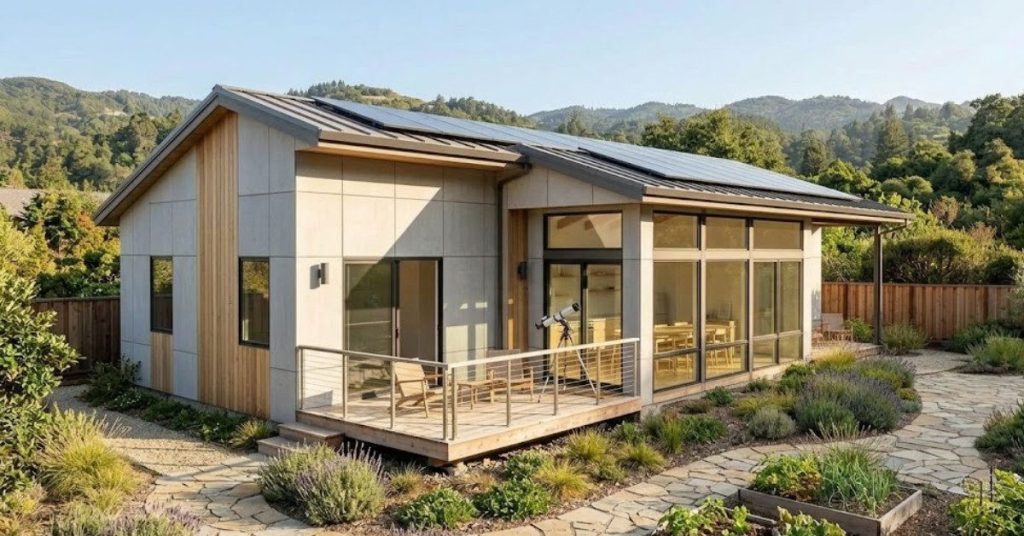
Nestadu helps clients select materials that balance sustainability, durability, and budget without cutting corners on craftsmanship. Recommended sustainable material choices include:
- Reclaimed or recycled content lumber to reduce demand for new timber
- Low-VOC paints, adhesives, and sealants for healthier indoor air quality
- Bamboo or cork flooring as fast-growing renewable alternatives to traditional hardwood
- Fiber cement siding for a durable, fire-resistant, low-maintenance exterior finish
- Recycled steel framing where structural needs allow, termite-resistant and fully recyclable
Water Conservation Features Worth Including
California’s ongoing water challenges make water-efficient design a practical priority, not just an environmental one. Most water conservation features are inexpensive to include during construction and significantly more costly to add after the fact.
Low-flow fixtures for toilets, faucets, and showerheads are the baseline starting point. Additional features worth discussing with your builder during the design phase include:
- Tankless or heat pump water heaters to eliminate standby energy loss
- Greywater system rough-in for future irrigation use from sink and shower water
- Drought-tolerant native landscaping around the ADU perimeter
- Permeable paving for driveways and pathways to reduce surface runoff
Smart Home Technology for Ongoing Efficiency
Sustainability does not end when construction is complete. The right technology helps occupants manage energy use without thinking about it, whether you are living in the ADU yourself or renting it to a tenant.
Simple additions during construction make a meaningful long-term difference:
- Smart thermostats that learn usage patterns and reduce wasted heating and cooling
- Occupancy sensors for lighting in hallways and low-traffic areas
- Energy monitoring systems that provide real-time usage data to the occupant
- Smart appliances designed to shift high-energy tasks to off-peak utility rate periods
Green Certifications and California Incentives
California offers real financial incentives for homeowners who build with sustainability in mind. Utility rebate programs cover heat pump systems, water heaters, and high-efficiency appliances. State and local solar programs help offset installation costs, and some municipalities offer grants specifically for sustainable ADU construction.
Certification programs like GreenPoint Rated and ENERGY STAR for new construction add documented credibility to your unit’s sustainability claims, which carries weight for both rental appeal and long-term resale value.
How Nestadu Builds Eco-Friendly ADUs
At Nestadu, sustainability is part of the design conversation from the very first consultation, not offered as an optional upgrade at the end of the process. Our in-house team of ADU contractors and designers advises on eco-friendly choices that are practical for your property, your budget, and California’s specific energy requirements.
Every Nestadu ADU is designed to perform well for the homeowner and the occupant long after construction is complete.
Ready to explore sustainable ADU design options for your California property? Contact Nestadu today for a free consultation.