

Choosing between stick built vs modular construction is one of the first major decisions you’ll face when planning an accessory dwelling unit in California. Both methods produce quality homes, but they take completely different paths to get there. Understanding these differences can save you time, money, and headaches down the road.
The construction method you choose affects everything from your project timeline to your final costs. At Nestadu, we’ve worked with both approaches and know that the right choice depends on your specific property, budget, and goals. Let’s break down what makes each method unique.
What is Stick-Built Construction?
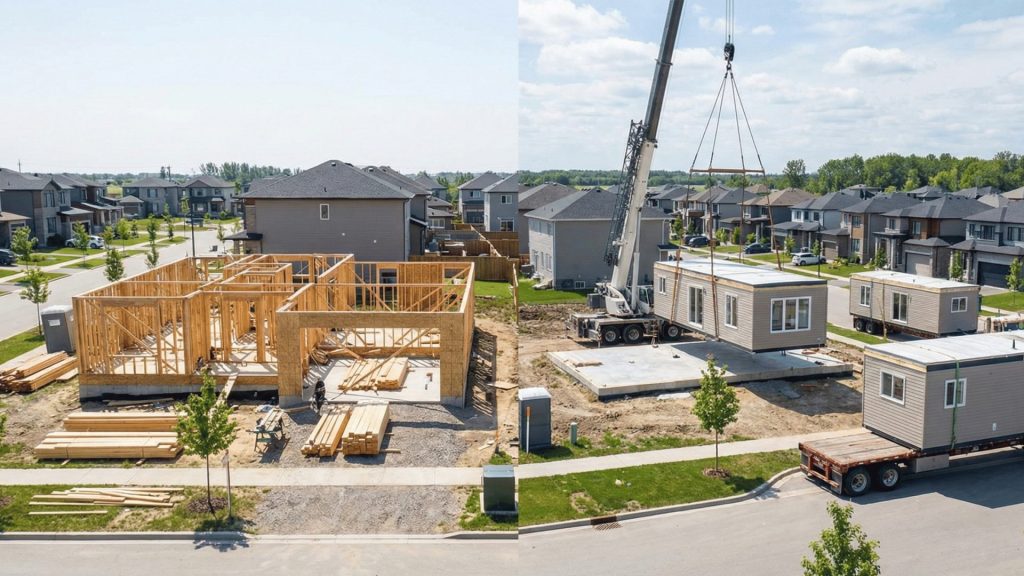
Stick-built homes are constructed the traditional way, built entirely on your property from the ground up. A crew arrives at your site with raw materials and assembles everything piece by piece, following architectural plans. This is how homes have been built for generations, and it’s still the most common construction method in California.
The process starts with foundation work, then moves through framing, roofing, and finishing stages. Each phase happens on-site, which means your project is exposed to weather and depends on coordinating multiple subcontractors. Here’s what defines stick-built construction:
Key Characteristics:
- Built completely on-site from raw materials
- Requires multiple contractor visits and inspections
- Timeline depends heavily on weather conditions
- Allows for unlimited design customization
- Material delivery happens in stages throughout construction
- Site remains active construction zone for months
The biggest advantage of stick-built construction is flexibility. If you have a unique lot shape, specific design vision, or need to work around existing structures, this method gives you complete control. Nestadu’s design team can create truly custom ADUs that match your main home’s architecture perfectly when using stick-built methods.
What is Modular Construction?
Modular homes are built in sections at a factory, then transported to your property for final assembly. The factory environment allows for precise construction under controlled conditions, free from weather delays. Once the modules arrive, they’re set on your prepared foundation and connected together, usually in just a day or two.
Think of modular construction like assembling a high-quality piece of furniture, except the pieces are room-sized sections built to the same code standards as traditional homes. These aren’t mobile homes or temporary structures. They’re permanent residences built in a more efficient way.
How Modular Construction Works:
- Factory builds home sections while foundation is prepared
- Quality control happens in controlled environment
- Modules are transported on flatbed trucks
- Crane places sections on foundation
- On-site crew connects modules and completes finishing work
- Total construction time reduced by 50% or more
California has specific requirements for modular homes, including state certification and local inspections. The modules must meet or exceed the same building codes as stick-built homes. Many homeowners are surprised to learn that modular construction often results in stronger structures because factory building allows for tighter tolerances and better material protection.
Cost Comparison: What to Actually Expect
Budget matters for any ADU project, and the cost difference between these methods isn’t always straightforward. Modular construction typically costs 10-20% less per square foot than stick-built, but several factors influence the final price.
Stick-built projects face more variables. Weather delays add costs. Material price fluctuations during long construction periods affect your budget. Change orders during construction can quickly increase expenses. You’re also paying for longer site management and more inspector visits.
Typical Cost Factors for Stick-Built ADUs:
- Higher labor costs due to longer timelines
- Potential weather-related delays and expenses
- Material waste from on-site cutting and fitting
- Extended permit and inspection fees
- More opportunities for cost overruns
Modular Construction Cost Advantages:
- Fixed pricing with fewer surprise expenses
- Reduced labor costs through factory efficiency
- Minimal material waste
- Shorter overall project timeline
- Lower financing costs due to faster completion
At Nestadu, we help clients understand the total project cost, not just the construction price. Sometimes spending slightly more on stick-built construction makes sense if it allows you to maximize your lot’s potential or achieve specific design goals.
Timeline: When You Can Start Earning Rental Income
Time is money, especially if you’re building an ADU for rental income. A stick-built ADU in California typically takes 8-12 months from permits to completion. Modular construction can cut that to 4-6 months for the same size unit.
The difference comes from parallel work. While your modular home is being built in the factory, site preparation and foundation work happen simultaneously. With stick-built, everything happens in sequence. You can’t frame until the foundation cures. You can’t install drywall until plumbing and electrical are done.
Weather affects stick-built projects significantly. A rainy California winter can add weeks to your timeline. Factory-built modules aren’t subject to these delays, which means more predictable completion dates.
Key Differences at a Glance
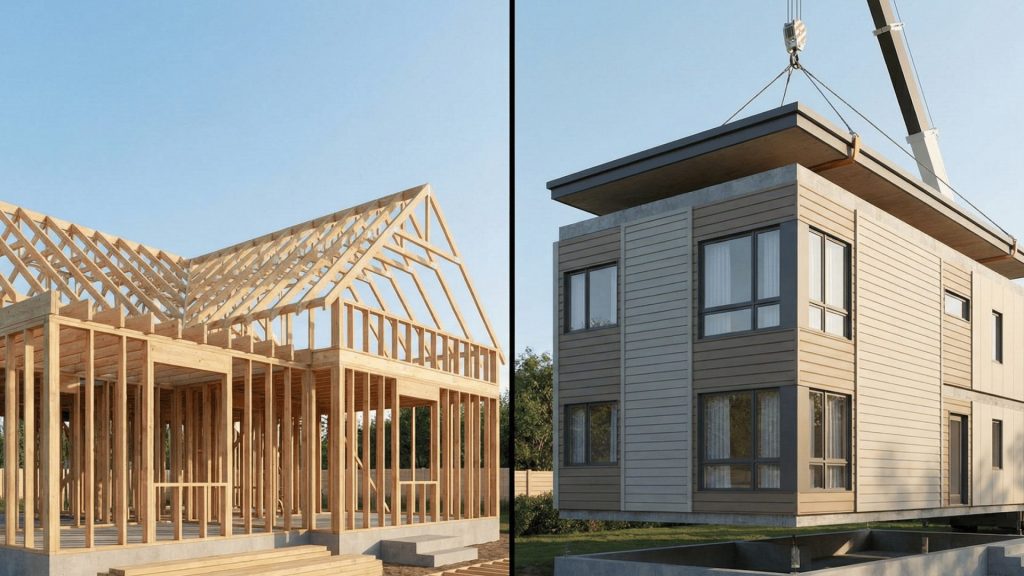
To help you understand the practical differences between these construction methods, here’s a side-by-side comparison of what matters most for California ADU projects:
| Feature | Stick-Built | Modular |
| Construction Timeline | 8-12 months | 4-6 months |
| Cost Per Square Foot | Higher | 10-20% lower |
| Design Flexibility | Unlimited customization | Good within factory parameters |
| Weather Impact | Significant delays possible | Minimal impact |
| Site Access Requirements | Standard access | Need crane and truck access |
| Quality Control | Varies by contractor | Consistent factory standards |
| Financing Options | Traditional loans readily available | May require specialized lenders |
| Resale Value | Traditionally higher perception | Equal when properly appraised |
| Best For | Complex designs, challenging lots | Quick completion, budget focus |
This comparison shows that neither method is universally better. Your choice should reflect your specific priorities and property conditions.
Design Flexibility and Customization
This is where stick-built construction really shines. If you want a curved wall, custom windows in specific locations, or unique architectural details that match your main home, stick-built gives you unlimited options. The Nestadu team can design exactly what you envision without worrying about factory production constraints.
Modular homes work within the factory’s capabilities. Most manufacturers offer extensive customization within their systems, but you’re choosing from established floor plans and making modifications rather than starting with a blank slate. For many ADU projects, this level of customization is plenty.
When Stick-Built Makes More Sense:
- Challenging lot shapes or slopes
- Matching complex existing architecture
- Very specific design requirements
- Limited site access for crane delivery
- Unique local design guidelines
When Modular Works Better:
- Straightforward rectangular floor plans
- Quick project completion needed
- Budget consciousness is priority
- Good site access for delivery
- Standard ADU designs meet your needs
California ADU Considerations
California’s ADU laws favor both construction methods equally. Your local building department doesn’t care how your ADU was built, only that it meets code. However, some practical considerations affect which method works better for your property.
Site access matters more for modular construction. Can a crane reach your backyard? Is your street wide enough for module delivery? Some urban California properties have access challenges that make stick-built the only practical option. Nestadu evaluates these factors during initial site visits.
Permit timelines are similar for both methods, though some jurisdictions move faster on modular approvals because the factory construction is pre-certified. Your neighborhood’s aesthetic requirements might also influence the choice. Some homeowner associations or design review boards have preferences, though they can’t legally discriminate against modular construction.
Making Your Decision
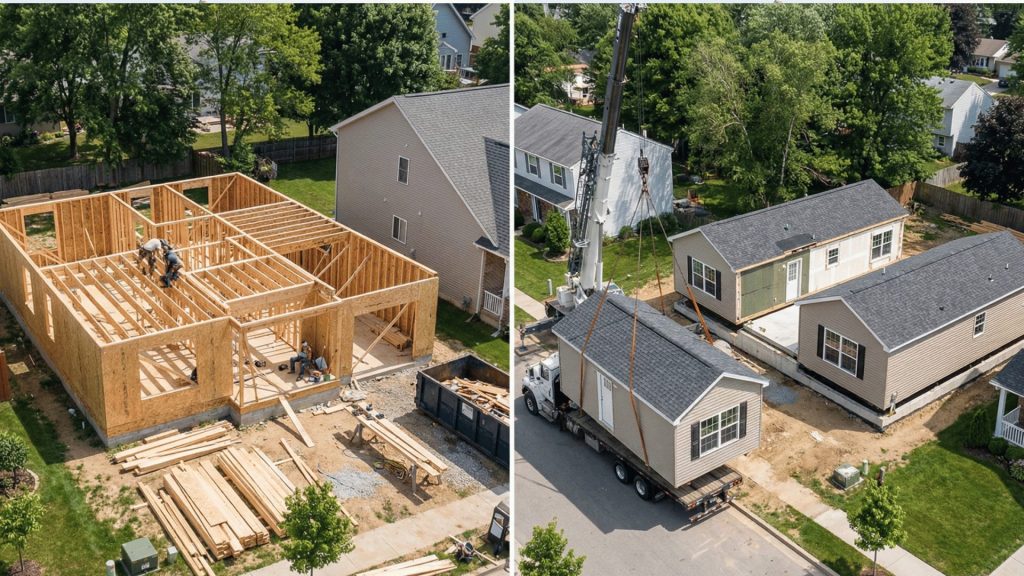
There’s no universally “better” construction method. The right choice depends on your specific situation. Stick-built construction offers maximum flexibility and works on any buildable lot. Modular construction delivers faster completion and more predictable costs when site conditions allow.
Consider your priorities. Do you need to start earning rental income as soon as possible? Modular might be your answer. Do you have specific design requirements that don’t fit standard floor plans? Stick-built gives you that freedom. Is your budget tight with little room for overruns? Modular’s fixed pricing provides peace of mind.
At Nestadu, we guide California homeowners through this decision based on their unique properties and goals. We’ve successfully completed ADU projects using both methods, and we know which approach works best for different scenarios. Our experienced team evaluates your lot, discusses your vision, and recommends the construction method that makes the most sense.
The bottom line is that both stick-built and modular construction can deliver beautiful, durable ADUs that add value to your property. The key is understanding which method aligns with your timeline, budget, and design needs. Ready to explore your options? Contact Nestadu for a personalized consultation and let’s bring your ADU vision to life.