
Building an accessory dwelling unit on your California property involves countless decisions, but few are as critical as choosing the right foundation approach. Understanding the difference between stem wall vs retaining walls can save you thousands of dollars and prevent structural headaches down the road.
At Nestadu, we’ve built dozens of ADUs across California, and we’ve seen firsthand how proper foundation planning makes or breaks a project. Whether you’re working with a flat lot or challenging hillside terrain, knowing when to use each wall type ensures your ADU stands strong for decades.
What is a Stem Wall in ADU Construction?
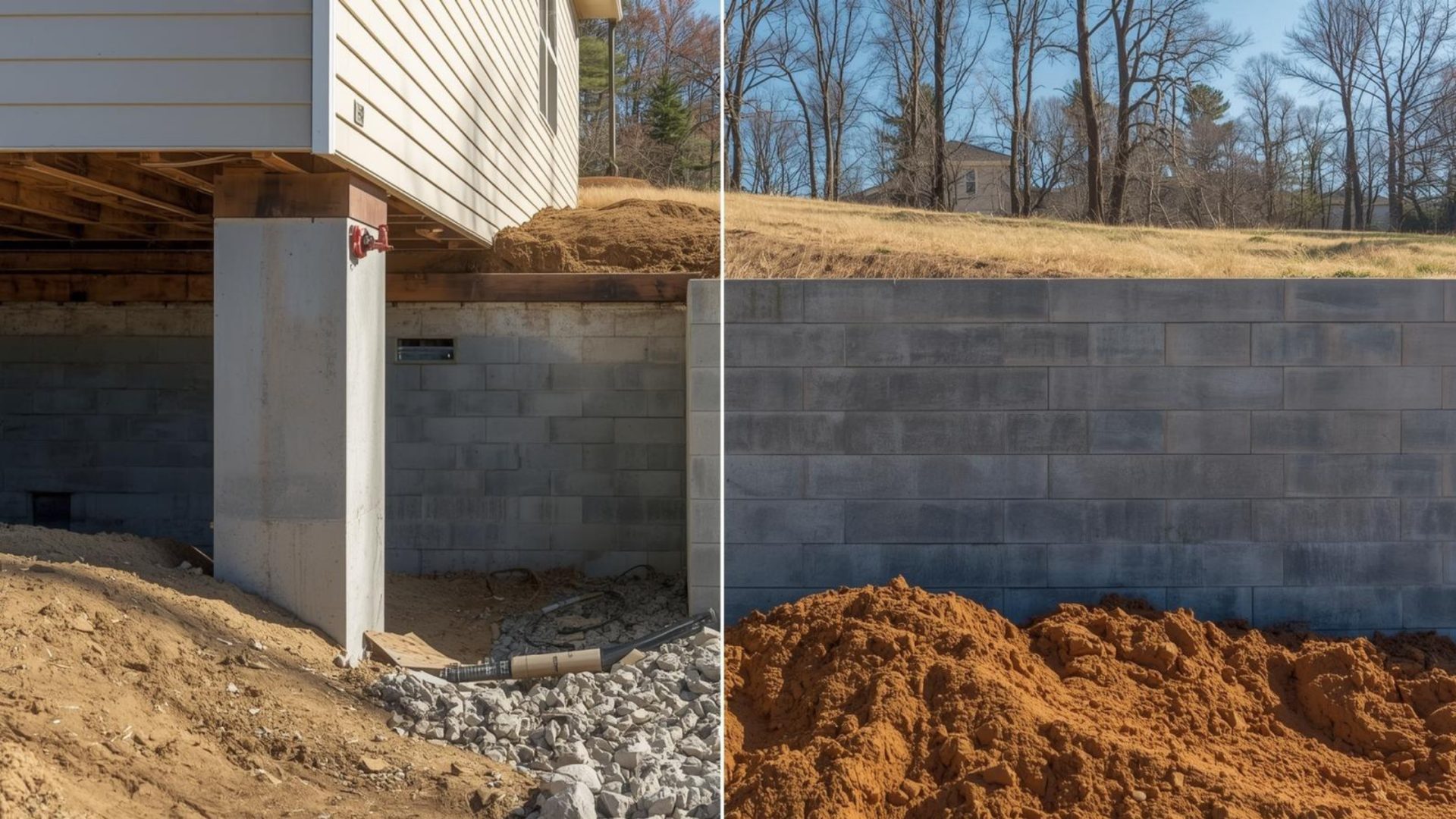
A stem wall is the short concrete wall that sits on top of your foundation footing and connects to the above-ground structure of your ADU. Think of it as the bridge between what’s underground and what you’ll actually see and live in. This vertical wall typically rises 18 to 24 inches above ground level and creates the perimeter of your ADU’s foundation.
Key features of stem walls for ADUs include:
- Creating crawl space for utility access and plumbing runs
- Raising the floor system above ground moisture
- Providing anchor points for floor joists or slab edges
- Meeting California building code requirements for foundation height
- Allowing proper drainage away from the ADU structure
Understanding Retaining Walls for ADU Sites
Retaining walls serve a completely different purpose than stem walls. These structures hold back soil and manage elevation changes on your property. If your ADU site has any slope or if you need to create a level building pad, you’ll likely need a retaining wall somewhere in the project.
Common situations requiring retaining walls for ADU projects:
- Sloped properties where you need to create a level building pad
- Sites with significant grade changes between front and back yards
- Terraced landscaping around the ADU footprint
- Protecting existing structures from soil movement
- Managing water runoff and erosion control

Stem Wall vs. Retaining Wall: Quick Comparison
| Feature | Stem Wall | Retaining Wall |
| Primary Function | Supports vertical loads from ADU structure | Holds back soil and resists lateral pressure |
| Location | Part of ADU foundation perimeter | Separate from structure, manages grade changes |
| Typical Height | 18-24 inches above grade | 3-8 feet (varies by slope) |
| Load Direction | Vertical (downward) | Horizontal (lateral soil pressure) |
| Materials | Poured concrete with steel rebar | Concrete blocks, poured concrete, timber, stone |
| Cost Range | $6,000-$10,000 (part of foundation) | $8,000-$15,000 (30 feet at 4 feet high) |
| Engineering Required | Standard foundation design | Required for walls over 4 feet in California |
| Inspection Type | Part of foundation inspection | May require separate permit and inspection |
| Lifespan | 50+ years with proper construction | 50+ years with drainage and maintenance |
Core Differences Between Stem Walls and Retaining Walls
The confusion between these two wall types is understandable since both involve concrete and both are part of site preparation. However, they handle forces in completely different directions. A stem wall carries vertical loads downward, while a retaining wall pushes back against horizontal soil pressure.
Construction requirements also differ significantly. Stem walls must be precisely level and follow the exact footprint of your ADU. Retaining walls need proper drainage systems, appropriate setbacks from property lines, and engineering stamps for walls over four feet tall in most California jurisdictions.
When Your ADU Project Needs Both Wall Types
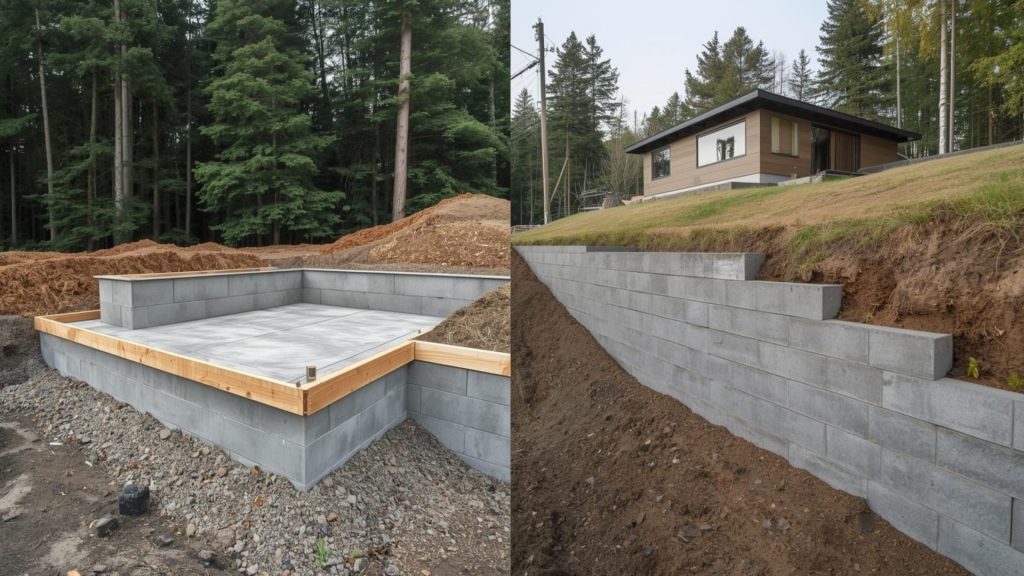
Many California properties require both stem walls and retaining walls working together. Picture a hillside lot where you want to add a backyard ADU. You might need a retaining wall to create the level building pad, then a stem wall to actually support the ADU structure itself.
This integrated approach is common in areas like the Bay Area hills or coastal properties with natural slopes. Nestadu handles these complex sites regularly, coordinating the retaining wall construction first to establish the building pad, then following with the stem wall foundation once the site is properly prepared.
Benefits of using both wall types together include:
- Creating usable outdoor space around your ADU on sloped lots
- Better water management and drainage control
- Protecting your ADU foundation from soil movement
- Meeting setback requirements while dealing with grade changes
- Adding visual interest with terraced landscaping
Materials and Construction Methods
Both stem walls and retaining walls in California ADU construction typically use concrete for durability and strength. Stem walls are almost always poured concrete with steel reinforcement matching the specifications in your engineered foundation plans.
Retaining walls offer more material flexibility. For shorter walls under three feet, you might use concrete blocks, timber, or even boulder walls for a natural look. Taller retaining walls usually require poured concrete with substantial steel reinforcement and proper drainage systems installed during construction.
California Building Code Considerations
California has specific requirements for both wall types, and Nestadu ensures every project meets or exceeds these standards. Stem walls must tie into foundation footings with proper rebar overlap and spacing. The height above finished grade must provide adequate clearance for moisture protection, typically 6 inches minimum between soil and any wood framing.
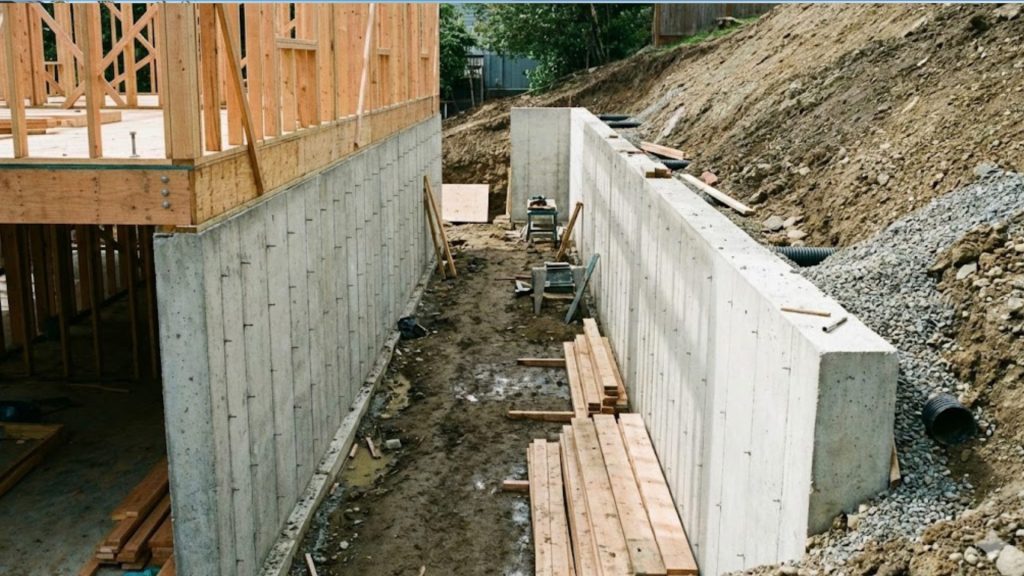
Retaining walls over 4 feet tall require engineered plans and structural calculations in most California cities. Even shorter walls need proper drainage systems with weep holes or drainage pipe behind the wall.
Critical compliance requirements include:
- Seismic design calculations for earthquake resistance
- Proper footing depth below frost line
- Adequate drainage systems to prevent water buildup
- Setback compliance from property lines
- Structural engineer stamps for permits
Making the Right Choice for Your ADU Project
The decision between stem walls and retaining walls isn’t really a choice, it’s about understanding what your specific site requires. Every ADU needs a stem wall as part of its foundation system. Whether you also need retaining walls depends entirely on your property’s topography and existing grades.
Nestadu’s approach starts with a detailed site evaluation. We look at existing slopes, drainage patterns, soil conditions, and how your ADU will fit into the overall property layout. This assessment reveals whether simple stem wall construction suffices or if retaining walls are necessary for proper site preparation.
Budget planning should account for both possibilities. If your property has any noticeable slope, set aside contingency funds for potential retaining wall work. The good news is that properly built retaining walls and stem walls can last 50 years or more with minimal maintenance, making them worthwhile investments in your property’s value and functionality.