
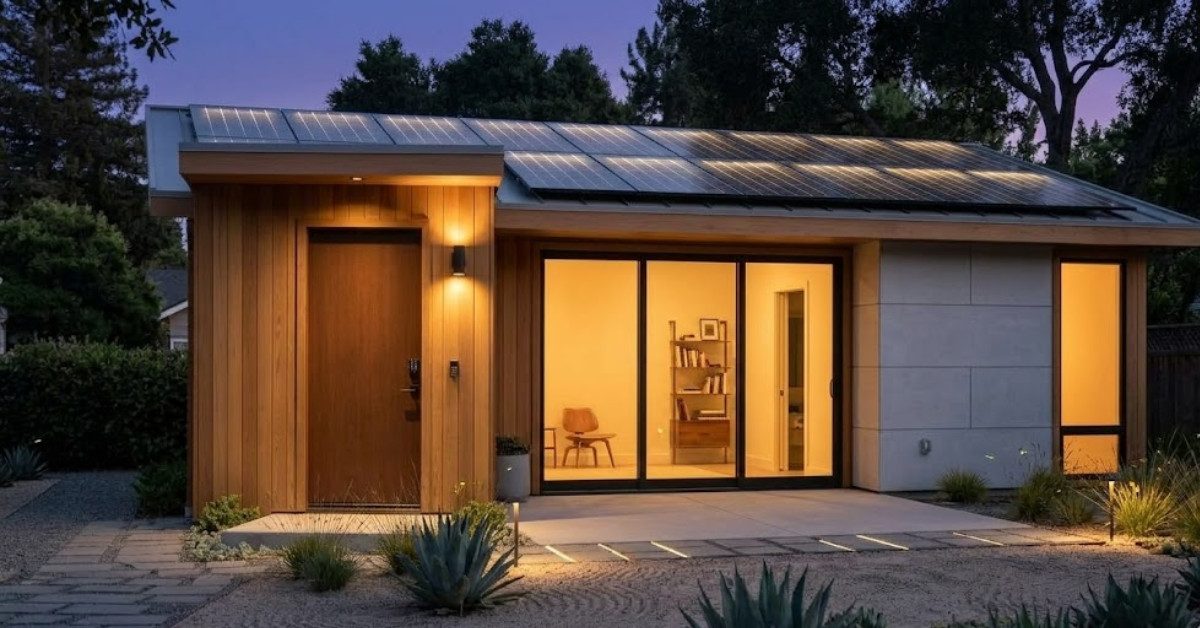
Smart home technology is no longer reserved for luxury builds. For ADU owners across California, it has become a practical tool that reduces operating costs, improves security, and makes managing a rental or multigenerational living situation significantly easier from a distance.
The key insight most homeowners miss is timing. Planning smart technology during the build phase costs a fraction of what retrofitting the same systems costs after construction wraps up.
Why Smart Home Technology for ADU Matters More Than a Primary Home
An ADU serves a specific purpose, whether that is generating rental income, housing a family member, or providing a dedicated private space. Each of those use cases creates a different relationship between the homeowner and the unit, and smart technology is what makes that relationship manageable without requiring constant physical presence.
For rental ADUs in particular, smart systems reduce friction between landlord and tenant and protect the property between occupancies. At Nestadu, smart home rough-ins are part of the design conversation from the very first consultation, not an afterthought added at the end.
Smart Locks and Access Control
Smart locks are one of the highest-return additions for any ADU, and they are especially valuable for rental units. Keyless entry eliminates the logistical problem of handing off physical keys to tenants, maintenance workers, or cleaning staff every time there is a changeover.
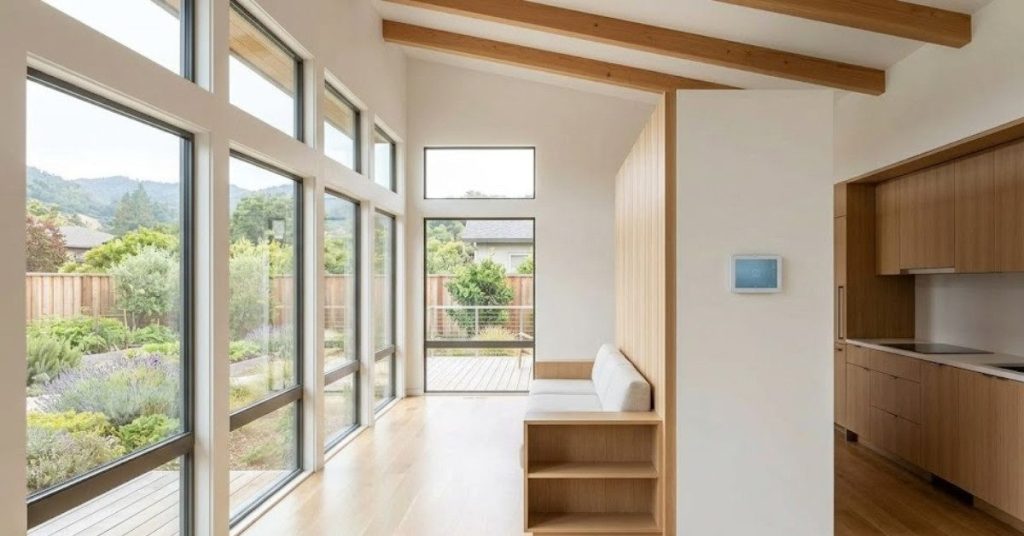
Key features to look for in a smart lock system:
- Remote access management from a smartphone between tenant occupancies
- Temporary and time-limited access codes for guests, cleaners, or contractors
- Auto-lock settings that engage automatically after a set period of inactivity
- Integration with video doorbells and exterior cameras for a complete entry picture
- Battery backup and physical key override for power outage situations
Smart Thermostats and HVAC Control
A smart thermostat pays for itself quickly in a rental ADU by eliminating energy waste between tenants and reducing utility costs for whoever occupies the unit. Learning thermostats adjust schedules based on occupancy patterns over time without any manual input from the owner.
For California ADUs built as all-electric units with heat pump systems, smart thermostat compatibility is especially important. Remote access between tenancies allows the homeowner to set a minimal baseline temperature rather than leaving the system running at full capacity in an empty unit.
Security Cameras and Video Doorbells
External security monitoring matters for both standalone ADUs and those sharing a lot with the primary home. A video doorbell at the ADU entrance handles package security and visitor management without requiring the main homeowner to be involved in day-to-day activity.
Important considerations for camera setup:
- Position exterior cameras to cover the ADU entrance and any shared driveway access points
- Choose systems that send real-time motion alerts directly to the homeowner’s phone
- Use cloud storage for footage so recordings are accessible remotely at any time
- Consider privacy boundaries carefully when the ADU and primary home share close proximity
- Integrate cameras with smart lock notifications for a unified security picture
Smart Energy Monitoring and Solar Integration
California homeowners face some of the highest utility rates in the country, which makes energy monitoring a genuinely practical tool rather than a novelty. Real-time energy dashboards help both the owner and the tenant understand exactly where consumption is occurring and identify waste.
For ADUs on the same electrical service as the primary home, sub-metering is worth discussing during the design phase. It separates ADU energy use from the main house, which matters both for billing clarity and for measuring how the unit actually performs over time. Planning for energy monitoring during construction is significantly less expensive than adding it after the fact.
Smart Lighting Systems
Motion-activated and occupancy-sensing lighting reduces energy waste in shared spaces and adds a low-cost security layer when the ADU is sitting vacant between occupancies. Programmed lighting schedules also create the appearance of occupancy during vacancy periods without any ongoing manual effort.
Practical lighting decisions to make during the build:
- Smart switches work with any standard bulb and are more practical for rental units where tenants may replace bulbs independently
- Outdoor path and entry lighting on motion sensors reduces both energy use and the need for manual control
- Occupancy sensors in bathrooms and hallways handle low-traffic areas automatically
- Nestadu rough-ins electrical during construction to support smart lighting without surface-mounted conduit later
Smart Appliances and Leak Detection
Smart appliances reduce maintenance calls and improve tenant satisfaction in rental ADUs by providing remote diagnostics before a minor issue becomes a costly repair. In a compact ADU where the kitchen and bathroom are close together, water damage can spread quickly and go unnoticed if the owner is not regularly present.
Practical additions worth including during the build:
- Leak detection sensors under sinks and near water heaters with immediate smartphone alerts
- Smart smoke and carbon monoxide detectors that notify the landlord directly, not just the occupant
- Wi-Fi connected washer and dryer combinations for remote cycle monitoring
- Smart refrigerators with temperature alerts to prevent food loss during power disruptions
What to Rough-In During Construction for Future Upgrades
This is the most cost-effective part of smart home planning. Several infrastructure items cost very little to add during construction but become expensive retrofit projects if left out and added later.
Items worth discussing with your Nestadu team during the design phase:
- Conduit runs for future camera wiring at exterior corners and entry points
- Structured wiring for internet and networking throughout the unit
- Dedicated circuits with adequate capacity for smart panels and high-draw devices
- Doorbell wiring at the main ADU entrance from day one
- Sub-panel sizing that accounts for future smart home load requirements
How Nestadu Plans Smart Home Technology From the Start
At Nestadu, smart home planning is built into the initial design conversation for every ADU project. Our in-house team of ADU contractors and designers advises on rough-in requirements, electrical capacity, and technology compatibility based on how the unit will actually be used, whether for rental income, family housing, or personal use.
We make sure those decisions are made before construction begins, not after the walls are already closed.
Ready to plan smart home technology into your ADU from day one? Contact Nestadu today for a free consultation.