
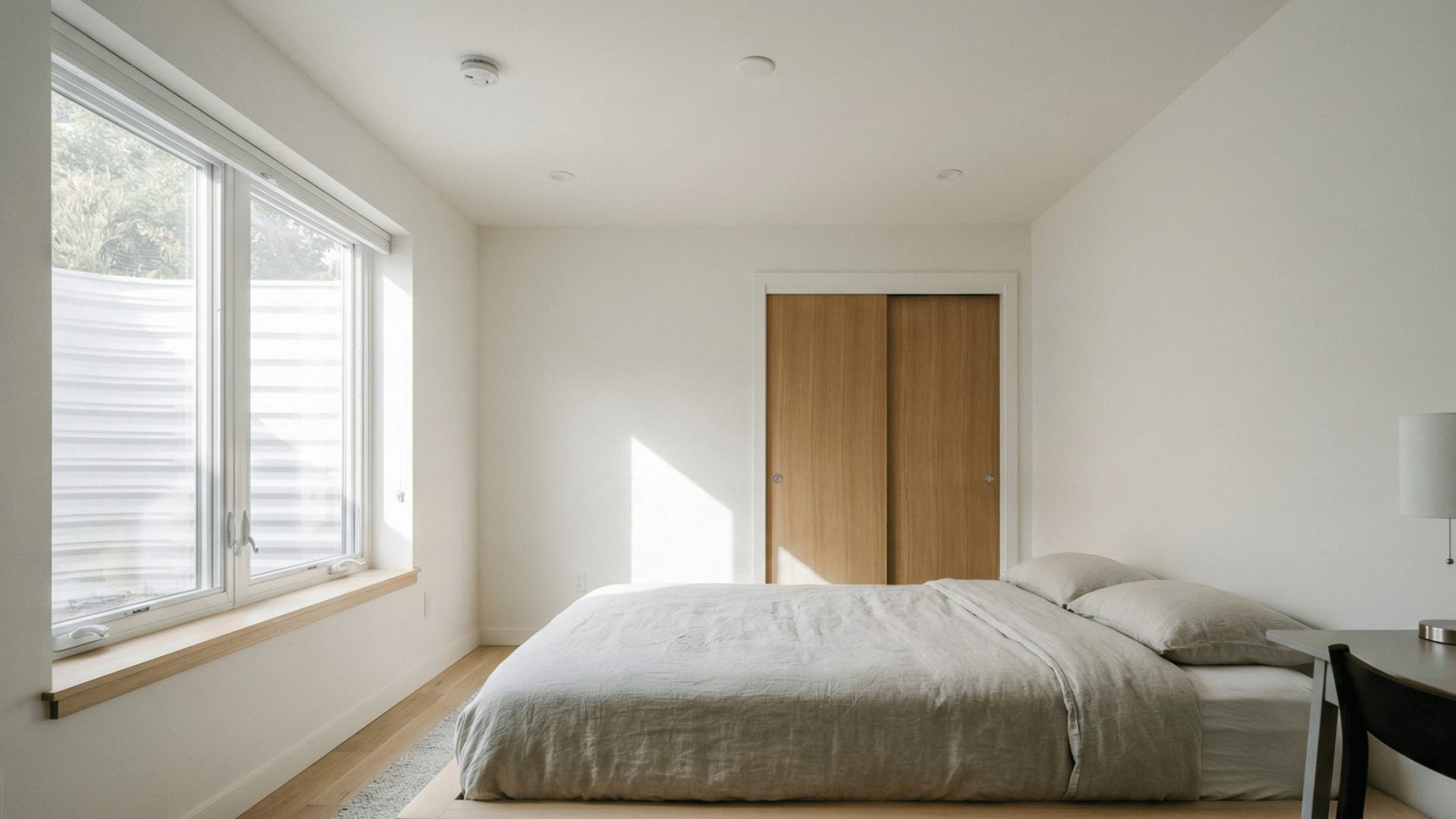
Building an ADU in California opens up incredible opportunities for extra income, housing family members, or creating flexible living space. But before you start planning that perfect backyard cottage, understanding legal bedroom requirements is critical. Getting this wrong can mean failed inspections, reduced property value, or even legal issues down the road.
California has specific building codes that determine what legally counts as a bedroom. These aren’t just bureaucratic rules. They exist to ensure safety, proper living conditions, and fair property valuations. Whether you’re working with Nestadu to build a new ADU or converting existing space, knowing these requirements saves time, money, and headaches.
What Legally Defines a Bedroom in California
Here’s where many homeowners get confused. A room doesn’t become a bedroom just because you put a bed in it. California’s building code sets clear standards that a space must meet before you can legally call it a bedroom.
The distinction matters for several practical reasons. Appraisers count legal bedrooms when determining property value. Lenders use bedroom count for mortgage calculations. Insurance companies need accurate information. And if you’re renting your ADU, advertising a room as a bedroom when it doesn’t meet code requirements can create liability issues.
A legal bedroom in California must have:
- Minimum square footage requirements
- Proper ceiling height throughout
- Two means of egress (exit points)
- Adequate natural light and ventilation
- Climate control (heating)
- Permanent walls and a door for privacy
Missing even one of these elements means the room legally cannot be counted as a bedroom, regardless of how you use it.
Legal Bedroom Requirements
California building code specifies that bedrooms must be at least 70 square feet for a single occupant. If two people will use the room, you need at least 50 square feet per person. This applies to ADUs just like primary residences.
But square footage alone doesn’t tell the whole story. The room also needs proper dimensions. You can’t have a 70-square-foot room that’s 3 feet wide and 23 feet long. The space needs to be functional and livable.
Ceiling Height Standards
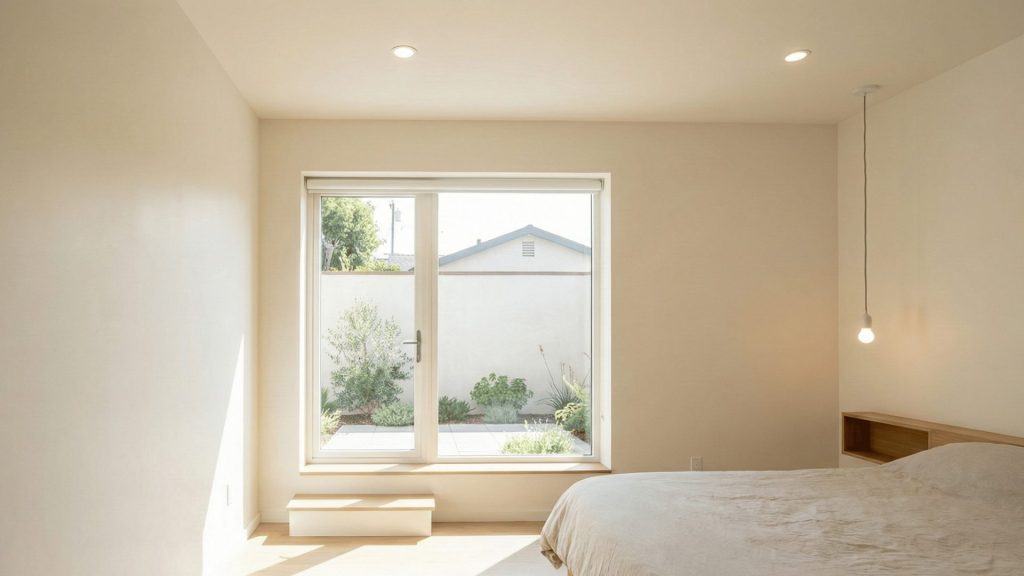
Every bedroom needs a minimum ceiling height of 7.5 feet over at least 50% of the room’s floor area. No portion of the ceiling can drop below 7 feet. This becomes particularly important in ADUs with loft bedrooms or sloped ceilings.
When Nestadu designs ADUs, we carefully consider ceiling heights in the initial planning phase. Sloped rooflines might look attractive from the outside, but they need to maintain code-compliant interior heights. Smart design solves this without sacrificing aesthetics or space efficiency.
The Critical Egress Requirements
This is where bedroom safety really comes into focus. California requires two separate means of egress from every bedroom. Typically, this means a door and a window that both meet specific requirements.
Door requirements include:
- Must open directly to the outside or into a hallway leading outside
- Minimum 32 inches wide
- Minimum 80 inches tall
- Must swing in the direction of exit travel
Window egress requirements are very specific:
- Minimum 5.7 square feet of openable area
- Minimum 24 inches tall when open
- Minimum 20 inches wide when open
- Bottom of opening no more than 44 inches from the floor
- Must be operable from inside without tools or keys
These window specifications exist for fire safety. In an emergency, occupants need to escape quickly, and firefighters need to enter. A beautiful picture window or skylight doesn’t count if it can’t be opened or doesn’t meet size requirements.
Strategized content expansion with balanced formatting and structural organization.
I’m at about 500 words now. I need to continue with more sections, keeping the paragraph/bullet point ratio in mind. Let me add more content about light, ventilation, heating, the closet myth, and compliance importance.
Natural Light and Ventilation Standards
Beyond emergency egress, bedroom windows serve another legal purpose. California requires natural light equal to at least 8% of the room’s floor area. A 100-square-foot bedroom needs at least 8 square feet of glass area.
Ventilation requirements call for an openable window area equal to 4% of the floor space. The same windows that provide light usually satisfy ventilation requirements. However, mechanical ventilation systems can substitute for natural ventilation in some cases.

Does a Bedroom Need a Closet in California?
Let’s clear up one of the biggest myths about California bedrooms. No, bedrooms do not legally require closets. This misconception is so widespread that many homeowners insist they need closets in every bedroom.
The confusion likely comes from real estate tradition and buyer expectations. Rooms with closets are more desirable and marketable. But from a legal standpoint, California building code never mentions closet requirements for bedrooms. You can have a perfectly legal bedroom without any closet at all.
That said, Nestadu typically includes closets in ADU bedroom designs. While not legally required, they add functionality and appeal. When you’re building rental income property or future resale value matters, closets make good business sense.
Heating Requirements for Bedrooms
Every bedroom must have a permanent heat source capable of maintaining 70 degrees Fahrenheit three feet above the floor. Portable space heaters don’t count. The heating system must be permanently installed and capable of heating the entire room.
Acceptable heating sources include:
- Forced air heating systems
- Radiant floor heating
- Wall-mounted electric heaters
- Heat pumps
- Ductless mini-split systems
Air conditioning isn’t legally required for bedrooms in California, though it’s certainly appreciated in many climates. Many ADU builders, including Nestadu, install systems that provide both heating and cooling for year-round comfort.
Privacy and Electrical Requirements
Bedrooms need permanent walls extending to the ceiling, not partial walls or room dividers. The room must have a door that closes for privacy. These seem obvious, but they’re actual code requirements.
Electrical code requires at least two separate outlets in bedrooms, placed on different walls when possible. You also need proper smoke detectors and carbon monoxide detectors following current safety standards.
Why Bedroom Compliance Matters for ADU Owners
Building a non-compliant bedroom creates problems that multiply over time. Inspectors will catch issues during final inspection, delaying your certificate of occupancy. If problems slip through, they’ll surface during refinancing, selling, or insurance claims.
Marketing a non-compliant room as a bedroom when renting can expose you to liability. Tenants injured in emergencies could claim the space didn’t meet safety requirements. Appraisers won’t count non-compliant rooms, reducing your property’s assessed value.
Working with experienced ADU contractors like Nestadu means these requirements get addressed during design. We’ve built hundreds of code-compliant ADUs across California. Our team knows local jurisdiction variations and builds everything to pass inspection the first time.

Getting Your ADU Bedroom Right
Understanding legal bedroom requirements helps you make informed decisions during ADU planning. Whether you’re designing a studio, one-bedroom, or two-bedroom ADU, these standards apply equally. They protect your investment, ensure safety, and create genuinely livable space.
The complexity of California building codes makes professional guidance valuable. Nestadu handles the technical details while you focus on how you’ll use your new ADU. From initial design through final inspection, we build ADUs that meet every requirement and exceed your expectations. Contact us to discuss your ADU project and learn how we can bring your vision to life while ensuring full legal compliance.