
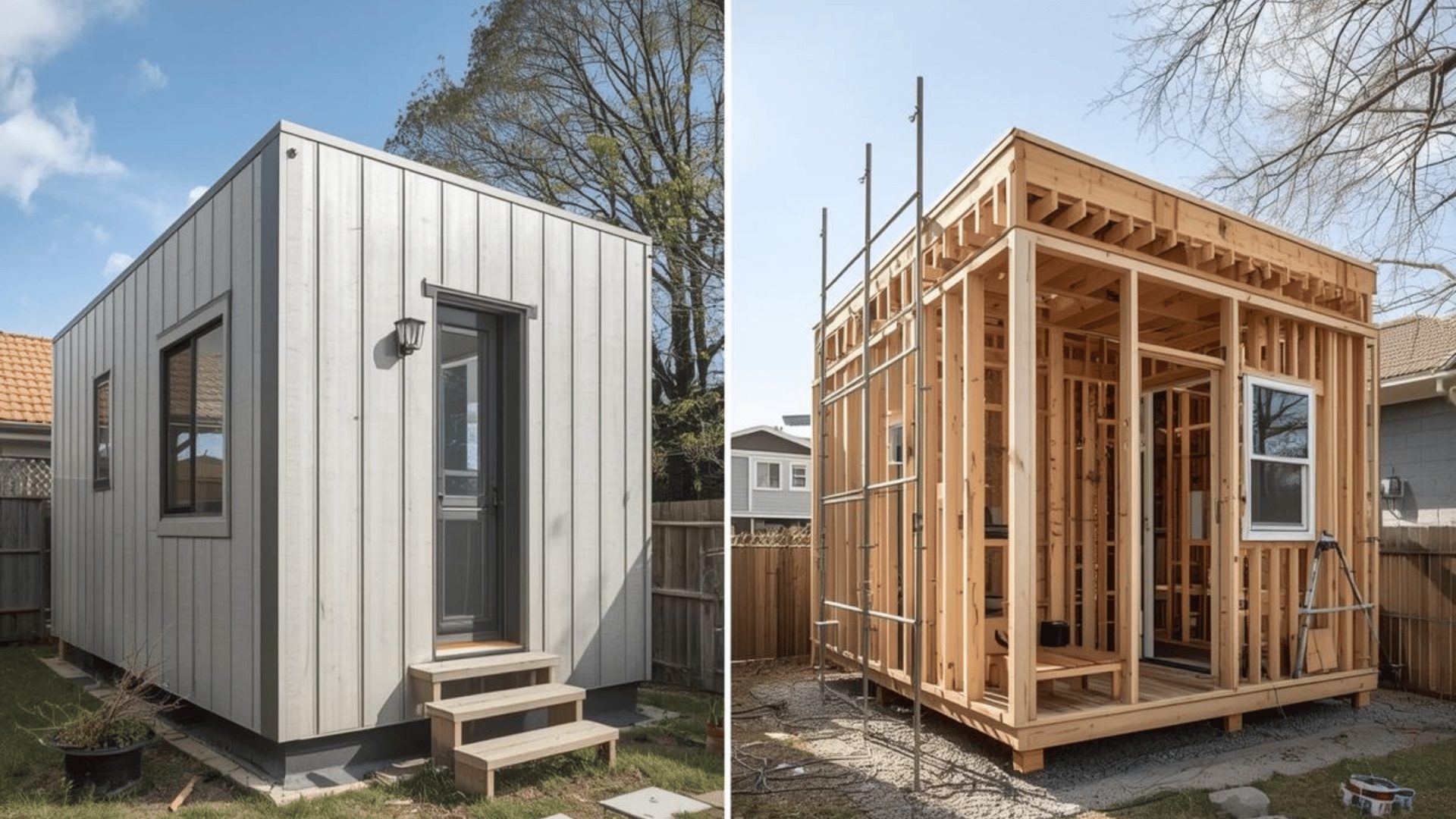
If you’re a California homeowner considering adding an accessory dwelling unit to your property, you’ve probably asked yourself this question more than once. The short answer? It depends.
Understanding what drives the cost difference can help you make a smarter decision for your specific situation. The prefab versus traditional construction debate isn’t just about dollars and cents.
Initial Cost Breakdown
Prefab ADUs typically range from $150 to $250 per square foot for the base unit. Traditional construction in California runs between $200 and $400 per square foot, sometimes more depending on your location.
Prefab pricing factors:
- Factory construction costs and profit margins
- Transportation and delivery fees ($5,000 to $15,000)
- Crane rental for installation ($2,000 to $8,000)
- Foundation and site preparation work
Traditional construction costs:
- Architectural and design fees (3% to 10% of project)
- Raw materials at retail pricing
- On-site labor costs (higher in urban areas)
- Project management and supervision
Construction Timeline
Prefab units can be manufactured in 6 to 12 weeks while your site is being prepared. Once delivered, installation typically takes just 1 to 3 days.
Traditional construction moves slower. Design and permitting alone can take 2 to 4 months. Then you’re looking at 6 to 12 months of actual construction.
Labor Expenses
Factory workers build prefab components in controlled conditions with predictable schedules. No rain delays or subcontractor no-shows.
Traditional builds depend on coordinating multiple trades. In California’s tight labor market, finding available skilled workers can push timelines back weeks or months.

Material Quality
High-quality prefab manufacturers use the same or better materials than site-built construction. The difference is consistency in every unit.
Traditional builds sometimes involve substitutions when certain products aren’t available. This can affect both quality and final costs.
Customization Options
Traditional construction pulls ahead here. Want to match your main house’s architectural style exactly? Traditional builds offer unlimited flexibility.
Prefab options include:
- Selecting from 3 to 8 base floor plans
- Choosing exterior siding and roofing colors
- Picking interior finishes
- Adding appliance upgrades
Traditional allows:
- Completely custom floor plans
- Matching architectural details to existing home
- Adapting to challenging site conditions
- Making changes during construction
Permit and Inspection Fees
Permitting costs are similar between both methods. However, some jurisdictions have streamlined approval processes for pre-approved prefab models.
Traditional builds require multiple inspections at various stages. Prefab units undergo factory inspections before shipping, then need fewer on-site inspections.
Long-term Maintenance
A well-built ADU should last 50 years or more with proper maintenance. The construction method matters less than quality of materials and installation.
Prefab units built in controlled environments often have fewer initial defects. Traditional builds depend heavily on the skill of individual tradespeople.
Energy Efficiency
Modern ADUs of both types can achieve excellent energy performance. The key is in the details like insulation values and window quality.
Prefab units often feature tight construction that minimizes air leakage. Factory assembly ensures insulation is installed consistently without gaps.
Financing Options
Most lenders treat ADUs similarly whether prefab or traditionally built. You’re financing based on total project cost and your home’s equity.
The faster construction timeline of prefab can improve your financing costs. Less time paying construction loan interest means more money stays in your pocket.

Resale Value
Future buyers care about quality, condition, and functionality. They care less about whether your ADU was built in a factory or on-site.
Nestadu specializes in creating ADUs that feel like natural extensions of your property. This approach protects and enhances your investment regardless of construction method.
Is A Prefab Adu Cheaper: Which Option Saves Money?
The answer depends on your specific situation. If you have a straightforward lot, prefab options will likely save money and time.
Prefab makes sense when:
- You have a simple, flat lot with good access
- Standard designs meet your needs
- You need the ADU completed quickly
- You want predictable, fixed pricing
Traditional works better when:
- Your lot has challenging conditions
- You want custom design matching your home
- You need unique architectural features
- Long-term property value is the priority

Final Thoughts
Is prefab cheaper than traditional construction? Sometimes yes, particularly when factoring in faster timelines and reduced labor complications.
At Nestadu, we help California homeowners evaluate both options honestly. Our goal is helping you make the choice that maximizes your investment and satisfaction.
Ready to explore your options? Contact Nestadu today for a consultation and transparent pricing for your accessory dwelling unit project.