
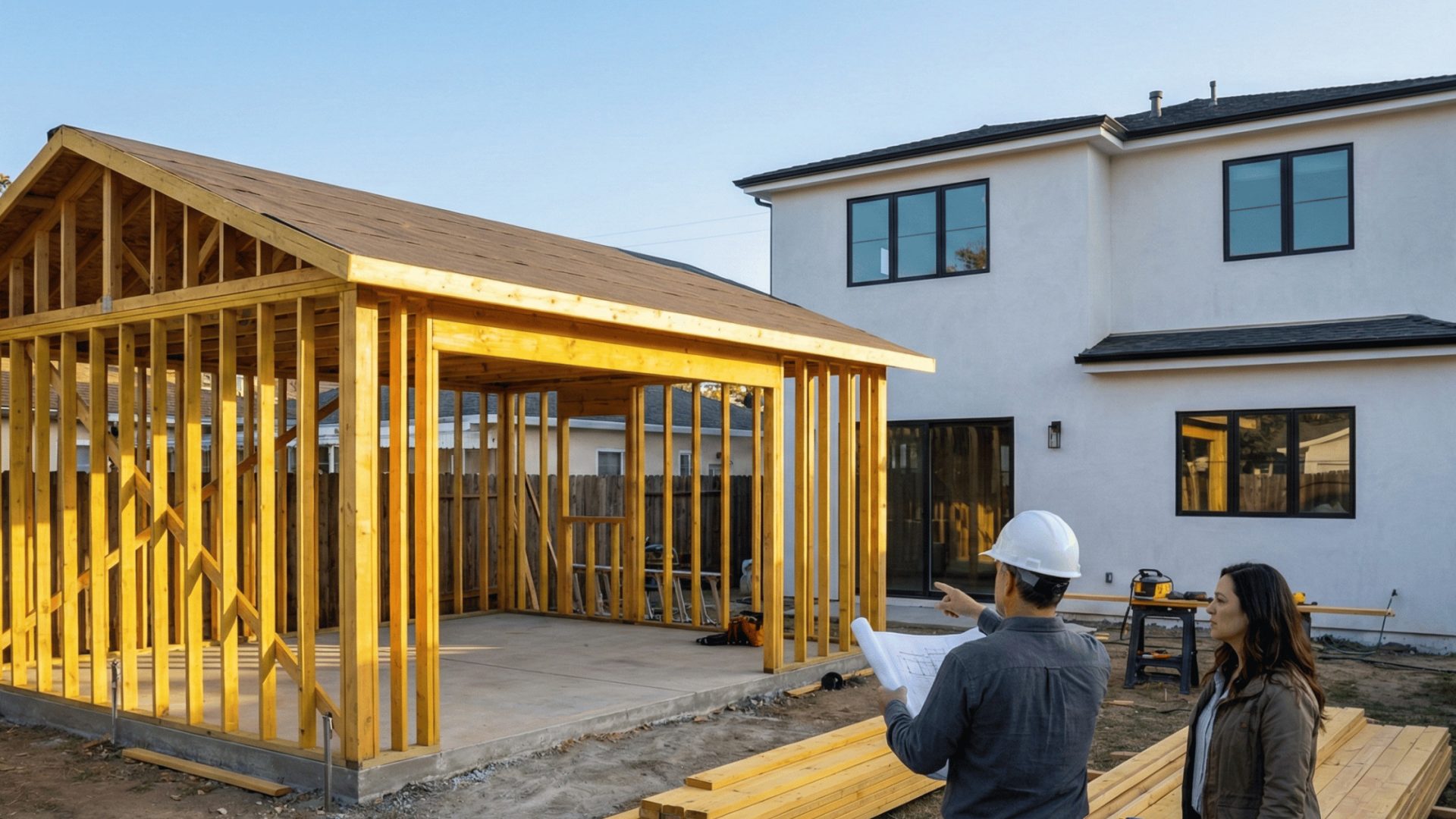
Building an accessory dwelling unit in California is one of the smartest investments a homeowner can make. But without the right preparation, code compliance issues can stall your project and blow your budget before construction even begins.
Ensure Your ADU Meets Building Codes
At Nestadu, we have guided homeowners through every stage of the ADU building process. Proper planning from day one is what keeps projects on schedule and protects homeowners from expensive surprises down the road. This guide covers exactly what it takes to build a code-compliant ADU in California.
Why Code Compliance Is More Important Than Homeowners Realize
A code-compliant ADU does more than satisfy inspectors. It protects your tenants, your insurance coverage, your legal standing as a landlord, and the long-term resale value of your property.
Non-compliant construction can void your homeowner’s insurance policy, expose you to personal liability, and in serious cases, result in forced demolition of unpermitted work. Getting it right from the start is always far cheaper than fixing it after the fact.
What California State Law Requires
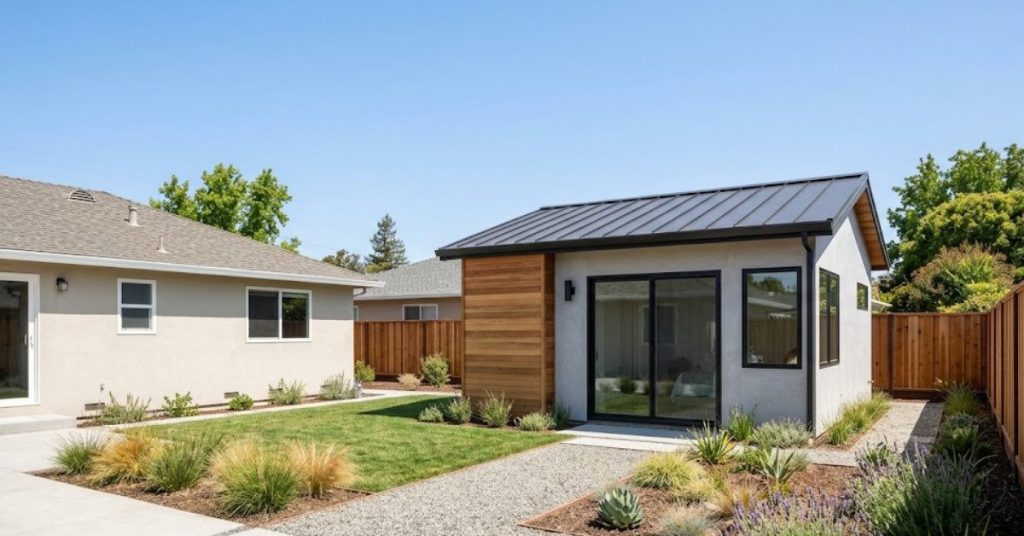
State legislation sets the foundation for every ADU project in California. Assembly Bill 68 allows homeowners to add an ADU and a Junior Accessory Dwelling Unit on any residential lot, which means a legal triplex is possible on a single-family property when size and setback requirements are satisfied.
Key state-level rules every California homeowner should know:
- The minimum ADU size is 150 square feet in most jurisdictions
- The maximum size for a detached ADU is 1,200 square feet
- A 4-foot setback is required from side and rear property lines for detached ADUs
- Local governments must issue a permit decision within 60 days of a complete application, and an undecided application may be deemed approved
- Local agencies cannot impose impact fees on ADUs under 750 square feet
State law sets the floor. Your city or county can layer additional requirements on top of these minimums, which is why you should always verify local rules with your planning department before submitting plans.
Core Building Code Areas You Need to Address
Structural and Foundation Requirements
Your ADU’s foundation type must match the unit you are building. A detached backyard cottage carries different structural requirements than a garage conversion or an interior junior ADU.
Foundation, framing, and load-bearing elements must follow the California Residential Code. ADUs located in hillside or seismic zones may require enhanced structural engineering. California’s seismic risk makes this one of the most critical areas to address with a licensed professional from the beginning of your project.
Electrical Requirements
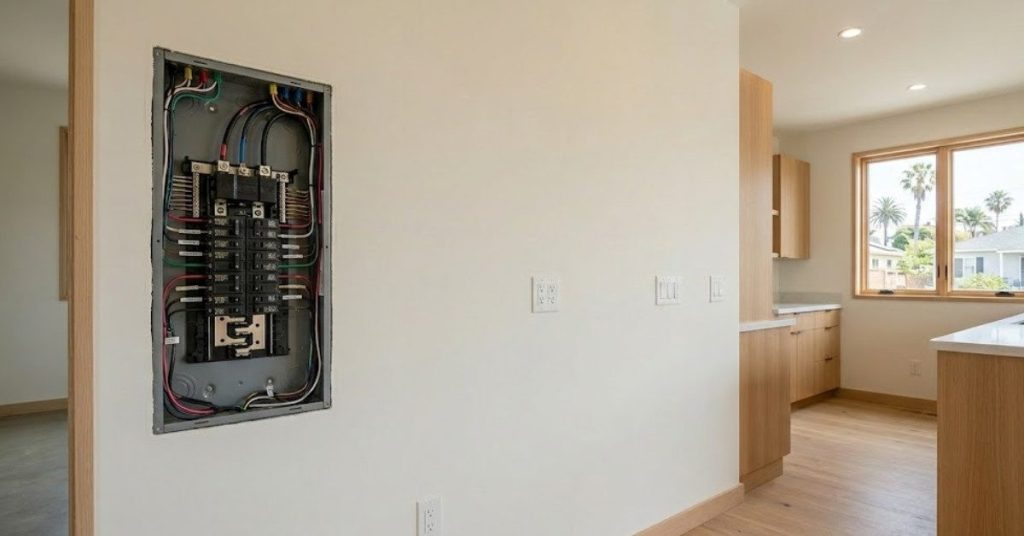
Most California ADUs require a 100 to 200 amp electrical panel depending on unit size and planned appliances. Larger units with full kitchens, laundry connections, and HVAC systems will need greater capacity.
Electrical compliance points your project needs to cover:
- GFCI protection is required in kitchens, bathrooms, garages, and outdoor areas
- AFCI protection is required in sleeping areas and living spaces
- Dedicated circuits are needed for high-demand appliances including HVAC systems and ranges
- Panel sizing should account for future additions such as EV charging infrastructure
Plumbing Requirements
All plumbing must meet the California Plumbing Code and the California Green Building Standards Code, which mandates low-flow fixtures throughout the unit.
Additional plumbing compliance requirements include:
- Water heaters must meet current efficiency ratings and proper venting standards
- New sewer and water lines may be required for detached units
- All plumbing must be inspected before walls are closed
- Bathroom and kitchen ventilation must satisfy mechanical code requirements
Fire and Life Safety
Smoke detectors are required in every sleeping room, outside each sleeping area, and on every floor of the unit. Carbon monoxide detectors are required when gas appliances or attached garages are present.
Additional fire safety requirements for California ADUs include:
- Properly sized egress windows in every sleeping room
- Fire sprinkler systems may be required depending on ADU size and local ordinance
- Safe clearances around electrical panels and mechanical equipment
Title 24 Energy Compliance
Title 24 sets statewide standards for energy efficiency, water use, ventilation, and building safety. Whether you are building a detached backyard unit, converting a garage, or adding an attached unit, energy compliance is a mandatory part of the building permit process in California.
What Title 24 requires for California ADUs:
- High-performance insulation matched to your local climate zone
- Energy-efficient windows with compliant U-values
- LED lighting throughout all habitable spaces
- Solar panels required for new detached ADUs above a certain square footage threshold, unless the site has excessive shading
- Mini-split and multi-split heat pump systems are permitted and can satisfy mandatory space-conditioning requirements under the energy code
Going all-electric simplifies Title 24 compliance, removes gas meter coordination from the equation, and can qualify your project for utility rebates.
Common Code Violations That Cause Failed Inspections
The same mistakes appear on California ADU projects over and over again. Most of them are entirely avoidable when plans are reviewed carefully before submittal.
- Ceiling height below 7 feet in habitable spaces
- Egress windows in bedrooms that are too small or incorrectly placed
- Missing GFCI outlets in kitchens and bathrooms
- Incorrect smoke and carbon monoxide detector placement
- Setback violations from side or rear property lines
- Covering plumbing or electrical work before required inspections are completed
Each of these issues triggers a correction notice and adds weeks to your project timeline. Nestadu’s design process is built to identify every one of these problems before a single plan is submitted to the city.
What to Expect From the Permit Process
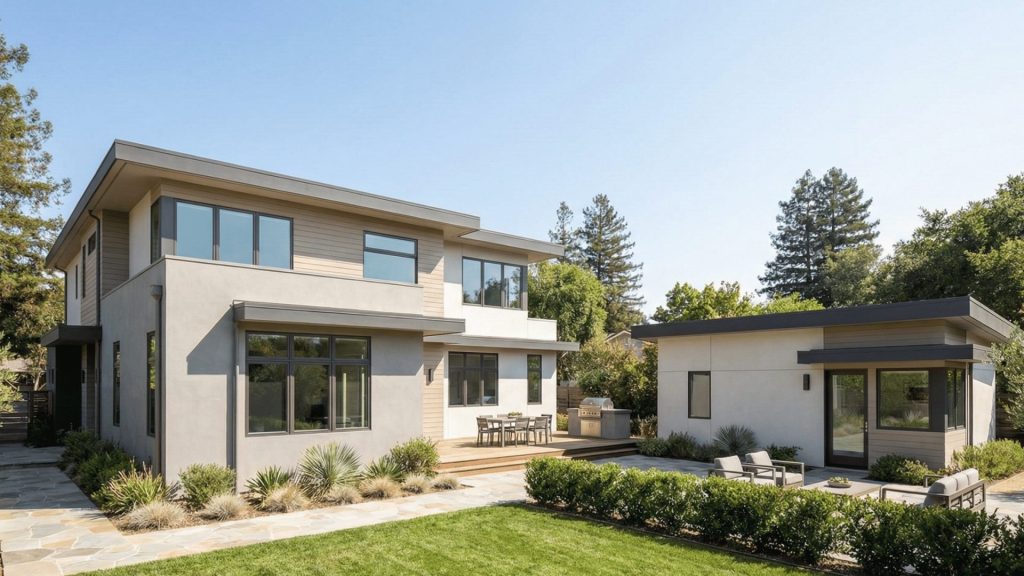
A complete ADU permit application requires architectural drawings, structural and utility plans, energy compliance documentation, and in some cases a soil report and stormwater management plan.
Here is how a typical California ADU permit process flows:
- Site assessment and architectural drawings: 2 to 6 weeks
- Structural engineering and permit documents: 2 to 4 weeks
- City plan review and approval: 4 to 8 weeks
- Construction with staged inspections at foundation, framing, and rough-in phases
- Final inspection and certificate of occupancy
Never cover walls or close up work before a required inspection is completed. This single mistake causes more project delays than almost anything else on California ADU builds.
How Nestadu Manages Code Compliance for Every Project
At Nestadu, building code compliance is built into every project from the first design conversation to the final inspection sign-off. Our team coordinates permits, manages utility applications, and handles plan submissions on your behalf so you are never left chasing city departments or trying to interpret technical bulletins on your own.
We build across California and stay current on both state law updates and local ordinance changes, so your ADU is designed to meet your city’s specific requirements the first time through plan review.
Ready to build your ADU the right way? Contact Nestadu today and let our team guide you from concept to a fully compliant, move-in-ready unit.
Final Thoughts
Knowing how to ensure your ADU meets building codes is not just about passing inspections. It protects your investment, your tenants, and the long-term value of your property. With the right team and the right process, code compliance becomes a built-in part of your project rather than an afterthought.
Nestadu is here to make sure your ADU is built right from the ground up.