
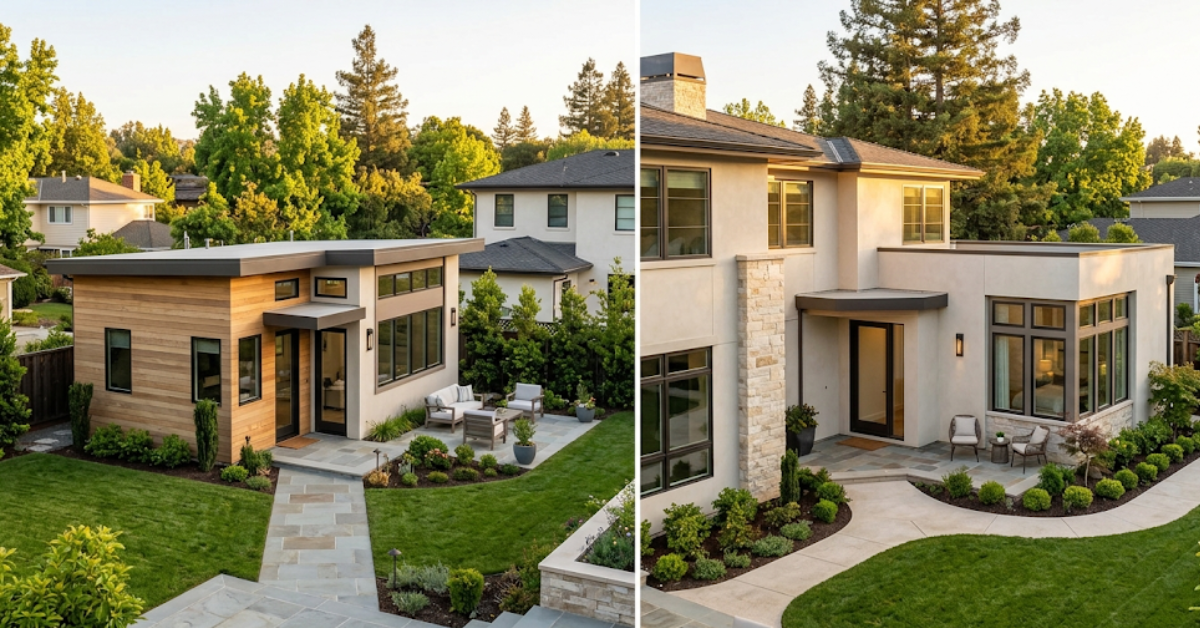
If you are planning to add an accessory dwelling unit to your property, the first major decision is whether to build detached or attached. Both give you extra living space, rental income potential, and a bump in property value. But the cost difference between the two can run anywhere from $50,000 to $150,000 depending on the size, location, and complexity of the project.
Detached ADU Cost vs. an Attached One
Detached ADUs in California typically cost between $150,000 and $350,000. Attached ADUs fall in the $80,000 to $200,000 range. That gap exists because a detached unit is a completely independent structure that needs its own foundation, walls, roof, and utility connections. An attached unit shares at least one wall with your main home, which cuts down on materials, labor, and infrastructure costs.
Here is a closer look at where those numbers come from and how to decide which type fits your property and budget.
Cost Comparison at a Glance
Before getting into the details, here is a simplified side-by-side comparison for a typical 600 sq ft ADU in California:
- Detached ADU: $150,000 to $350,000 (roughly $250 to $450 per sq ft)
- Attached ADU: $80,000 to $200,000 (roughly $150 to $350 per sq ft)
- Garage conversion: $50,000 to $150,000 (roughly $100 to $250 per sq ft)
These ranges cover design, permitting, construction, and basic interior finishes. They do not include furnishing, landscaping, or major appliance upgrades, which are separate line items.
What a Detached ADU Costs and Why It Is More Expensive
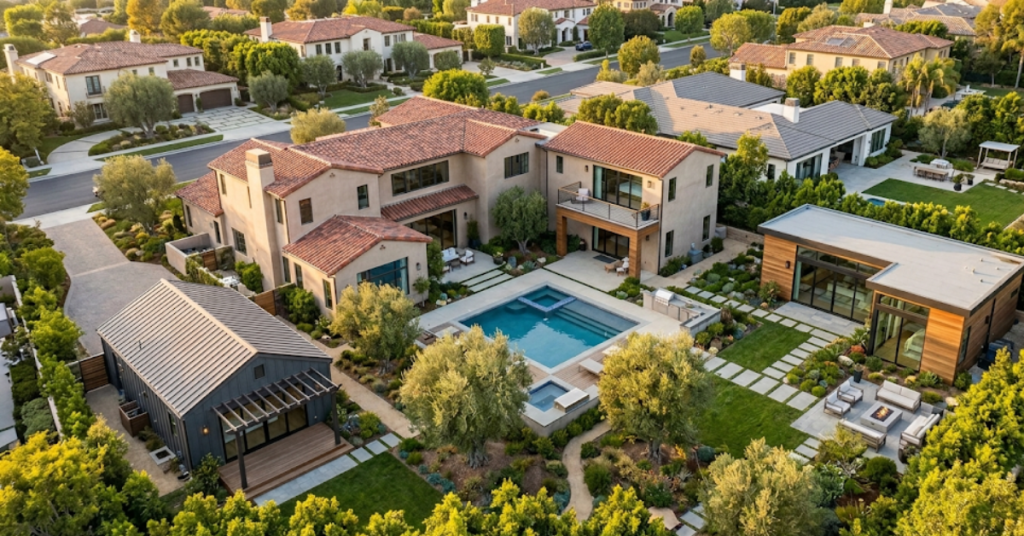
A detached ADU is a standalone building on your property, completely separate from the main house. Think of it as a small home in your backyard with its own entrance, kitchen, bathroom, and living space.
The higher price tag comes down to the fact that everything has to be built from scratch. There is no existing wall to lean on, no shared roof, and no plumbing or electrical system to tap into without running new lines across your yard.
The main cost drivers for a detached ADU include:
- Foundation and site prep: A new concrete foundation is required, and the site may need grading, tree removal, or demolition of an existing structure. This alone can run $15,000 to $50,000.
- Framing, roofing, and exterior walls: A full four-wall structure with its own roof costs significantly more than extending an existing one.
- Utility connections: Running new water, sewer, and electrical lines from the main house or street to the detached unit adds $8,000 to $20,000 depending on the distance.
- HVAC system: A separate heating and cooling system is needed since the unit cannot share the main home’s existing setup.
- Permitting and impact fees: Detached ADUs in many California cities carry higher impact fees, especially for units over 750 sq ft.
Despite the higher upfront cost, detached ADUs offer some clear advantages. They provide full privacy for both the homeowner and the occupant. They command higher rental rates because tenants see them as standalone homes rather than extensions of someone else’s house. In cities like Sacramento, a detached one-bedroom ADU can rent for $1,800 to $2,500 per month compared to $1,400 to $2,000 for a comparable attached unit.
What an Attached ADU Costs and Why It Is Cheaper
An attached ADU is built as an extension of your existing home. It shares at least one wall, and in many cases, it connects to the main house’s roof line and foundation. Common examples include side additions, second-story conversions, and bump-out extensions with a private entrance.
Attached ADUs typically cost 15% to 30% less than detached units because they take advantage of your home’s existing structure and systems.
Here is where the savings come from:
- Shared foundation: In many cases, the ADU extends from the existing foundation rather than requiring a new pour.
- Shared utilities: Plumbing, electrical, and HVAC can often tie directly into the main home’s systems, cutting out the cost of trenching and running new lines.
- Less framing and roofing: One or more shared walls and a connected roof line mean less material and labor.
- Faster construction: Attached ADUs typically take 4 to 7 months from permit to completion, while detached units take 6 to 9 months. A shorter build means lower labor costs.
The trade-off is reduced privacy. Shared walls can mean sound transfer, and tenants may feel less independent. Attached ADUs also come with design constraints since the layout has to work with where the unit connects to the main house.
Garage Conversions: The Most Affordable Option
If you have an existing garage you are willing to give up, converting it into an ADU is the most budget-friendly path. Costs typically fall between $50,000 and $150,000 because the foundation, walls, and roof are already in place.
The main expenses in a garage conversion include:
- Insulation and drywall
- Plumbing for a kitchen and bathroom
- Electrical upgrades and new outlets
- Flooring, windows, and interior finishes
- A private entrance if one does not already exist
The biggest trade-off is losing your parking and storage space. In some California cities, this is not an issue since recent state laws have removed parking requirements for ADU projects. But it is still something to factor into your decision.
Where the Real Cost Difference Shows Up
The gap between detached and attached ADU costs is not just about the total price tag. It shows up in specific construction categories that are easy to overlook during the planning phase.
Foundation work is the most significant one. A detached ADU needs a full new foundation, which can cost $15,000 to $50,000 depending on soil conditions and unit size. An attached ADU often extends the existing slab or adds a smaller footer, cutting that cost by 40% to 60%.
Utility trenching is the second biggest differentiator. Running water, sewer, and electrical lines underground from the main house to a backyard structure adds $8,000 to $20,000. Attached ADUs avoid most of this because they connect directly to existing systems through the shared wall.
Permitting fees also differ. While both ADU types require building permits in California, detached units often trigger higher impact fees and additional review steps, particularly in cities like Los Angeles, San Francisco, and San Jose.
Which ADU Type Adds More Property Value?
Both detached and attached ADUs increase your home’s appraised value, but the amount varies.
Detached ADUs generally add more to resale value because buyers perceive them as separate rental units or guest houses with their own identity. In many California markets, a well-built detached ADU can add $100,000 to $200,000 in property value while also generating monthly rental income that covers or exceeds the mortgage payment.
Attached ADUs add value too, but they are often appraised more like a home addition than a standalone unit. The rental income potential is slightly lower due to the shared-wall setup, but the lower construction cost means a faster return on investment in many cases.
How to Decide Between Detached and Attached
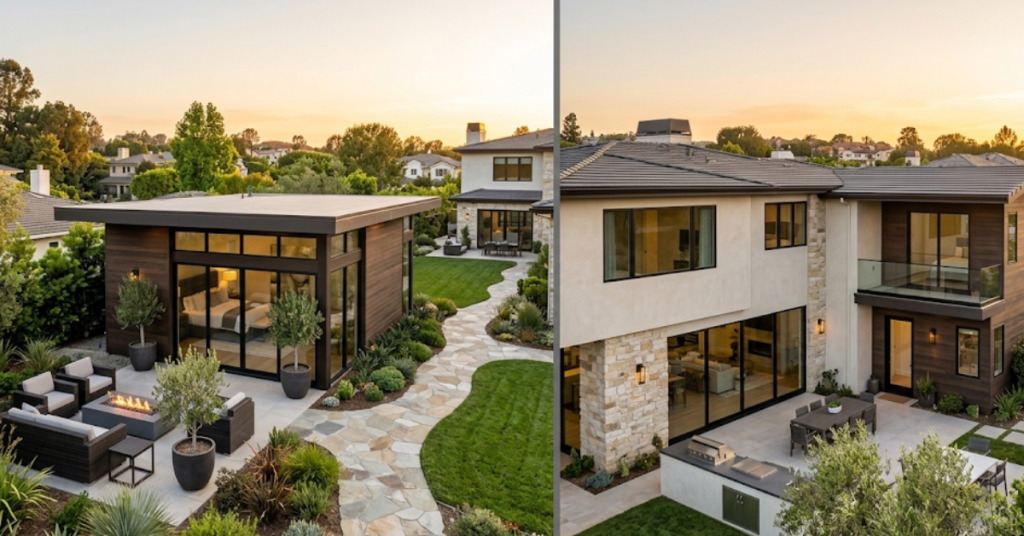
The right choice depends on your specific property, budget, and goals. Here are the key factors to weigh:
- Lot size: Detached ADUs need enough backyard space to meet setback requirements (typically 4 to 5 feet from side and rear property lines). If your lot is small, an attached unit or garage conversion may be your only option.
- Budget: If you are working with $80,000 to $150,000, an attached ADU or garage conversion is the realistic path. Detached units almost always exceed $150,000 in California.
- Privacy needs: If the ADU is for rental income and you want full separation between your household and the tenant, detached is the better fit. If it is for an aging parent or family member who benefits from proximity, attached makes more sense.
- Rental income goals: Detached units command higher monthly rents and attract more tenant interest because of the standalone feel.
- Timeline: Attached ADUs are typically built 2 to 3 months faster than detached ones, which matters if you need the space sooner or want to start collecting rent quickly.
Build the Right ADU for Your Property With Nestadu
Choosing between a detached and attached ADU is not just a cost decision. It is about matching the right structure to your lot, your budget, and how you plan to use the space for years to come.
At Nestadu, we help California homeowners make that decision with confidence. Our team evaluates your property, walks you through the cost differences, handles all permitting and design work, and builds your ADU from concept to completion with transparent pricing and no hidden fees. Whether you are building a backyard cottage for rental income or an attached in-law suite for family, Nestadu delivers a finished unit that adds real value to your property.
Ready to find out which ADU type works best for your lot? Contact Nestadu for a free consultation.