
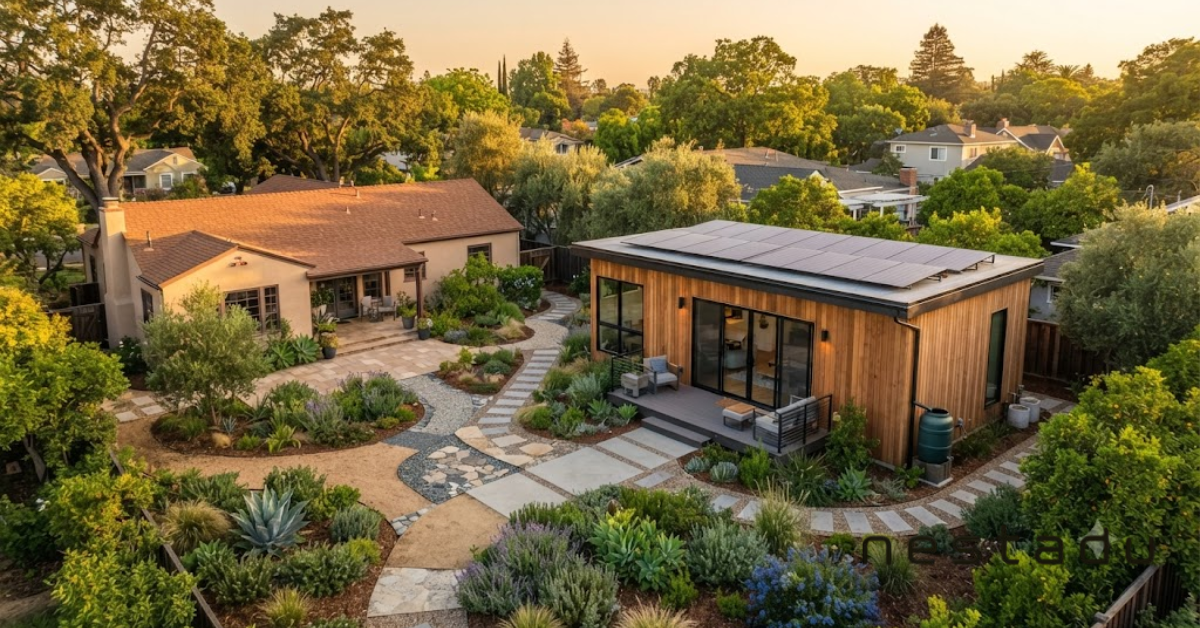
ADUs contribute to sustainable living because they use far less energy than a full-size house, sit on land that is already developed, and connect to utility lines that already exist. A smaller home means a smaller footprint in almost every way: less power, less water, less material, and less commuting.
For California homeowners, that matters more than it used to. Housing is tight, energy costs keep climbing, and state building rules now push new construction toward electric systems and solar. An accessory dwelling unit sits right at the center of all three pressures.
Why Do Smaller Homes Use Less Energy?
The math here is simple. A 600 square foot ADU has less air to heat, less air to cool, and fewer lights to run than a 2,400 square foot house. The building envelope is tighter, so heat escapes slower in winter and creeps in slower in summer.
Most ADUs in California land between 400 and 1,200 square feet. Compared to the average single family home, that usually cuts energy use by more than half.
- Smaller HVAC systems, often a single mini split instead of full ducted equipment
- No wasted conditioning of rooms nobody uses
- Shorter plumbing runs, so hot water arrives faster and less water goes down the drain waiting
- Fewer windows and doors, which are the weak points for heat loss
How Do ADUs Reduce Land and Material Waste?
This is the part most people miss. A new housing development means clearing land, grading soil, laying roads, trenching sewer lines, and running new power. An ADU skips all of it because your backyard already has those things.
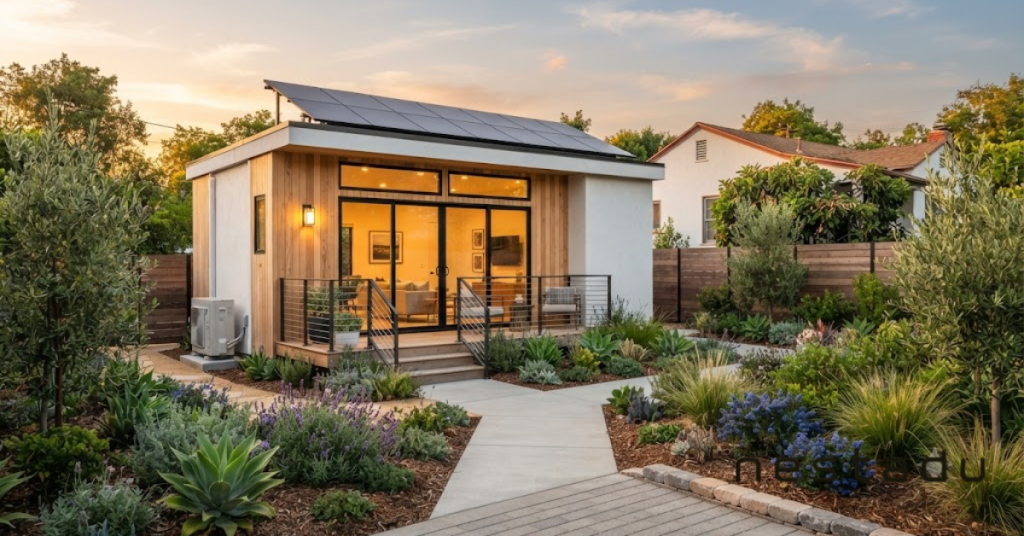
Nestadu builds on lots that are already served by water, sewer, gas, and electric. The driveway is there. The street is there. The neighborhood is there.
Material use drops too. Less framing lumber, less concrete, less roofing, less drywall. And because ADUs are small, contractors can plan cut lists tightly, which means less scrap heading to the landfill.
Can an ADU Actually Help Fight Urban Sprawl?
Sprawl happens when housing gets pushed further and further from where people work. That creates longer commutes, more cars on the road, and more emissions per household.
Infill housing does the opposite. An ADU adds a home inside an existing neighborhood, close to jobs, schools, buses, and grocery stores. California recognized this, which is why state ADU laws were loosened to make backyard units easier to permit.
The person living in that ADU drives less. That single change often outweighs everything else on this list in terms of carbon saved.
What Green Materials and Systems Work Best in an ADU?
Because the build is small, the cost of going efficient stays reasonable. Upgrading insulation across a whole house is expensive. Doing it across 700 square feet is not.
Here is what we typically recommend at Nestadu:
- Heat pump HVAC: heats and cools with one electric unit, no gas needed
- Heat pump water heater: roughly three times more efficient than a standard gas tank
- Induction cooktop: faster, cleaner, and no combustion inside the unit
- High performance windows: dual pane, low-E coating, tight seals
- Blown-in or mineral wool insulation: better thermal performance than basic batts
- Low VOC paints and finishes: cleaner indoor air for whoever lives there
- LED lighting and smart thermostats: small cost, immediate savings
- Drought tolerant landscaping: less irrigation around the unit
Some homeowners go further with reclaimed wood, recycled steel framing, or bamboo flooring. Those choices are nice, but the mechanical systems above move the needle more.
Is a Net Zero ADU Realistic?
Net zero means the building produces as much energy as it uses over a year, usually through solar panels. On a full size house, that takes a big array and a big budget.
On an ADU, it is much easier. The energy load is small, so the solar system needed to cover it is small. California already requires solar on most new residential construction, which means many ADUs are close to net zero before you even try.
Add a battery and the unit can run through outages. Add a heat pump and the unit runs entirely on that solar power, with no gas line at all.
How Do ADUs Save Water?
Water is the quiet sustainability issue in California, and ADUs help here in two ways. Fewer fixtures means less total demand, and new construction means everything installed is current code, which is far stricter than what is in most older homes.
- Low flow toilets, faucets, and shower heads by default
- Efficient dishwashers and washing machines
- Compact landscaping footprint, often replacing thirsty lawn
- Optional greywater systems that route shower and laundry water to irrigation
- Optional rainwater capture for garden use
Does Multigenerational Living Count as Sustainable?
It absolutely does, and it is the reason many Nestadu clients start the conversation. When aging parents or adult children move into an ADU instead of buying a separate house somewhere else, one entire new home never gets built.
That family shares a lot, shares infrastructure, and often shares a car. The environmental savings are large and permanent, even if they never show up on an energy bill.
Do Sustainable ADUs Make Financial Sense?
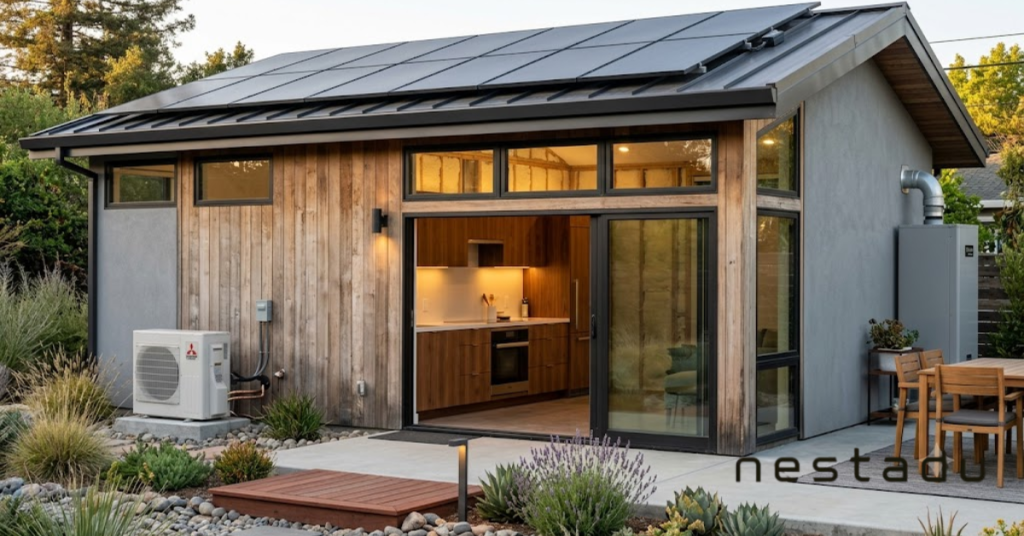
Green building has a reputation for costing more upfront. With ADUs, the gap is narrow and the payback is fast, because the systems are small and the rebates in California are generous.
- Lower monthly utility bills for whoever lives in the unit
- Rental income that offsets the build cost, often within several years
- State and utility rebates for heat pumps, water heaters, and electrical panel upgrades
- Higher resale value, since buyers now actively look for ADUs
- Reduced exposure to rising gas prices if the unit is all electric
The efficiency upgrades usually add a modest amount to the project total and pay themselves back through lower bills and rebate money.
Common Questions About ADUs and Sustainability
Are ADUs considered eco friendly housing?
Yes. Between the small footprint, existing infrastructure, and efficient new systems, ADUs are one of the lowest impact ways to add a home in California.
How much less energy does an ADU use than a main house?
It depends on size and systems, but a well built ADU commonly uses less than half the energy of a typical single family home.
Can I put solar on my ADU?
Yes, and in most California new builds it is required. The panel count needed is small because the load is small.
Do prefab ADUs waste less material?
Factory builds do produce less on-site waste, though a well managed site build can come close. Nestadu plans material orders carefully either way.
Are there incentives for building green in California? Yes. TECH Clean California, utility rebates, and various local programs offer money back on heat pumps, water heaters, and electrical work.
Building a Greener Backyard Home with Nestadu
An ADU is one of the few construction projects where the sustainable choice is also the practical one. Small footprint, existing land, efficient systems, and a home for someone who needs it.
Nestadu handles the full process across California, from design and permits through construction, with transparent pricing and no guesswork. If you are thinking about a backyard unit and want it built to run clean and cheap, reach out and we will walk you through what your lot can support.