
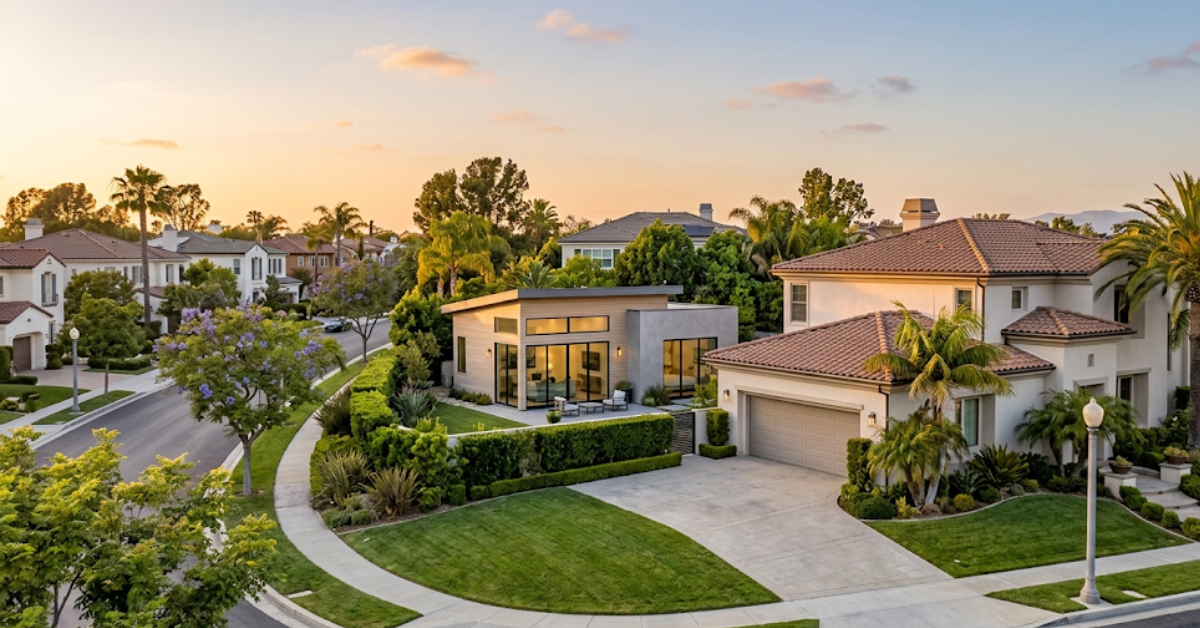
Not all ADUs deliver the same financial return. A permitted ADU in Los Angeles does not add the same percentage of value as the same unit built in a rural town with low housing demand. The market you are in plays a massive role in what your ADU is actually worth when it comes time to sell.
Do ADUs Add More Value to Homes
The short answer is yes. ADUs add significantly more value in competitive, high-demand housing markets where inventory is tight and rents are strong. Nestadu builds ADUs across California, where the data consistently shows stronger returns than the national average.
Why Market Competition Drives ADU Value
The value of an ADU is not just about what it costs to build. It is driven by basic supply and demand economics. In markets where housing is scarce and prices are high, every additional livable square foot on a property carries more weight with buyers and appraisers.
Three forces push ADU values higher in competitive markets:
- Housing scarcity. When there are not enough homes to meet buyer demand, properties with ADUs stand out because they offer more usable space on a single lot. Buyers in tight markets actively search for these listings and are willing to pay a premium when they find one.
- Strong rental demand. High rents mean the ADU generates meaningful monthly income. A unit pulling $2,500 to $3,500 per month is worth far more at resale than one in a market where rents sit at $800. Buyers and appraisers both factor this income potential into property valuations.
- Multiple buyer pools. In competitive markets, ADU homes attract investors, multigenerational families, remote workers, and house-hackers all at once. More buyer interest means more showings, stronger offers, and faster sales.
In slower markets, these forces are weaker. Rental demand is lower, housing inventory is more available, and fewer buyers are specifically looking for ADU properties. The ADU still adds value, just less of it.
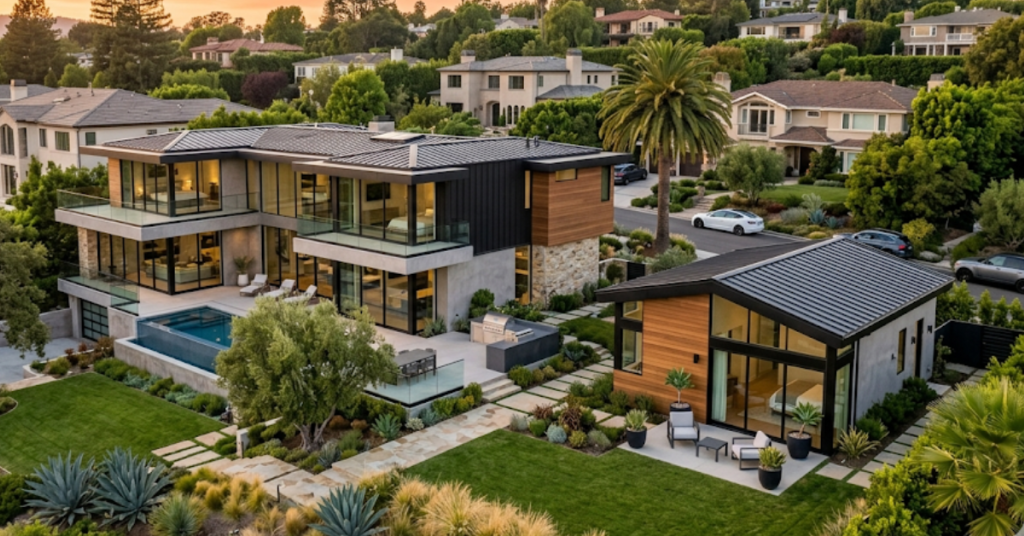
How Much More Value Do ADUs Add in California’s Top Markets?
The numbers vary by city, but the pattern is consistent across California. The more competitive the market, the higher the ADU premium. Here is what the data shows in specific markets.
Los Angeles is one of the strongest ADU markets in the country. The National Association of Realtors reports that homes with ADUs are priced about 35% higher than comparable homes without them. In some LA neighborhoods, homeowners have seen value increases of up to 58%. One homeowner built a 1,000-square-foot detached ADU for $300,000 and saw their property value jump by roughly $614,000.
San Diego shows similar strength. Homes with ADUs command 25% to 35% resale premiums and sell about 26% faster. A homeowner who added a 500-square-foot unit for $200,000 saw their home’s value increase by approximately $307,000.
Bay Area markets are among the most competitive in California. An analysis of over 1,000 ADU projects in similarly competitive markets found that property values rose by an average of 39%. The Bay Area built 2,761 new ADUs in 2023 alone, creating a growing volume of comparable sales data that supports stronger appraisals.
Sacramento is a growing mid-tier market where ADU premiums typically land in the 20% to 30% range, reflecting lower median home prices and softer rental demand compared to coastal cities.
Rural and lower-demand areas still see positive returns from ADUs, but premiums generally fall in the 15% to 20% range. Fewer comparable ADU sales make appraisals less predictable, and lower rental demand limits the income-based value that drives higher prices in competitive cities.
Rental Income as a Value Multiplier in Hot Markets
In competitive markets, rental income does not just cover your mortgage. It directly increases what your property is worth to the next buyer. This is where the financial advantage of building in a strong market really shows up.
California ADU rents range from $1,500 to $3,500 per month depending on size, location, and finish quality. In premium markets like LA and the Bay Area, rents can push even higher. That income stream changes the math for buyers and appraisers in two key ways:
- Buyers factor rental income into what they will pay. A property generating $30,000 to $42,000 per year in ADU rent is worth significantly more than an identical property without that income stream. Investors especially are willing to pay a premium for built-in cash flow.
- Appraisers use the income approach to valuation. In strong rental markets, appraisers calculate the ADU’s net operating income and apply a capitalization rate to determine how much value the rental unit contributes to the property. This method directly ties rental potential to appraised value.
The result is straightforward. A $200,000 ADU build in San Diego that generates $2,500 per month in rent adds more resale value than the same $200,000 ADU in a market where the unit only rents for $900. The construction cost is the same, but the market determines the return.
Annual returns from renting out ADUs in competitive California markets typically range from 8% to 12%. Long-term appreciation for properties with ADUs averages about 9.3% per year compared to 7.7% for homes without them. Over a five to ten year hold, that difference compounds into a significant gap in equity.
What Makes a Market “Competitive” for ADU Value?
Not sure whether your area qualifies as a competitive ADU market? Five indicators consistently predict higher returns on ADU investments:
- High median home prices where buyers are already spending large amounts and are willing to pay extra for income-producing properties
- Low housing inventory that creates competition among buyers and makes ADU listings stand out from standard single-family homes
- Strong rental demand with average rents high enough for the income approach to appraisal to work in your favor
- Population growth outpacing new construction which creates sustained demand for creative housing solutions like backyard cottages and in-law suites
- Favorable ADU legislation like California’s 60-day permit review timelines, reduced impact fees, no owner-occupancy requirements for standard ADUs, and the ability to sell ADUs as separate condos under AB 1033
California checks every one of these boxes, which is why ADU returns here consistently outperform the national average. Over 60,000 ADU permits have been issued statewide since 2018, and the state is on track to add 30,000+ ADUs annually by mid-decade.
Why ADUs in Slower Markets Still Add Value
ADUs are not a bad investment outside of competitive markets. They just deliver smaller premiums and take longer to pay for themselves through rental income.
- Premiums of 15% to 20% are still common in slower markets, which can translate to $50,000 to $150,000 in added value depending on the base home price
- Fewer comparable ADU sales make appraisals less predictable, which means your ADU could be undervalued on paper even if buyers would actually pay more
- Lower rental demand reduces the income-based value component, so the ADU’s worth relies more on added square footage than on rental potential
- Multigenerational living demand still drives buyer interest everywhere. The National Association of Realtors reported that 17% of homes purchased in 2024 were multigenerational households, and that trend is not limited to expensive cities
The takeaway is that market competition determines the size of the premium, not whether the premium exists at all.
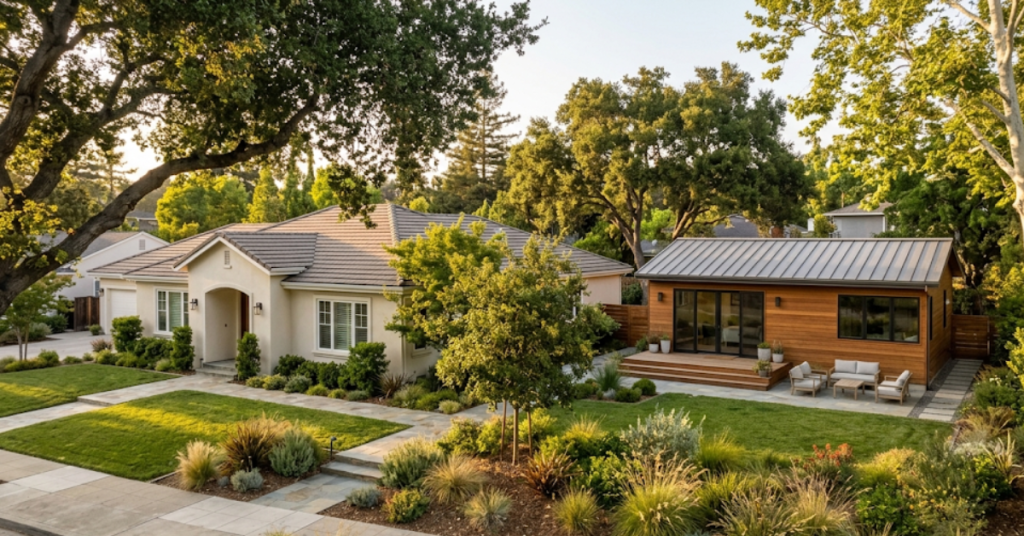
What Type of ADU Adds the Most Value in Hot Markets?
In competitive markets, buyers want ADUs that work as standalone rental units from day one. The features that drive the highest premiums are consistent across California’s top cities.
- Detached ADUs with a full kitchen and bathroom command the highest resale premiums because they offer complete privacy and function as independent living spaces
- Separate entrance and private outdoor space make the unit more attractive to tenants and more valuable to buyers who plan to rent it out immediately
- High-quality finishes that match the main home signal to buyers that the ADU was professionally built and will not require immediate work or repairs
- Permitted, code-compliant construction is the single biggest factor regardless of market. An unpermitted ADU adds zero value on an appraisal even in the hottest zip code in California
The sweet spot in most California markets is a detached unit between 400 and 800 square feet with quality finishes, a separate entrance, and full permit documentation. Nestadu designs every ADU with these resale-driving features built into the project from the first conversation.
How Nestadu Builds ADUs That Capture Full Market Value
Nestadu builds every ADU with resale value and rental appeal in mind from day one. That means fully permitted, code-compliant construction on every project so your investment counts on every future appraisal.
Every Nestadu ADU is custom-designed to complement your existing home and neighborhood, with layouts built for rental appeal and long-term buyer interest. If you want to understand what an ADU could add to your property’s value, talk to the Nestadu team to get started.