
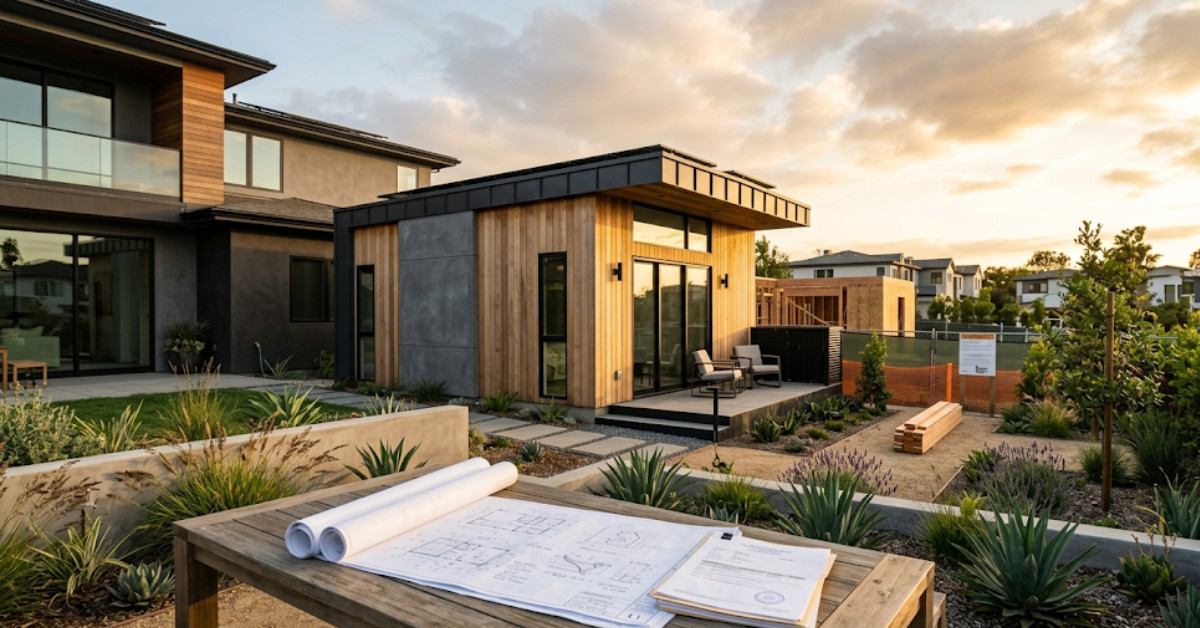
Building an ADU in California costs anywhere from $80,000 to $300,000 depending on the type, size, and location. With that kind of investment on the line, most homeowners want to know if the government offers any tax credits to bring that number down.
There is no direct federal or California tax credit for ADU construction. You cannot write off building costs just because you added an accessory dwelling unit. However, federal energy credits, a state grant program, rental property deductions, and local fee waivers can reduce your total cost significantly if you plan for them.
Federal Energy Tax Credits That Apply to ADUs
The federal government does not offer a tax credit for the general cost of building an ADU. Construction labor, materials, and permitting fees are not deductible. But two energy-related credits can apply to specific components installed inside your unit, and both run through 2032.
Energy Efficient Home Improvement Credit (Section 25C)
This credit covers qualifying energy-efficient upgrades with a combined maximum annual credit of $3,200. It breaks down into two categories:
- Up to $1,200 per year for energy-efficient windows, exterior doors, insulation materials, and certain high-efficiency HVAC systems
- Up to $2,000 per year for qualifying heat pumps, heat pump water heaters, and biomass stoves or boilers
- Up to $150 for a professional home energy audit
If you are building a new ADU and installing a high-efficiency heat pump system or upgraded insulation that meets current energy standards, those specific costs may qualify for this credit.
Residential Clean Energy Credit (Section 25D)
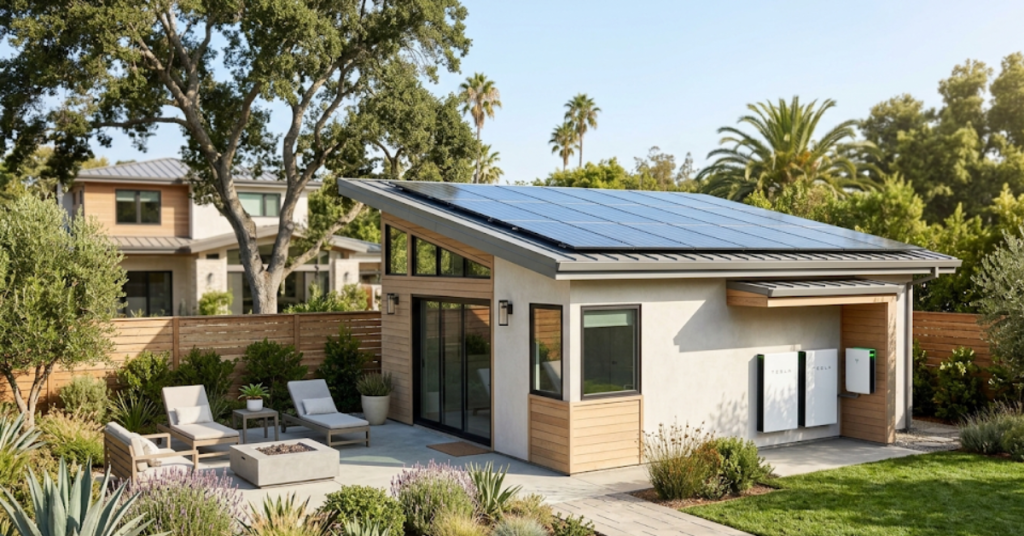
This credit covers 30% of the total cost of solar panels, solar water heaters, battery storage systems, and geothermal heat pumps installed on your property, including on an ADU. There is no annual dollar cap on this credit through 2032.
If you add a $15,000 solar array to your ADU’s roof, you can claim a $4,500 tax credit. If you pair that with a $10,000 battery storage system, the combined credit comes to $7,500.
Both credits are dollar-for-dollar reductions in the taxes you owe, not just deductions from your taxable income. They apply to the energy components only, not the ADU structure itself. But when you are already spending six figures on construction, planning for $3,000 to $7,500 in energy credits is a smart addition to your budget.
California’s CalHFA ADU Grant Program
California created the CalHFA ADU Grant Program to help homeowners cover the upfront soft costs of building an ADU. The program offered up to $40,000 per project and was designed to reimburse pre-development expenses that happen before construction begins.
Eligible expenses included:
- Architectural and engineering designs
- Permit fees and impact fees
- Soil tests and property surveys
- Energy reports
- Non-recurring closing costs on the construction loan
The grant targeted low to moderate-income homeowners who occupy the property. Funds were distributed through CalHFA-approved lenders on a first-come, first-served basis from a $100 million state allocation.
As of mid-2026, the most recent round of funding has been fully allocated and the program is not accepting new applications. There is legislative interest in re-funding it, but no confirmed relaunch date has been announced. Do not plan your ADU budget around this grant until new funding is officially confirmed. If anyone contacts you claiming they can help you get a CalHFA grant right now, it is a scam according to CalHFA’s own public warning.
State Laws That Directly Reduce ADU Costs
California does not offer a state tax credit for ADUs, but it has passed several laws in recent years that cut real dollars from the cost of building one. These are not credits you claim on a tax return, but they reduce what you pay out of pocket during the construction process.
- Impact fees are fully waived for ADUs under 750 sq ft
- Parking requirements are eliminated for ADUs located near public transit stops
- ADU permit approvals must be processed within 60 days, reducing delays and carrying costs
- Owner-occupancy requirements have been removed for detached ADUs
- Local agencies cannot require minimum lot sizes as a condition for ADU approval
For many California homeowners, these policy changes save $5,000 to $15,000 in fees and cut months off the approval timeline.
How Building an ADU Affects Your Property Taxes
One of the most common concerns is whether adding an ADU will trigger a full reassessment of your property and cause your annual tax bill to spike. In California, the answer is no.
Under Proposition 13 and SB 1164, adding an ADU does not reassess your entire home. Only the new construction is evaluated at current market value. Your existing home keeps its original assessed value untouched.
Here is how the math works in practice. If your ADU costs $200,000 to build and California’s average property tax rate is 1% to 1.5%, your annual property tax increase would be roughly $2,000 to $3,000 per year. That is a real cost to budget for, but it is far less than a full reassessment would produce. If you are renting the ADU out, this increase is easily covered by monthly rental income.
Tax Deductions When You Rent Out Your ADU
This is where the most significant long-term tax benefits come into play. Once you start collecting rent from your ADU, the IRS treats it as a rental property. That classification unlocks a range of annual deductions that reduce your taxable rental income.
Depreciation
Depreciation is the single most valuable deduction for ADU owners who rent out their unit. You can depreciate the cost of the ADU structure (excluding land value) over 27.5 years. On a $200,000 build, that works out to roughly $7,270 per year in paper losses that reduce your taxable income without requiring any actual out-of-pocket spending.
Deductible Rental Expenses
Beyond depreciation, the IRS allows you to deduct the ongoing costs of operating the rental:
- Mortgage interest on the loan used to finance the ADU
- Property taxes attributable to the ADU portion of your property
- Insurance premiums for the rental unit
- Maintenance and repair costs (plumbing fixes, repainting, appliance replacements)
- Property management fees if you hire a third party
- Utilities if you cover them on behalf of the tenant
- Advertising costs for listing the rental
If your ADU generates $24,000 per year in rental income but your deductible expenses including depreciation total $18,000, you only owe taxes on $6,000 of that income. Over a 10-year period, these deductions add up to a substantial reduction in your effective tax burden.
Short-Term Rental Rules
If you list your ADU on Airbnb or VRBO, the same deductions generally apply. The IRS requires that you rent the unit for 15 or more days per year and use it personally for fewer than 14 days for it to qualify as a rental property with full deduction eligibility.
Tax Benefits for ADUs Used as Home Offices
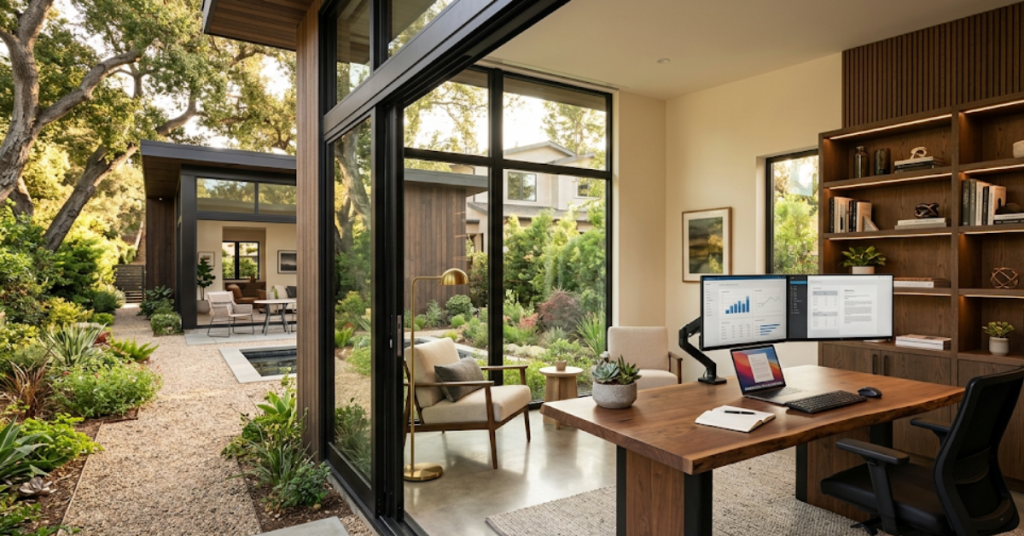
If you use your ADU exclusively as a home office and it serves as your primary place of business, you may qualify for the home office deduction. The IRS requires the space to pass the “exclusive and regular use” test, meaning the ADU cannot double as a guest room or personal living area.
The simplified method allows a flat deduction of $5 per square foot, up to 300 square feet, for a maximum of $1,500 per year. The regular method requires tracking actual expenses like utilities, insurance, and depreciation, but it often produces a larger deduction for dedicated office spaces.
Local Fee Waivers Worth Checking
Beyond state and federal programs, many California cities offer their own incentives that cut ADU project costs directly:
- Los Angeles: Waived school fees and expedited plan check for ADU projects
- San Diego: Waived development impact fees for accessory dwelling units
- San Jose: Deferred utility connection fees and reduced permit costs
- San Francisco: Reduced permit fees for ADUs under 750 sq ft
- Sacramento: Fee waivers and pre-approved ADU plan sets that lower design costs
These city-level programs change frequently. Check with your local planning department before finalizing your budget.
Build Your ADU With Every Available Benefit in Mind
There is no single tax credit that covers ADU construction in California. But when you stack federal energy credits, rental income deductions, depreciation write-offs, and local fee waivers together, the financial picture gets significantly better over the life of the project.
At Nestadu, we build ADUs across California with energy-efficient features that qualify for federal credits and layouts designed for strong rental returns. If you want transparent pricing from a builder who plans for every cost and benefit, contact Nestadu for a free consultation.
Disclaimer: Nestadu is not a tax advisor. The information in this article is for general educational purposes only. Consult a licensed CPA or tax professional for advice specific to your financial situation.