
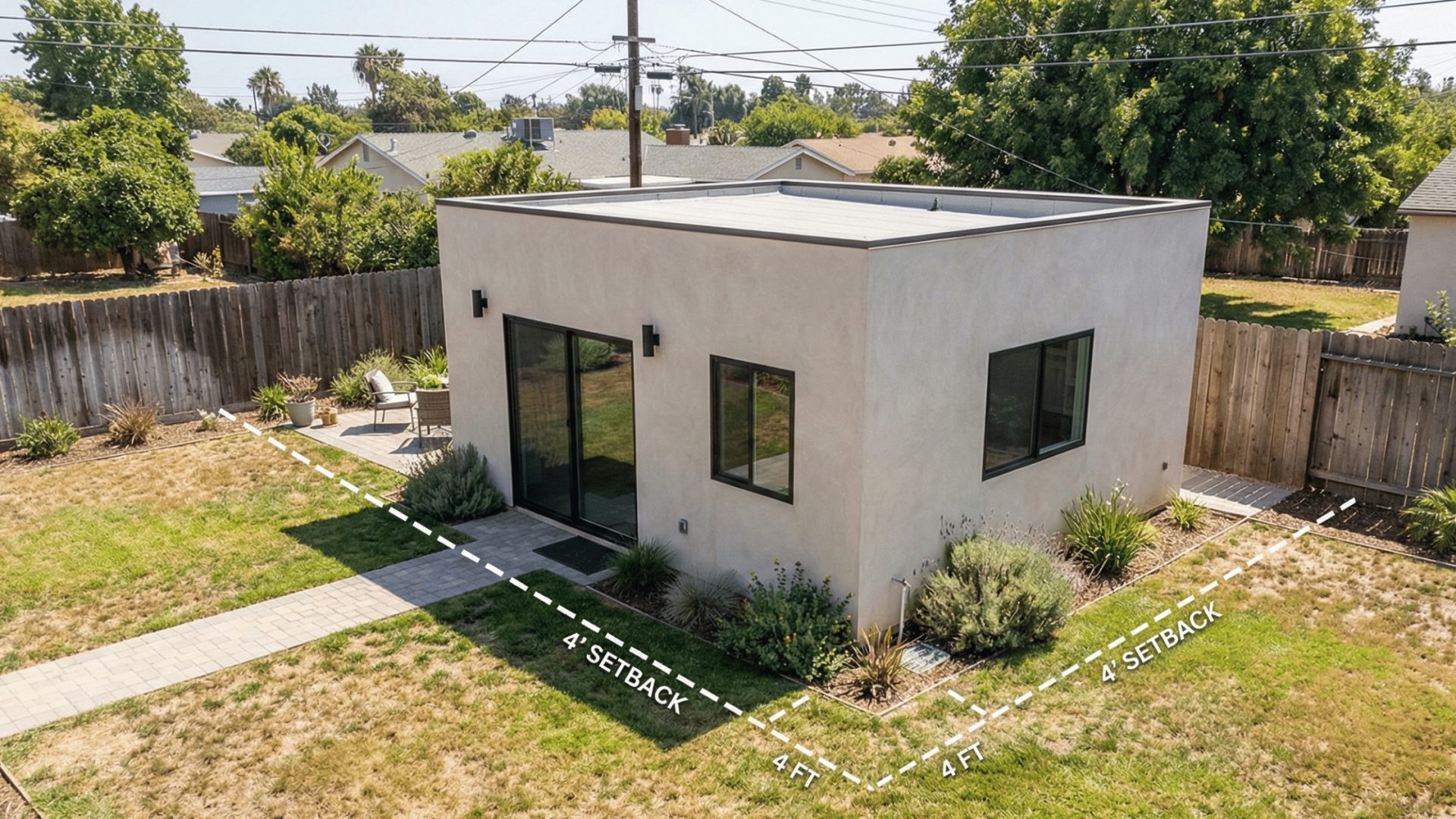
Planning to build an accessory dwelling unit on your California property? One of the first things you need to figure out is how close that new structure can actually sit to your property lines. Setback requirements play a huge role in determining where your ADU goes, how big it can be, and whether the project is even feasible on your lot.
At Nestadu, we walk homeowners through these rules every single day, and we know how confusing they can get. This guide breaks down what you need to know so you can plan your ADU project with confidence.
What Are ADU Setback Requirements?
In simple terms, a setback is the minimum distance your ADU must be from a property line, an easement, or another structure on your lot. These rules exist for practical reasons like fire safety, emergency access, ventilation, and maintaining a reasonable amount of space between neighboring properties.
Setbacks apply to the front, rear, and sides of your property. And here is the good news for California homeowners: the state has significantly reduced setback requirements over the past few years specifically to make ADU construction more accessible.
California’s Statewide ADU Setback Rules
California law has done a lot of the heavy lifting when it comes to making ADU setbacks more homeowner-friendly. Under current state legislation, most detached ADUs only need to maintain a 4-foot setback from the rear and side property lines. That is a much smaller buffer than what is typically required for a primary residence.
Here is a quick look at how setbacks break down across different scenarios:
- Rear and side setbacks: 4 feet from the property line for most single-story detached ADUs under 16 feet in height.
- Two-story ADUs: If your ADU exceeds 16 feet in height, some cities may require larger setbacks, particularly if the property borders another residential lot.
- Front setbacks: California state law does not override local front yard setback rules, so these still follow your city’s zoning code.
- ADUs under 800 square feet: Front setback requirements cannot be used as a reason to deny your ADU permit, giving smaller units more placement flexibility.
These statewide rules have opened up options for thousands of homeowners who were previously limited by restrictive local zoning. However, your specific city or county may have additional guidelines, which is why working with an experienced builder like Nestadu can save you time, money, and headaches.
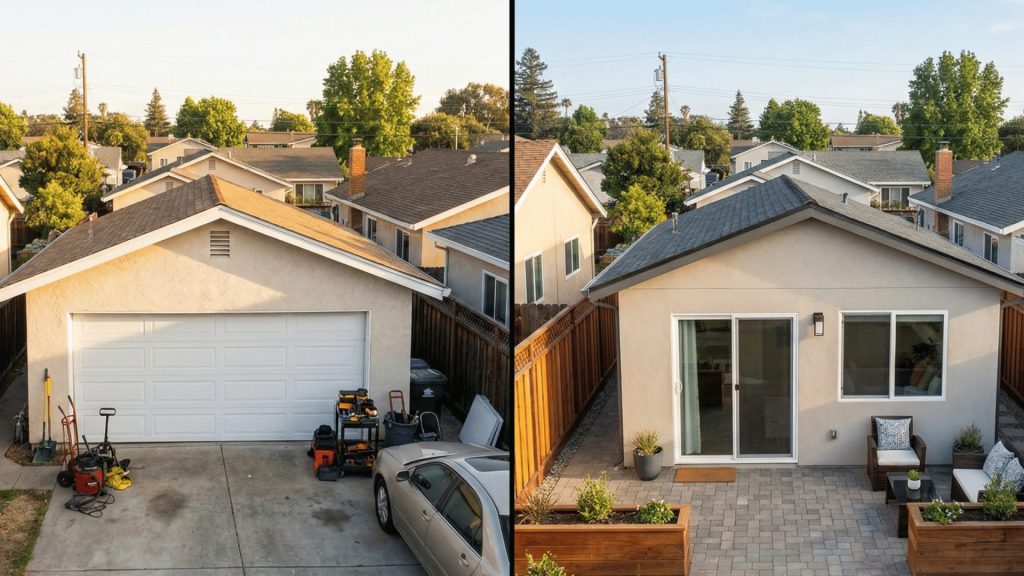
What About Garage Conversions?
If you are converting an existing garage into an ADU, the setback picture gets even simpler. Under California law, no additional setbacks are required when you convert a legally permitted structure into an ADU. That means if your garage already sits two feet from the property line, you can convert it without worrying about the standard 4-foot rule.
There is one important catch, though. If you plan to expand the garage footprint or add a second story, the newly constructed portions will need to meet the 4-foot rear and side setback requirements. The Nestadu team regularly helps homeowners figure out whether a straight conversion or an expansion makes more sense for their specific lot.
How Close Can Your ADU Be to the Main House?
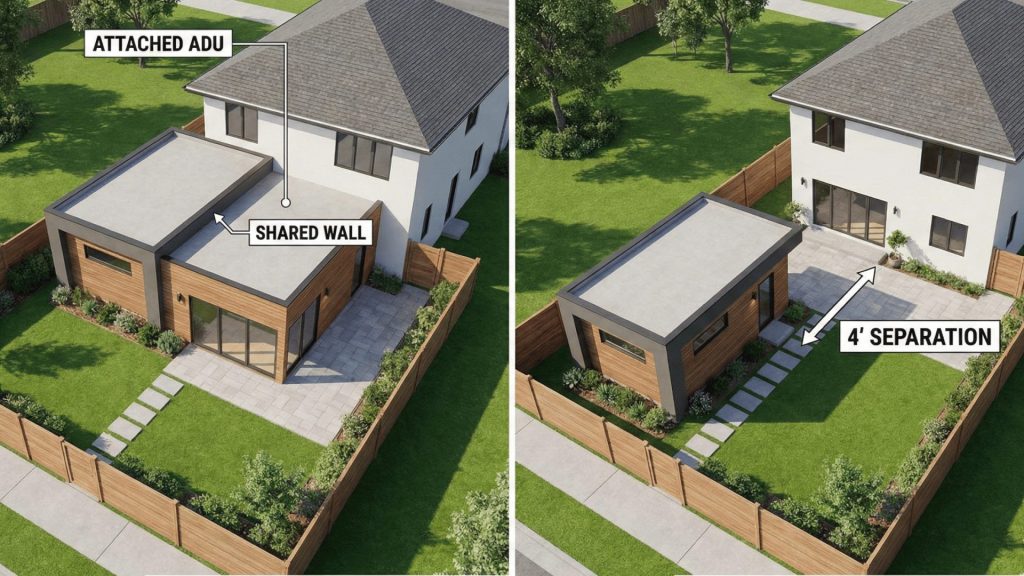
Setbacks from property lines get most of the attention, but the distance between your ADU and primary dwelling matters too. This is typically referred to as building separation rather than a setback, and it is governed by both building codes and fire safety regulations.
A few key things to keep in mind:
- Detached ADUs: Most jurisdictions require at least 4 feet of separation between a detached ADU and the main house.
- Attached ADUs: If your ADU shares a wall with your primary residence, building separation rules do not apply, but the structure needs to meet fire-rated construction standards.
- Fire code considerations: Depending on how close the ADU is to the main house or neighboring structures, you may need fire-rated exterior walls and special window protection.
These separation requirements can affect your design options, so it is smart to have a professional site evaluation done early in the planning process.
Local Zoning Variations You Should Know About
While California sets the minimum standards, your city or county can layer on additional rules. This is where things get tricky for homeowners trying to navigate the process on their own.
For example, some cities in Southern California allow 0-foot setbacks for single-story ADUs under 16 feet, meaning you can build right up to the property line. Other cities stick closer to the state minimum of 4 feet, and a handful have their own unique rules for corner lots, street-side yards, and properties in coastal or fire hazard zones.
Cities like Los Angeles, San Diego, San Francisco, and Sacramento all handle ADU setbacks a little differently. The best way to know exactly what applies to your property is to check with your local planning department or partner with a California ADU builder like Nestadu who already knows the rules in your area.
Common Setback Challenges and How to Handle Them
Not every lot is a perfect rectangle with plenty of room to spare. Real-world properties come with all kinds of complications that can make meeting setback requirements tricky. Here are some of the most common issues homeowners run into:
- Small or narrow lots: Limited space can make it difficult to place a full-size ADU while maintaining required setbacks on all sides.
- Irregularly shaped properties: L-shaped, triangular, or pie-shaped lots create setback challenges that require creative design solutions.
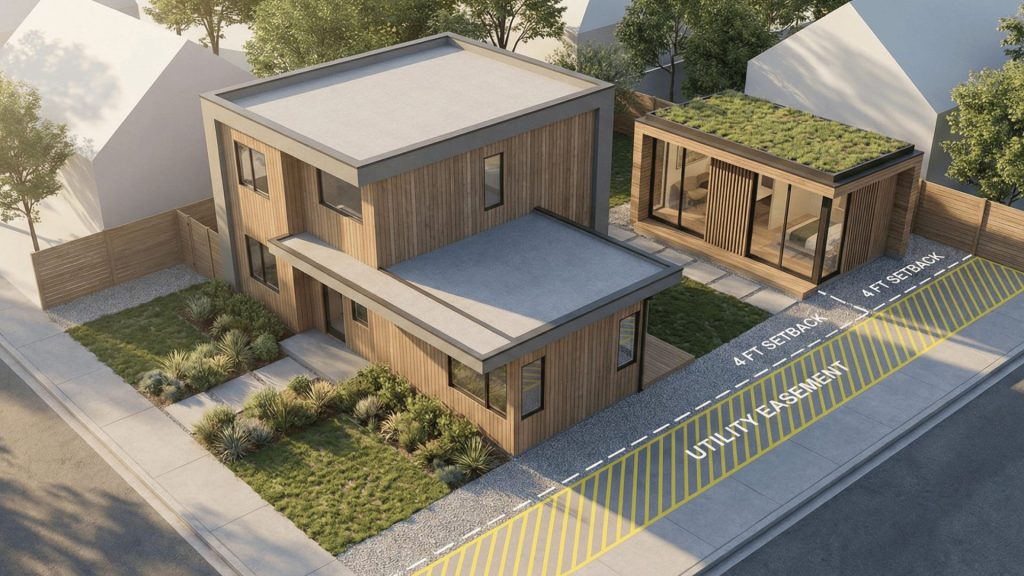
- Utility easements: If your lot has easements for power lines, sewer, or drainage, those areas are typically off-limits for construction.
- Corner lots: These properties often have two front setbacks instead of one, which can eat into your buildable area.
- HOA restrictions: While California law limits how much HOAs can interfere with ADU projects, some communities still have design guidelines that affect placement.
The Nestadu design team has worked with all kinds of lot configurations across California. A professional site assessment early in the process can identify these challenges before they turn into expensive surprises.
What Happens If You Violate Setback Requirements?
Ignoring setback rules is never worth the risk. If your ADU does not meet the required setbacks, you could face permit denial, stop-work orders, fines, or even be required to modify or demolish part of the structure. Correcting setback violations after construction has started is far more expensive than getting it right from the beginning.
This is one of the biggest reasons to work with a knowledgeable ADU contractor. Nestadu handles all permitting and compliance checks as part of our process, so you never have to worry about costly surprises down the road.
Tips for Getting the Most Out of Your Lot
Even with setback requirements in place, there are smart strategies to make the most of your available space:
- Explore garage conversions to avoid setback restrictions entirely within the existing footprint.
- Compare attached vs. detached options since attached ADUs may give you more flexibility on smaller lots.
- Know your state protections. California law guarantees every homeowner the right to build an ADU of at least 800 square feet, and setbacks cannot be used to deny that.
- Get a professional site evaluation. Understanding your exact setback requirements before you start designing prevents wasted time and redesigns.
Ready to Build Your ADU?
ADU setback requirements in California are more favorable than they have ever been, but the rules can still vary significantly from one city to the next. Understanding where your ADU can go and how close it can be to property lines is the foundation of a successful project.
At Nestadu, we take care of the details so you do not have to. From initial site evaluation and design to permitting and construction, our team guides you through every step. Contact Nestadu today for a free consultation and find out exactly what is possible on your property.