
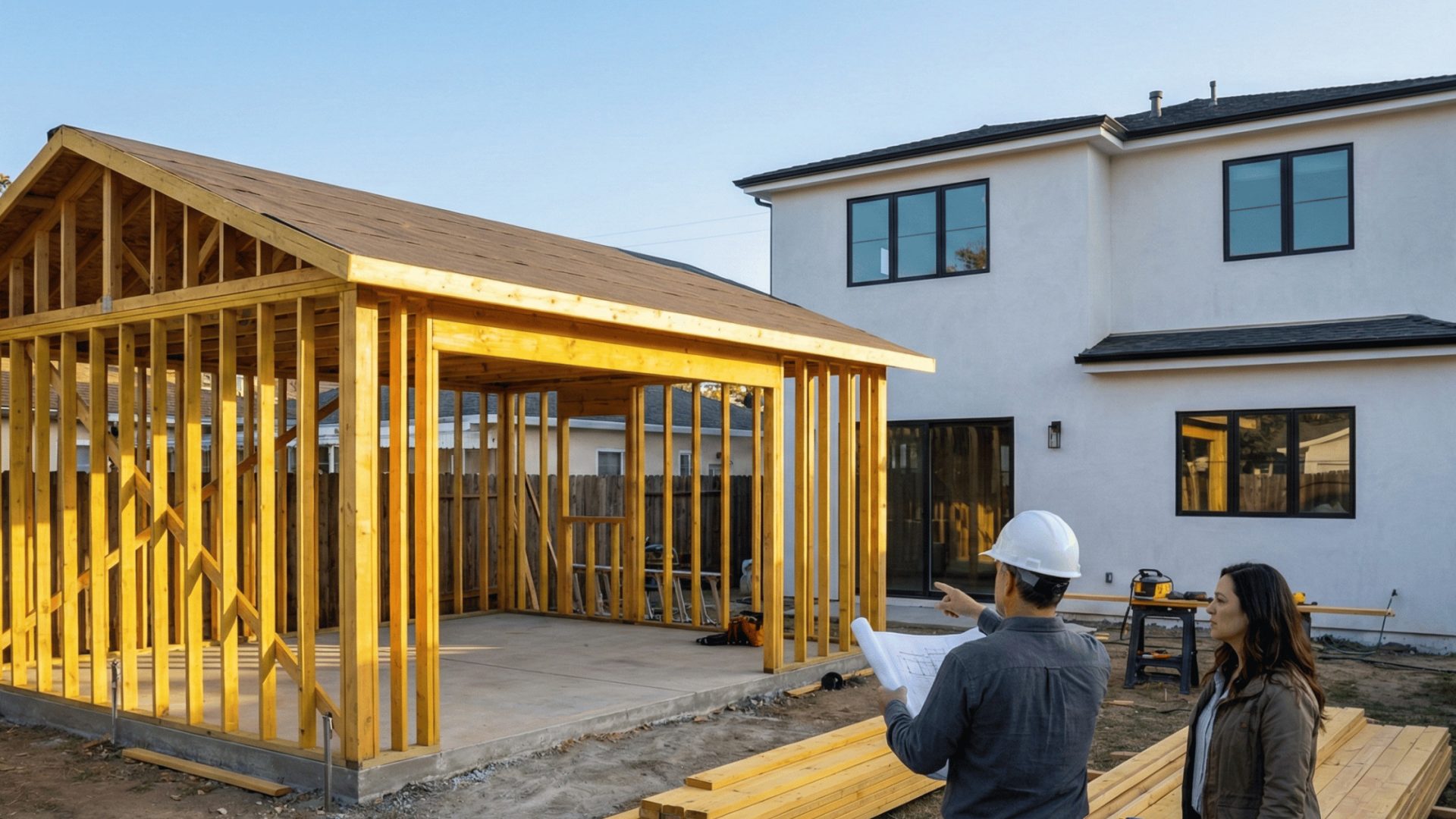
Building an accessory dwelling unit in California is exciting, but the costs can feel like a moving target if you don’t know what to expect. Between fluctuating material prices, labor shortages, and permit fees that vary by city, it’s easy to end up blindsided by the final number.
At Nestadu, we’ve helped countless California homeowners navigate the ADU building process with full transparency. This cost breakdown covers the four major expense categories so you can plan with confidence.
What Determines the Total Cost of an ADU?
No two ADU projects cost the same. A 400-square-foot garage conversion in Los Angeles will have a very different price tag than a 1,200-square-foot detached unit in San Diego. Several factors shape your bottom line.
- Unit type: Detached ADU costs more than attached units or garage conversions due to foundation, roofing, and utility work.
- Square footage: Larger units cost more overall, but the price per square foot often decreases as size increases.
- Site conditions: Sloped lots, tight access, or poor soil can add thousands before construction even starts.
- Local jurisdiction: Permit fees, impact fees, and code requirements differ significantly across California cities and counties.
Nestadu walks every client through a detailed assessment before any work begins, so there are no surprises down the road.
Materials: Where Your Budget Takes Shape
Materials typically account for roughly 40-50% of your total ADU construction cost. This is also the category where prices can swing the most depending on market conditions and the finishes you choose.
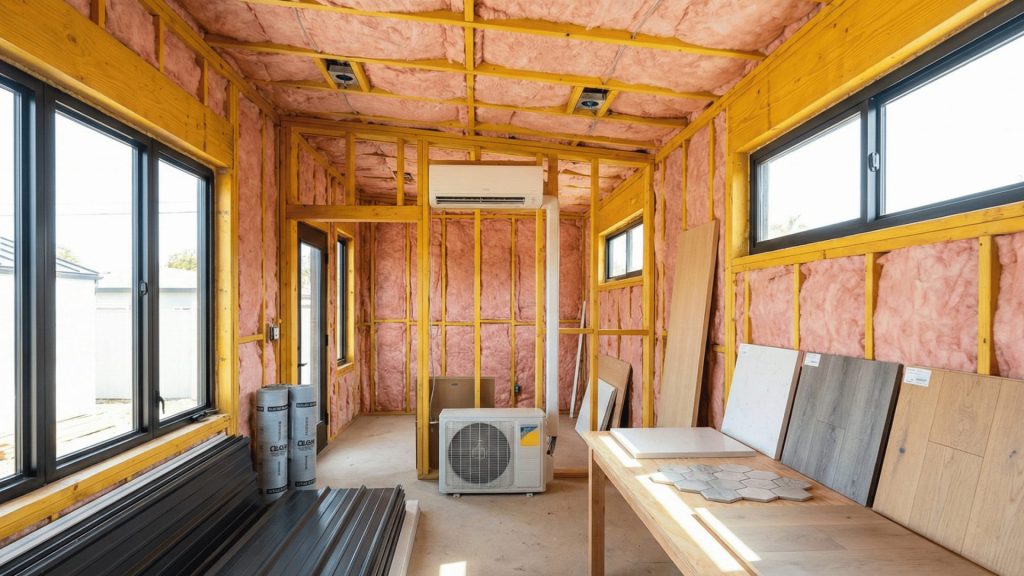
Structural materials like lumber, concrete, roofing, and insulation form the backbone of your build. These costs are largely non-negotiable and driven by current market pricing. Interior finishes are where you have more control. Choosing laminate countertops over quartz, for example, can save thousands without sacrificing functionality.
Key material considerations for California ADUs:
- Title 24 energy code compliance requires dual-pane windows, proper insulation, and energy-efficient HVAC systems.
- Fire-rated materials may be needed depending on your property’s location relative to lot lines and wildfire zones.
- Premium finishes like hardwood floors or custom tile work can add $10,000-$25,000 to the project.
The smart approach is to invest in structural quality while being strategic with cosmetic finishes. Your Nestadu design team can help identify exactly where to spend and where to save.
Labor Costs: The Biggest Line Item Most People Underestimate
Labor is often the single largest expense, typically representing 35-45% of the total budget. California’s high cost of living and strong demand for skilled tradespeople make this an unavoidable reality.
A typical ADU requires coordination between multiple trades including foundation crews, framers, electricians, plumbers, HVAC installers, and finish carpenters. Delays between trades cost money. If the electrician can’t start because framing isn’t complete, the project timeline stretches and costs climb.
Factors that affect labor costs:
- Regional wage differences across California (Bay Area and LA tend to be highest).
- Project complexity and accessibility of the build site.
- The experience level of your general contractor and subcontractors.
This is one of the biggest reasons working with an experienced ADU builder like Nestadu makes a real difference. Proper project management keeps trades moving in sequence and prevents expensive downtime. Choosing the cheapest bid often backfires when rework from inexperienced crews costs far more than hiring qualified professionals from the start.
Permits and Fees: The Often-Overlooked Budget Category
Many homeowners focus on construction costs and forget about the regulatory side. Permit and fee costs for a California ADU can range from $5,000 to $30,000 or more depending on your city.
Recent California legislation like SB 13 and AB 68 has reduced or eliminated certain impact fees for ADUs under 750 square feet. However, you’ll still encounter several charges in most jurisdictions.
- Building permits: Typically $1,500-$5,000 depending on the city and project scope.
- Plan check and review fees: Often 60-80% of the permit fee amount.
- Impact and development fees: Varies widely by city and county.
- Utility connection fees: Sewer, water, and electrical hookups can run $3,000-$10,000+, especially for detached units.
Nestadu handles the entire permitting process on behalf of our clients, from plan submission through final inspection. This saves homeowners time and ensures nothing falls through the cracks.
Surprise Costs That Can Derail Your Budget
This is where ADU projects go sideways for unprepared homeowners. Even with careful planning, certain costs only reveal themselves once work begins.
Soil and site issues are among the most common surprises. Poor drainage, expansive clay soil, or old tree roots during excavation can require additional grading or foundation modifications that weren’t part of the original estimate.
Common surprise costs to plan for:
- Electrical panel upgrades: Older homes may need a main panel upgrade ($2,000-$5,000) to support the additional load.
- Sewer lateral replacement: Aging sewer lines often need repair to meet current code, adding $3,000-$8,000.
- Fire sprinkler systems: Required in some jurisdictions, adding $3,000-$6,000 for a typical ADU.
- Design changes mid-project: Scope creep is real and almost always increases costs and timelines.
The best defense against surprises is thorough pre-construction planning. Nestadu conducts detailed site evaluations and includes contingency planning in every project estimate.
How to Keep Your ADU Project on Budget
Staying on budget starts before a single shovel hits the ground. Build a 10-15% contingency into your total budget from day one. Finalize your design decisions before construction begins, because every change order during the build adds cost and delays.
Most importantly, choose a full-service ADU builder who manages everything from design through construction. Nestadu’s concept-to-completion approach provides transparent estimates upfront and manages every phase so our clients know exactly what to expect.
Ready to Plan Your ADU?
Building an ADU in California is a significant investment, but it’s also one of the most effective ways to add living space, generate rental income, and increase your property value. Understanding the real costs of materials, labor, permits, and potential surprises puts you in control.
Contact Nestadu today for a free consultation. Our team will walk you through every detail so you can move forward with confidence.