
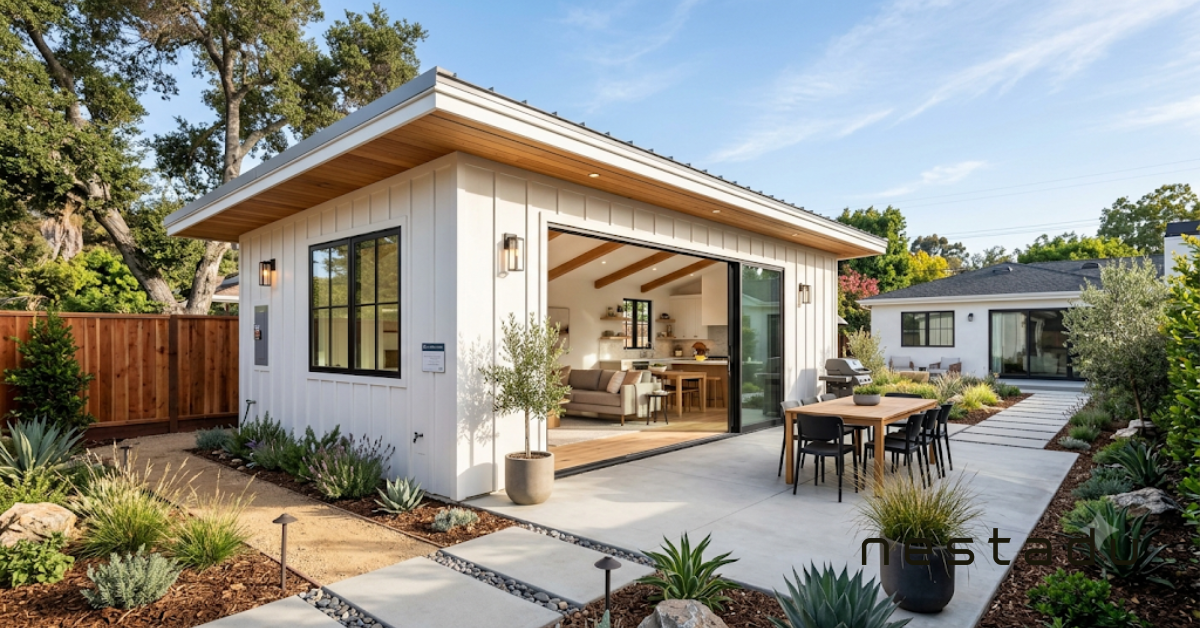
Short answer: yes. Every accessory dwelling unit (ADU) in California needs a building permit before construction starts. There is no size loophole and no garage-conversion exemption.
The good news is that the process in 2026 is easier than most homeowners expect. California has spent years removing the slow, discretionary steps that once stalled projects for a year or more. This Nestadu guide walks through what permit you need, what it covers, how long it takes, and what happens if you skip it.
Yes, a Building Permit Is Always Required
A building permit is mandatory for every ADU under California state law. The reason is simple. An ADU is a full living space, so it has to meet the building code for structure, fire safety, energy, plumbing, and electrical work.
This rule applies to every ADU type, with no exceptions for small units:
- Detached ADUs (a separate backyard structure)
- Attached ADUs (sharing a wall with the main house)
- Garage and interior conversions
- Junior ADUs (JADUs) built inside the existing home
One quick note on backyard structures. A storage shed under 120 square feet may be exempt, but the moment it has plumbing, electrical, or is used for living or sleeping, it becomes habitable space and needs a permit. That is why a “tiny structure” rule never saves you on an ADU.
The Permit Is “Ministerial,” and That Helps You
Here is the part that works in your favor. ADU applications in California are reviewed ministerially, which means that if your plans meet the code, the city must approve them.
There is no public hearing and no neighbor notification. The decision is based on objective rules, not opinion, so a planning board cannot block a compliant ADU the way it could a standard building project. This single change is what makes ADUs faster to permit than almost any other home addition in California.
What One ADU Permit Actually Covers
Most people assume a permit is a single sheet of paper. In reality, the Nestadu team handles one building permit that bundles several types of work under a single approval.
That building permit usually covers:
- Structural work like foundation and framing
- Electrical wiring, circuits, and any service upgrade
- Plumbing for the kitchen, bath, and water heater
- Mechanical (HVAC), often a heat pump or mini-split
- Title 24 energy compliance
The piece that catches owners off guard is utility service. Connecting new electric, gas, water, or sewer lines runs through the utility company, not the city, and that step can take months on its own. Nestadu submits those requests early so they do not delay your move-in date.
Documents You Will Need to Submit
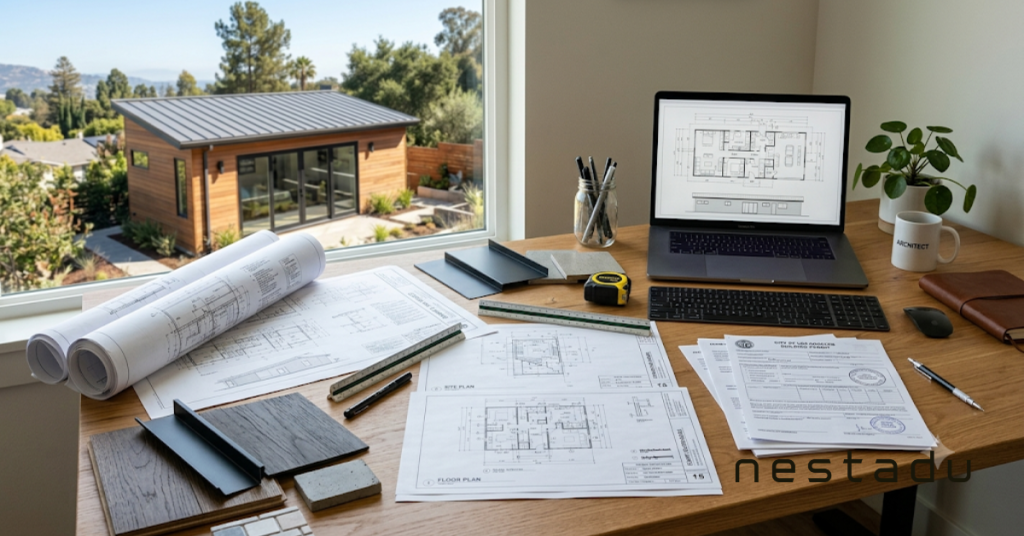
A permit application is only as fast as the plans behind it. Cities review compliant, complete submittals quickly, but they bounce back incomplete ones for corrections.
A typical ADU submittal package includes:
- Site plan showing the lot, setbacks, and the new unit
- Floor plans and elevations
- Structural and foundation details
- Title 24 energy calculations
- Utility and drainage information
Missing documents are the single most common cause of delay. When Nestadu prepares your package, the goal is a clean first submission so the city has nothing to send back.
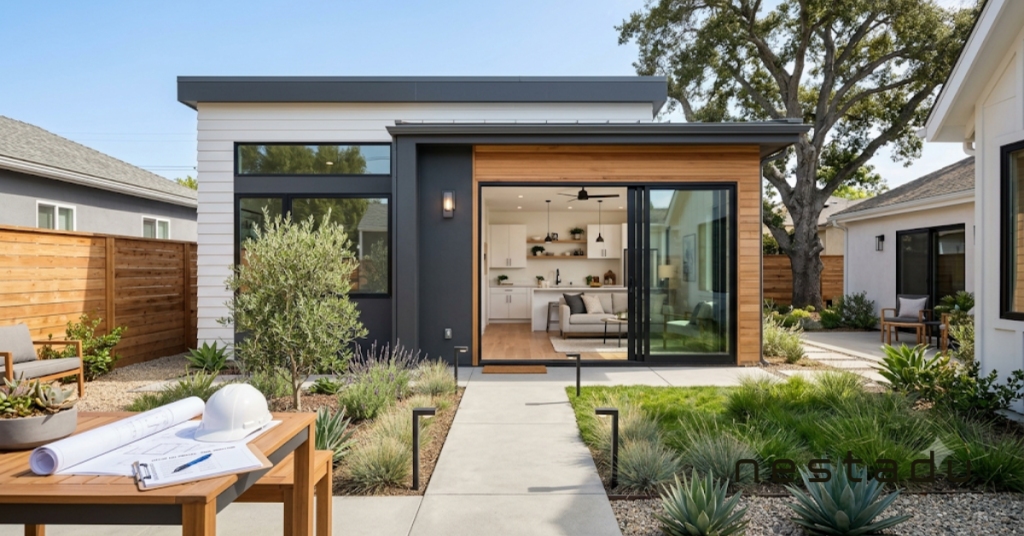
The 60-Day Rule You Should Know
California gives cities a hard deadline. They must approve or deny a complete ADU application within 60 days, and if they miss it, the application is automatically deemed approved.
A realistic Nestadu project timeline looks like this:
- Design and engineering: 4 to 8 weeks
- City plan review: up to 60 days, often faster with clean plans
- Construction: 4 to 8 months depending on size
- Final inspection before legal occupancy
Many cities also offer pre-approved ADU plans that cut review time sharply. San Jose, for example, can approve those designs in days rather than weeks, which is one reason pre-approved options are worth asking about early.
ADU vs JADU: A Permit Difference Worth Catching
A junior ADU (JADU) is a separate category with slightly different rules. It is capped at 500 square feet and must be built inside the walls of the existing home.
The key differences to know:
- A JADU can share a bathroom with the main house
- It only needs an efficiency kitchen
- It still requires a permit, but is not counted as brand-new housing
As of 2026, owner-occupancy is no longer required for standard ADUs, though a JADU still carries occupancy and rental conditions. Factor those in early if you are weighing a JADU mainly to save on cost.
What Changed in 2025 and 2026
California keeps loosening ADU rules almost every year, and several recent changes affect permitting directly. Rules from an older blog post may already be outdated, so always confirm against current law before you build.
The changes that matter most:
- Owner-occupancy removed for standard ADUs
- Relaxed setbacks and taller height limits, up to 25 feet in some cases
- A legalization path for older unpermitted ADUs
- Required pre-approved plan programs to speed up review
The takeaway is to check the California HCD ADU Handbook, last updated in January 2026, rather than relying on summaries from a few years back. The legal floor shifts often, and Nestadu tracks those updates so your plans reflect current code, not last year’s.
What Permits and Fees Typically Cost
Permit fees are only one slice of an ADU budget, but homeowners still want a sense of the numbers. Fees vary widely by city and by the size of the unit.
A few cost points worth knowing:
- Impact fees are waived for ADUs under 750 square feet
- Some cities reduce or waive connection fees for smaller units
- The CalHFA grant program has offered up to 40,000 dollars toward pre-development costs like permits, design, and surveys
Programs change often and funding can run out, so it is smart to confirm what is available in your city when you start. Nestadu can point you to the current local incentives during the design phase.
What Happens If You Skip the Permit
Building an ADU without a permit is not a shortcut, it is a liability. Required permits must be obtained before covered work begins, and skipping them creates expensive problems down the line.
Common consequences include:
- Correction notices and stop-work orders
- Fines and forced removal
- Trouble selling or refinancing the property
An unpermitted ADU can quietly tank a home sale, since buyers, lenders, and appraisers all want proof the space is legal. California now offers a legalization path for older unpermitted units, but it is always cheaper to permit it correctly the first time, which is exactly what Nestadu manages for you.
Local Rules Still Apply on Top of State Law
State law sets the floor, not the whole picture. Your city still runs the actual plan check and inspections, and it can apply its own objective standards as long as they do not conflict with state ADU law.
Before spending money on plans, work with a builder who already knows your city’s process. The difference between a smooth approval and a six-month correction loop usually comes down to getting the plans right on the first submission.
Building Your ADU the Right Way
So, do you need a permit to build an ADU in California? Always. But the permit protects your investment rather than slowing you down, because a permitted ADU is a legal, sellable, financeable asset on your property.
The smartest move is to work with a team that handles design, permitting, and construction together. Nestadu manages the full path from concept to final inspection, so your backyard cottage or in-law suite is fully legal and built to last.
FAQ
Do I need a permit for a garage conversion ADU?
Yes. Converting a garage into living space requires a building permit just like a new structure.
Do I need both planning and building permits?
Often yes. Planning confirms zoning, while the building permit covers safety codes. Many projects skip a separate zoning permit under state law, but the building permit is required.
How long does an ADU permit take in California?
Cities must decide within 60 days. The full process, including corrections, usually runs 2 to 4 months.
Can the city reject my ADU application?
Only if the plans fail to meet code. Because approval is ministerial, the city cannot deny a compliant application based on opinion or a public hearing.