
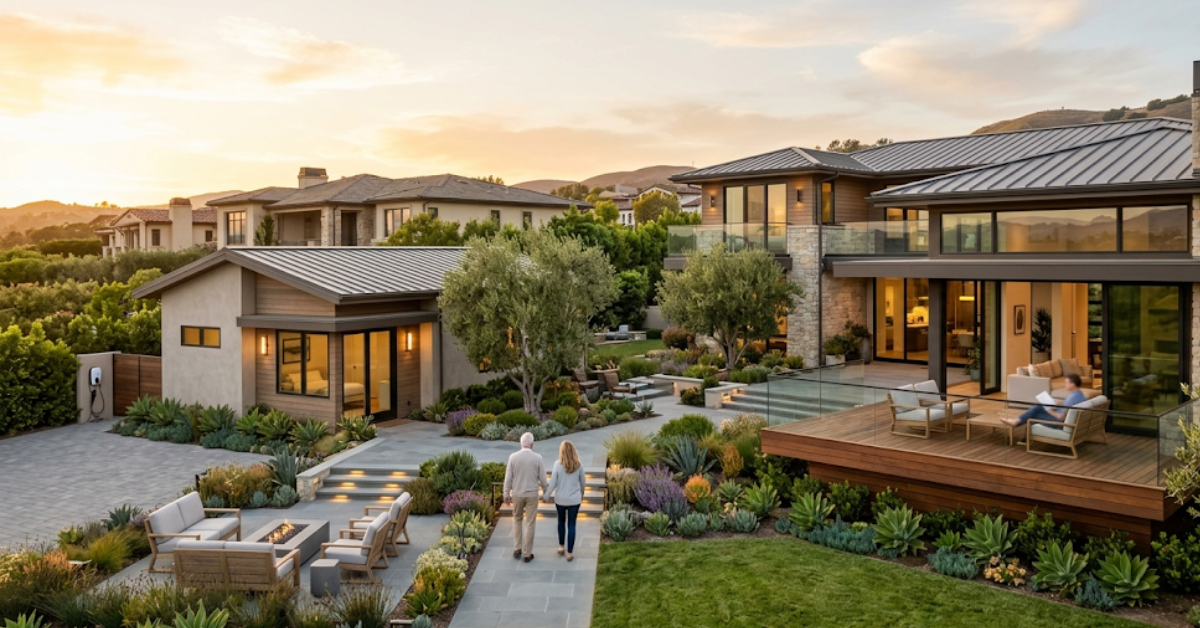
Yes, California law allows homeowners to build an accessory dwelling unit on their property, and housing aging parents is one of the most common reasons families do it. Whether you are looking at a detached backyard cottage, an attached in-law suite, or a prefab unit, the state has made it easier than ever to add a secondary dwelling to your lot.
But knowing it is legal and knowing how to do it well are two different things. Building an ADU for elderly parents involves specific design decisions, accessibility planning, and a clear understanding of how California regulations apply to your situation. This guide covers what California homeowners need to know before breaking ground on an ADU for aging parents.
Why Families Are Choosing ADUs Over Assisted Living
The cost of assisted living in California keeps climbing. As of 2026, the state average sits around $4,500 to $6,300 per month depending on the region. In urban areas like Los Angeles, that number pushes past $6,200 monthly. Over three years, that adds up to $160,000 to $225,000 spent on a facility with zero equity to show for it.
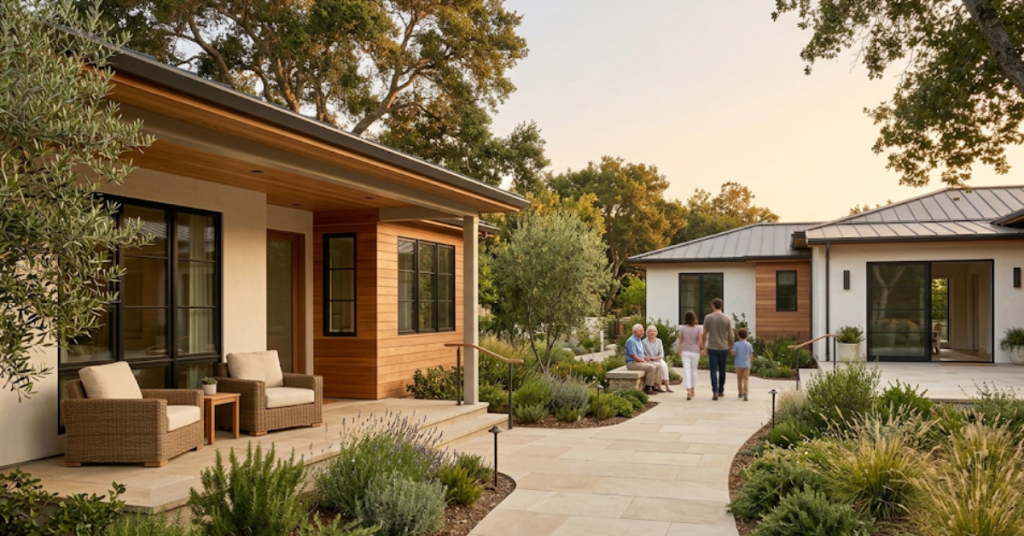
Building an ADU is a one-time investment, typically between $150,000 and $350,000 in California. That money goes into a permanent structure on your property that adds real appraised value, can generate rental income later, and keeps your parents close instead of in a facility surrounded by strangers. The financial case is hard to argue against, but the personal reasons matter just as much.
- Your parents maintain their own kitchen, front door, and daily routine while living steps away from family.
- You get peace of mind knowing they are right there if something goes wrong, without the awkwardness of sharing the same house.
- The ADU becomes a long-term asset you own, not a monthly expense that builds nothing.
- After your parents no longer need the unit, it can be rented out or used as a guest space or home office.
Design Features That Make an ADU Safe for Aging Parents
A standard ADU works fine for younger occupants or renters. But when the primary purpose is housing elderly parents, certain design choices become safety essentials, not luxury upgrades. Falls are the leading cause of injury-related death among adults over 65, and most of them happen at home. The right design prevents those risks from the start.
Working with a builder like Nestadu means these features can be incorporated into both prefab and custom ADU plans during the initial design phase. That is always cheaper and more effective than retrofitting after construction is finished.
- Single-story layout with zero-step entry. No stairs from the walkway to the front door. Steps are the number one fall risk for seniors, and eliminating them entirely is the single most important design decision.
- Wide doorways (36″+) and hallways (42″+). Enough clearance for walkers, wheelchairs, or simply easier movement as mobility changes over time.
- Curbless walk-in shower with grab bars. Non-slip flooring and a handheld showerhead add daily safety and convenience. A traditional bathtub is a fall hazard for most seniors.
- Lever-style door handles and rocker light switches. Round knobs and small toggle switches are difficult for seniors with arthritis or reduced grip strength. Lever handles require almost no grip to operate.
- Open floor plan with consistent flooring. Fewer transitions between rooms means fewer edges to trip over. One continuous floor surface throughout the unit is safest.
- Strong lighting in every room. Under-cabinet kitchen lights, motion-activated nightlights in hallways and bathrooms, and bright overhead fixtures reduce the risk of falls in dim conditions. Aging eyes need significantly more light than younger ones.
- Emergency-ready infrastructure. Pre-wiring for medical alert systems and ensuring reliable Wi-Fi or cell coverage throughout the unit. In an emergency, these details can make a real difference.
Attached vs. Detached: Which Works Better for Elderly Parents?
The right ADU type depends on your parents’ mobility, how much care they need, and how much independence both households want. Each option has clear trade-offs worth understanding before you commit.
Detached ADU
A detached backyard cottage gives your parents a fully separate home with their own entrance, kitchen, bathroom, and living area. This works best when parents are still mobile and independent, and when both families want clear personal boundaries. Detached units add more resale value and convert easily to rental income down the road.
Nestadu offers prefab models like the Nest Studio and Nest One that can be configured with accessible features built in from the factory. For families who want a fully custom layout, Nestadu’s site-built option provides complete design flexibility to match the exact needs of the senior occupant and the conditions of the property.
Attached ADU
An attached ADU shares a wall with the main house, making it easier to check in on a parent without stepping outside. Utility costs are lower since the unit shares some infrastructure. This works well when a parent needs more frequent daily assistance. The trade-off is less privacy for both households.
Junior ADU (JADU)
California also allows Junior ADUs, which are units of 500 sq. ft. or less created within the existing home’s footprint. A JADU can share a bathroom with the main house and includes an efficiency kitchen. This is the most affordable path but offers the least independence. It works best when a parent needs close daily support.
California ADU Laws That Support Multigenerational Living
California has passed several laws to remove barriers to ADU construction. For families building for aging parents, these regulations make the process faster and more affordable than it was five years ago.
- Most single-family and multi-family residential lots now allow at least one ADU plus one JADU.
- Cities are required to process ADU permit applications within 60 days.
- Impact fees are waived for ADUs under 750 sq. ft., which covers most one-bedroom and studio layouts ideal for a single senior occupant.
- Rear and side yard setbacks have been reduced to 4 feet in most jurisdictions, giving homeowners more flexibility on where the unit can be placed.
- SB9 allows eligible lot splits with up to two units per new lot, creating additional options for larger properties.
These laws set the statewide floor, but every city still has its own interpretation and local process. Working with a California-based builder like Nestadu who knows your specific municipality prevents permit denials and expensive redesigns.
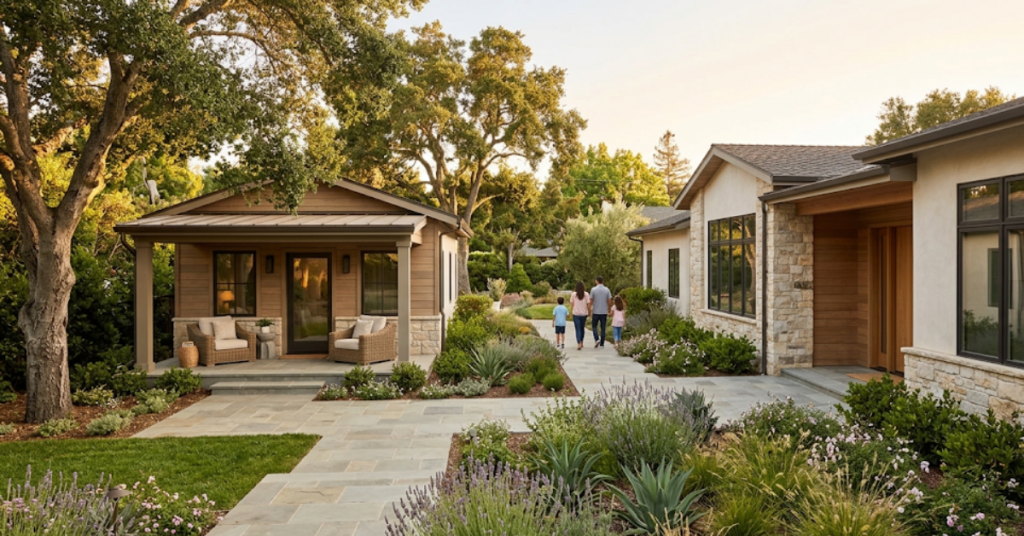
How Nestadu Helps Families Build ADUs for Aging Parents
Nestadu has built ADUs for multigenerational families across 100+ California cities. Their process starts with a consultation to understand not just the property, but the family’s situation: who will live in the unit, what their current and future mobility needs look like, and what the long-term plan is for the space.
From there, Nestadu’s design team tailors the layout to match those needs. For prefab builds, models like the Nest Studio or Nest One can be configured with accessible features from the factory. For custom builds, the design flexibility is even greater. Nestadu handles permitting, foundation work, construction, and inspections as a single turnkey service.
Common Questions About ADUs for Elderly Parents
Will an ADU increase my property taxes?
Yes, but only on the added value of the new structure. Your existing home’s assessed value stays the same under Proposition 13. The ADU is assessed separately as new construction.
Can I rent the ADU later if my parents no longer need it?
Yes. California law allows long-term ADU rentals in most cities. An ADU built for a parent today can become an income-producing unit in the future.
Do I need a separate address for the ADU?
In most California cities, yes. The ADU receives its own address for mail delivery and emergency services. Your local building department assigns this during the permit process.
Can my parent receive in-home care services in the ADU?
Yes. An ADU is a legal dwelling, so any home care services, visiting nurses, or medical equipment that would be delivered to a regular home can be delivered to the ADU as well.
How long does it take to build an ADU for a parent?
Most ADU projects in California take 6 to 12 months from consultation to move-in. Prefab options tend to be faster since the unit is factory-built while site prep happens simultaneously. Start the process before the need becomes urgent.
Giving Your Parents a Home Right Next Door
Building an ADU for elderly parents is one of the most practical and meaningful investments a family can make. It keeps everyone close, preserves independence on both sides, and puts your money into a property asset instead of monthly facility fees.
If you are considering this for your family, Nestadu can assess your property, walk you through the options, and handle the entire build from consultation to move-in day. Schedule a consultation to get started.