
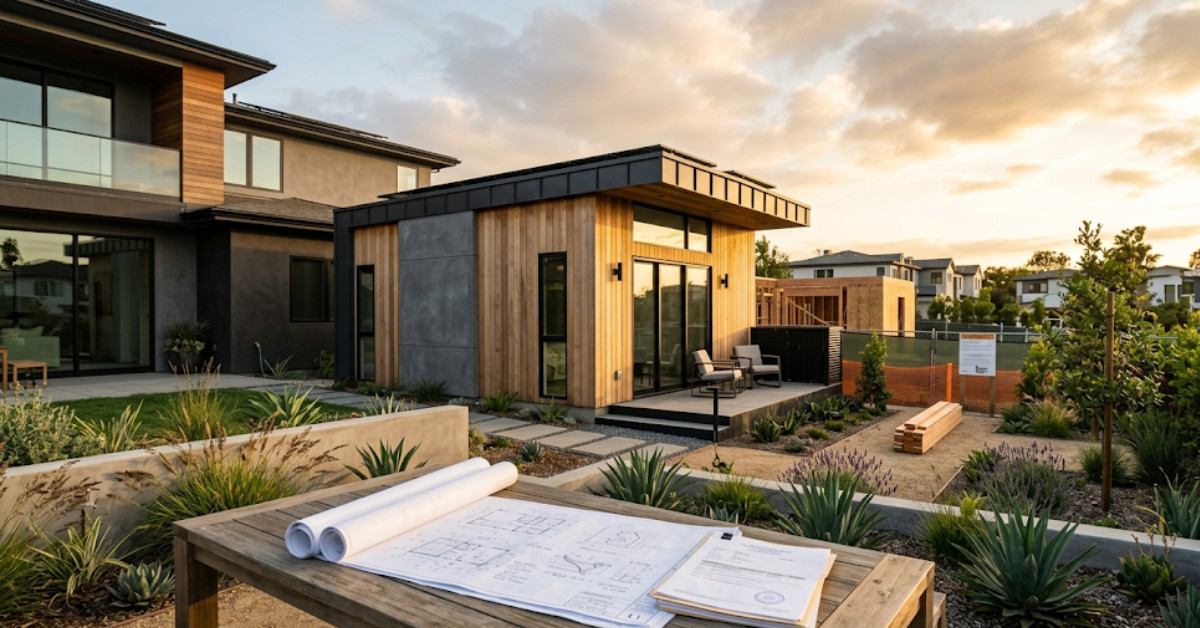
California’s ADU rules just went through their biggest update since 2017. Governor Newsom signed four new bills in October 2025, and most of them took effect on January 1, 2026.
If you’ve been thinking about adding a backyard cottage or rental unit, the rules have shifted in your favor. This Nestadu guide breaks down what each law means for your build.
Quick Snapshot of the 2026 New ADU Laws in California
Four major bills now shape how Californians plan and build ADUs in 2026. Each one targets a different part of the process.
- AB 462 – Live in your ADU while rebuilding after a disaster (active since October 15, 2025)
- AB 1154 – Loosens owner-occupancy rules for Junior ADUs
- SB 9 Updates – Clarifies lot split rules and protects ADUs on split lots
- SB 543 – Shortens permit review times and tightens enforcement against slow cities
AB 462: Rebuild Faster After a Disaster
If your primary home was destroyed in a wildfire or state-declared emergency, you no longer have to wait for the main house to finish before moving into your detached ADU. Local agencies must issue a Certificate of Occupancy for the ADU before the primary dwelling is complete, as long as it passes inspection.
The practical impact looks like this:
- Families displaced by wildfires can return within months instead of years
- The ADU becomes a temporary home during reconstruction
- Insurance and rebuilding delays no longer dictate where you live
AB 1154: JADU Owner-Occupancy Rules Got Easier
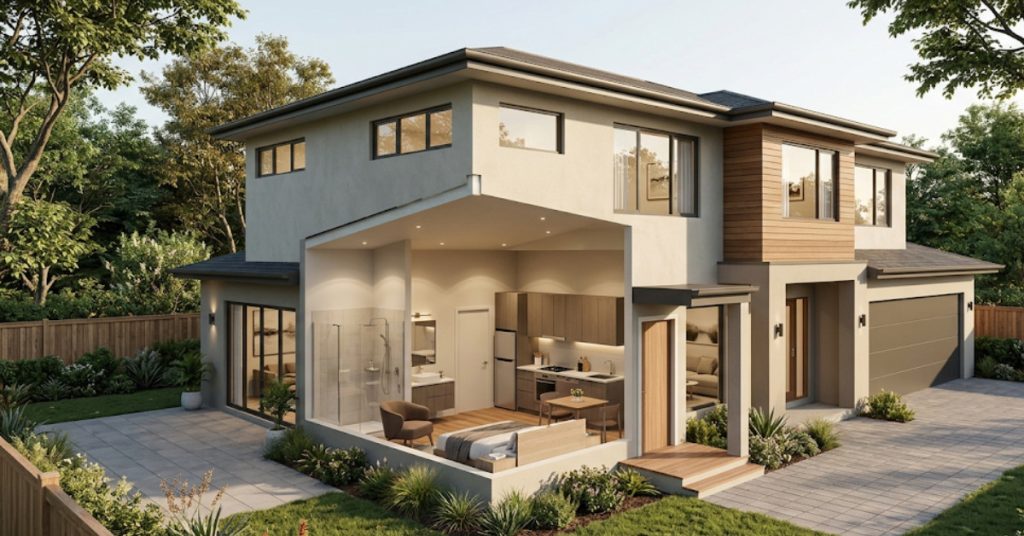
Before AB 1154, every Junior Accessory Dwelling Unit required the property owner to live on-site. That single rule blocked many homeowners from turning a JADU into a pure rental.
The new law softens this. Owner-occupancy is now only required if the JADU shares a bathroom with the main house, so a JADU with separate sanitation can be rented while you live elsewhere.
A few key points to keep in mind:
- JADUs must still be 500 square feet or less of interior livable space
- They must sit inside the walls of an existing or proposed single-family home
- Rentals must run longer than 30 days, so no short-term Airbnb use
- Standard ADUs already have no owner-occupancy rule under AB 976
SB 9 Updates: Protection for ADUs on Split Lots
SB 9 originally allowed single-family lot splits and duplex construction. The 2026 update clarifies how it works with existing ADUs and removes a few roadblocks that slowed property owners down.
Key changes in the 2026 update:
- Lot splits are now explicitly allowed on properties that already have an ADU
- Cities cannot impose setbacks greater than 4 feet on units built on split lots
- Existing ADUs do not have to be torn down or modified because of a split
SB 543: The Big One for Permit Timelines
SB 543 is the most impactful 2026 law for anyone trying to get a permit. It targets the slow process that has held back applicants for years and gives the state real power to push back on slow cities.
- 15-day completeness review: If a city misses this deadline, your application is automatically deemed complete
- Updated JADU size: Defined as 500 square feet of interior livable space
- No fire sprinklers: Cities cannot require them for your ADU if the main house doesn’t need them
- Coastal Zone: ADU applications must now be processed within 60 days
- HCD enforcement: Cities with non-compliant ordinances can have them declared null and void
Older Laws Still Driving the ADU Market
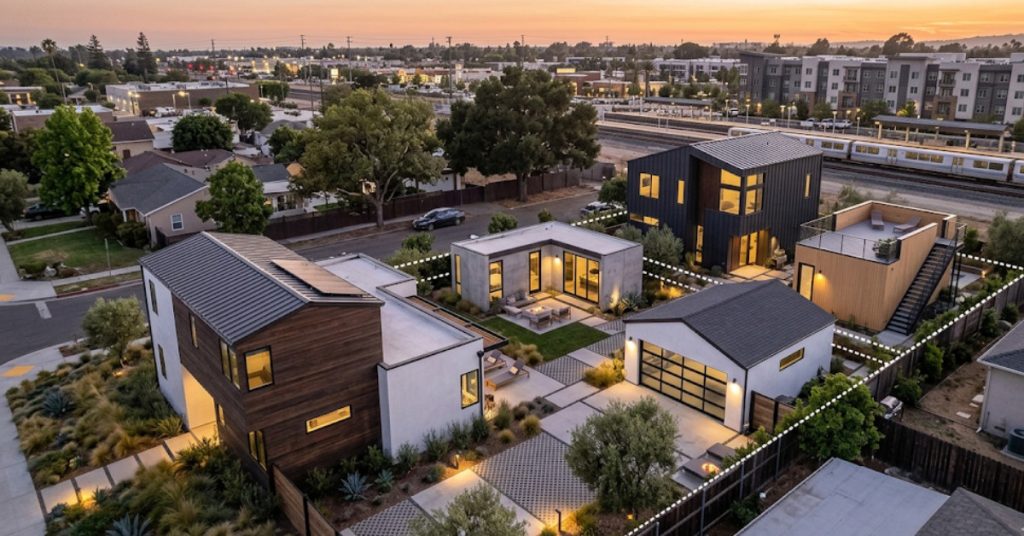
The 2026 bills sit on top of older laws that turned ADUs into serious investment properties:
- AB 976 (2024) – Permanently removed owner-occupancy for standard ADUs
- SB 1211 (2025) – Up to 8 detached ADUs allowed on multifamily properties
- AB 2533 (2025) – Clear legalization path for ADUs built before January 1, 2020
- AB 1332 (2025) – Pre-approved ADU plans must be reviewed within 30 days
Setback, Height, and Size Rules in 2026
State law gives you more room to design something that fits your property. Local cities can offer more flexibility but cannot impose stricter limits than the state baseline:
- Setbacks of 4 feet on side and rear yards
- Up to 18 feet of height for most detached ADUs, 25 feet near transit
- Up to 1,200 square feet for detached ADUs, 500 square feet for JADUs
- No replacement parking required for garage conversions or units near transit
What This Means for California Homeowners
ADUs now account for roughly 20% of new housing in California, and the 2026 changes will likely push that number higher. Typical projects run between $150 and $400 per square foot, putting most builds in the $180,000 to $360,000 range.
Rental income often falls between $1,500 and $3,500 per month in major California metros, which makes the math attractive for many homeowners.
How Nestadu Helps You Build Under the New Rules
Navigating these laws on your own is possible but rarely fast. At Nestadu, we handle the full process from concept to completion, and our team works with the latest state ADU rules every day.
Here’s what Nestadu handles for you:
- Site feasibility and zoning checks based on current law
- Custom and pre-approved ADU designs that fit your lot
- Full permit submission and city coordination
- Construction with transparent pricing and timelines
Frequently Asked Questions
Can I sell my ADU separately from my main home?
In some cities, yes. AB 1033 lets cities opt in to permit ADUs to be sold separately as condos. Check with your local jurisdiction.
Do I still need parking for my ADU?
Not in most cases. If your property is within half a mile of public transit or you’re converting an existing garage, no replacement parking is required.
Can my HOA stop me from building an ADU?
No. State law overrides HOA restrictions that would prohibit ADU construction on single-family lots.
How long does permit approval take?
For pre-approved plans, 30 days. For custom designs, 60 days after your application is deemed complete.
Building Smart with Nestadu
California’s 2026 ADU laws give homeowners more power than before. Faster permits, fewer restrictions, and stronger state enforcement have created a real opportunity for anyone considering an ADU.
Whether you want rental income, space for family, or added property value, the rules are now on your side. Schedule a free site assessment with Nestadu today.