
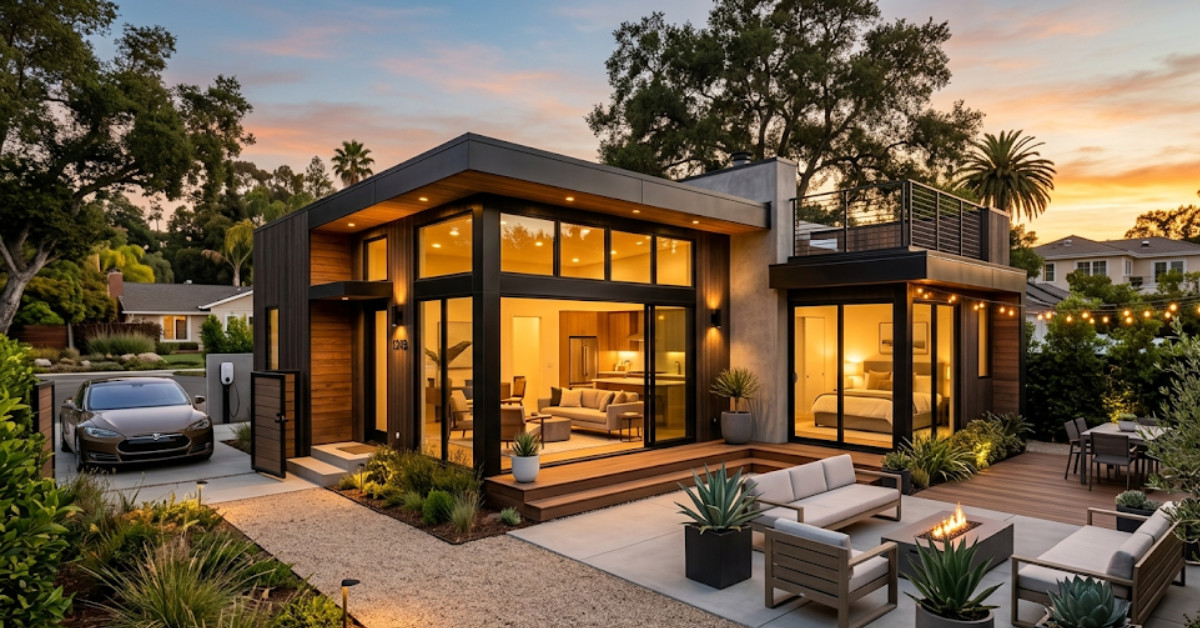
Most California ADUs generate $1,500 to $4,500 per month, with premium markets like the Bay Area and Santa Monica pushing past $4,500. That’s $18,000 to $54,000 in extra annual income from one backyard build.
This Nestadu guide breaks down what California homeowners actually earn from their ADUs in 2026, the factors that move the number, and the ROI math behind it.
Quick Answer: California ADU Rental Income at a Glance
Rental income shifts significantly by region. The same 1-bedroom ADU can earn double in Palo Alto compared to Sacramento:
- Bay Area: $2,500 to $4,500 per month
- Los Angeles Metro: $1,800 to $4,200 per month
- San Diego County: $2,000 to $3,800 per month
- Sacramento Region: $1,500 to $2,500 per month
- Inland Empire and Central Valley: $1,200 to $2,000 per month
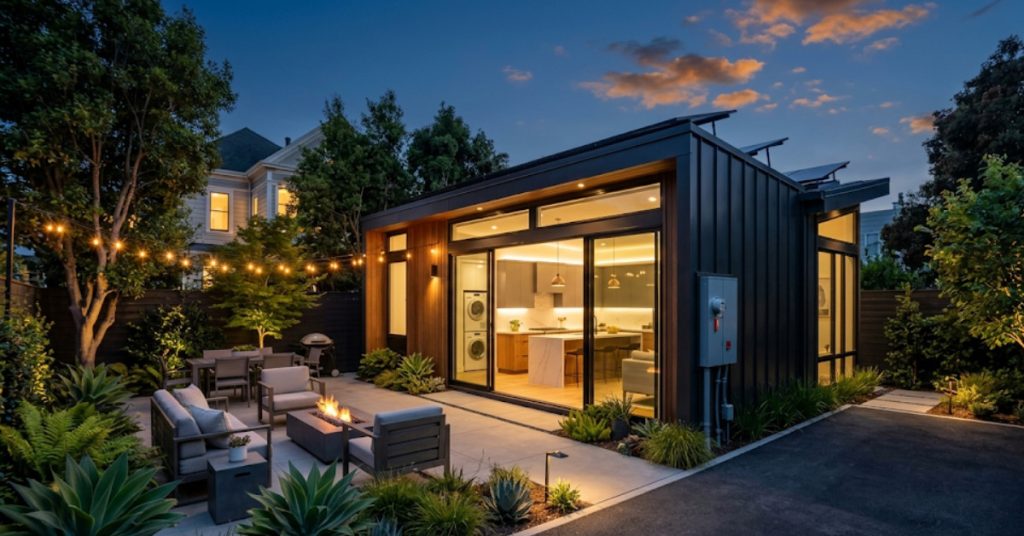
5 Factors That Determine Your ADU Rental Income
Your final rent depends on more than size and city. The right mix of location, quality, and rental strategy can add hundreds to your monthly check.
1. Location and Local Rental Demand
Location is the single biggest rent factor. ADUs near tech campuses, universities, transit, and good schools rent at the top of their local range, while suburban or low-demand neighborhoods sit closer to the bottom.
2. Size and Bedroom Count
Bigger ADUs earn more in absolute rent, but smaller units often deliver better rent per square foot. A 500 sq ft studio in San Jose at $2,500/month makes $5 per sq ft, while a 1,000 sq ft two-bedroom at $3,500 returns $3.50 per sq ft.
Typical California rents by size:
- Studio (400-500 sq ft): $1,500 to $2,800
- 1-bedroom (500-750 sq ft): $1,800 to $3,500
- 2-bedroom (750-1,200 sq ft): $2,500 to $4,500
3. Quality of Finishes and Amenities
Modern finishes and the right amenities can add $200 to $500 per month. Tenants in 2026 expect updated kitchens, quality flooring, and energy-efficient appliances at minimum.
Upgrades that command higher rent:
- In-unit laundry adds $100 to $250 per month
- Dedicated parking spot adds $150 to $250 per month
- Private entrance and outdoor space
- Smart home features and central air conditioning
4. Rental Type: Long-Term, Mid-Term, or Furnished
Long-term unfurnished rentals offer steady income with low management. Mid-term furnished rentals (30+ days) earn 20% to 40% more but need more work.
California law prohibits ADU rentals under 30 days, so traditional Airbnb is not legal in most cities.
5. Utility Setup and Separation
Separately metered ADUs almost always rent for more. Tenants prefer paying their own electric, gas, and water, and landlords avoid usage disputes.
California ADU Rental Income by Region
Regional rent gaps in California are some of the widest in the country. The same construction cost yields very different returns based on location.
Quick regional snapshot:
- San Francisco Bay Area: Highest in the state, $2,500 to $4,500 for a 1-bedroom, peaks above $5,000 in Palo Alto and Cupertino
- Los Angeles County: $1,800 to $4,200, with West Side and Silver Lake at the top
- San Diego County: $2,000 to $3,800, strong rental demand near beaches and universities
- Sacramento Region: $1,500 to $2,500, growing steadily with state worker demand
- Inland Empire and Central Valley: $1,200 to $2,000, lower rents but lower build costs too
ROI Math: How Long to Pay Off Your ADU?
A typical California ADU costs $200,000 to $350,000 to build. At $2,500 a month, that’s $30,000 in gross annual rent, which puts the payback period in the 8 to 12 year range before property value gains.
Sample math for a Bay Area ADU:
- Build cost: $250,000
- Monthly rent: $3,000
- Annual gross income: $36,000
- Gross payback: Roughly 7 years
- Property value increase: $250,000 to $350,000 at resale
After payback, the ADU produces nearly pure profit. Most permitted California ADUs also add 20% to 35% to resale value, so returns come from two directions.
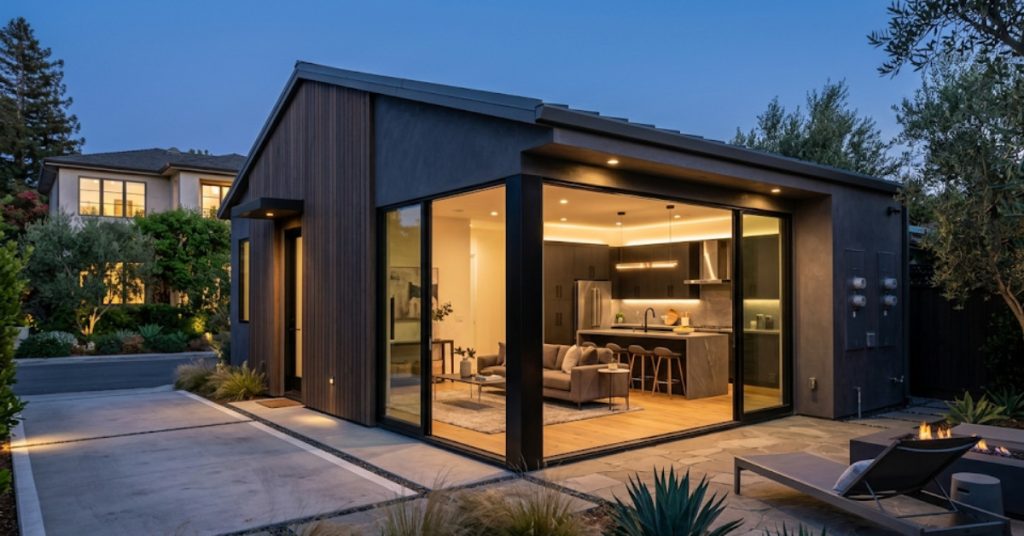
How California’s 2026 ADU Laws Affect Your Rental Income
Recent California laws have made ADU rentals more flexible than ever. AB 976 permanently removed owner-occupancy rules, so you can rent both your main house and ADU while living elsewhere.
Key rules every ADU landlord should know:
- 30-day minimum rental term required statewide
- AB 1154 allows JADU rentals with separate sanitation
- AB 1033 lets some cities permit ADUs sold as condos
- Statewide rent control (AB 1482) applies to most ADUs over 15 years old
How to Increase Your ADU Rental Income
Small design choices and a smart rental strategy can push your rent well above the neighborhood average. The right details matter more than total square footage.
Proven ways to earn more:
- Furnish the unit and target mid-term tenants
- Include in-unit washer and dryer
- Add a dedicated parking spot when possible
- Allow pets (small pet deposit covers risk)
- Install central AC and smart thermostat
- Use quality flooring and updated kitchens
How Nestadu Helps You Build a High-Income ADU
At Nestadu, every design decision factors in long-term rentability. Our team helps California homeowners pick layouts, finishes, and utility setups that earn the highest rent for the local market.
What Nestadu brings to every income-focused build:
- Honest rental income projections by region
- Layouts and finishes tested in real rental markets
- Separately metered utilities by default
- Full permit handling under 2026 California ADU laws
Frequently Asked Questions
Can I rent out my ADU and main house at the same time in California?
Yes. Under AB 976, standard ADUs have no owner-occupancy rule, so both units can be rented separately.
Is ADU rental income taxable?
Yes, but you can deduct depreciation, maintenance, mortgage interest, and a portion of utilities and insurance.
How long does it take for an ADU to pay for itself?
Most California ADUs reach gross payback in 7 to 12 years. Property value gains often deliver another 20% to 35% return at resale.
Can I list my ADU on Airbnb in California?
Not in most cases. State law requires rental terms of 30 days or longer.
Making the Most of Your ADU Investment
California ADUs are one of the strongest income-producing investments available today. With rental demand high and state laws working in your favor, the math has never been better.
Schedule a free site assessment with Nestadu and find out what your property could earn.