
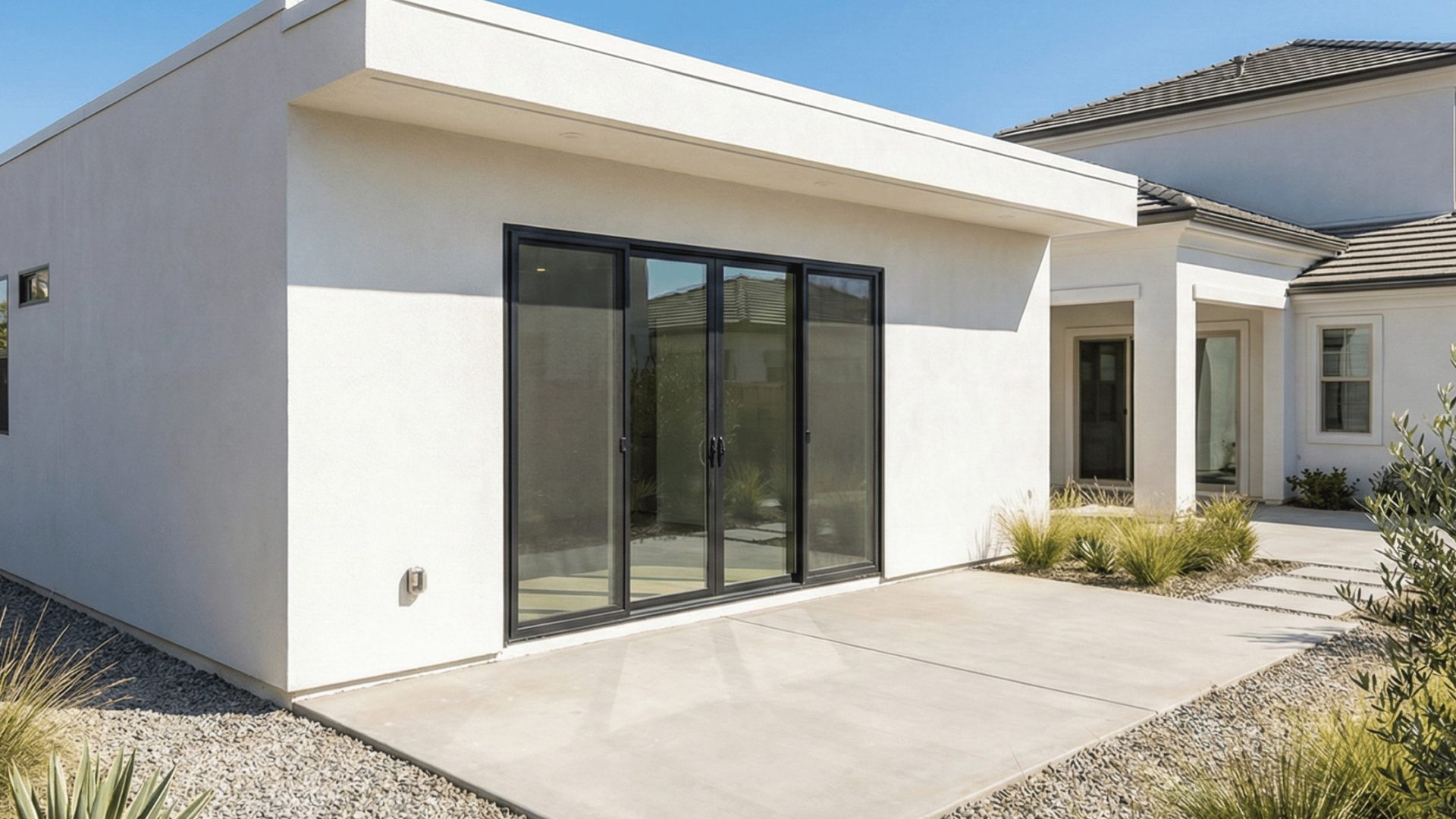
If you have been researching ways to add living space to your California property, the term “modular ADU” has probably come up more than once. And for good reason. These factory-built accessory dwelling units are changing how homeowners think about backyard living spaces, rental income, and multigenerational housing.
But what exactly is a modular ADU, and how does it differ from a traditionally built one? At Nestadu, we help California homeowners navigate the entire ADU process from start to finish, so let us walk you through everything you need to know.
What Is a Modular ADU?
A modular ADU is an accessory dwelling unit that gets built inside a factory rather than on your property. The unit is constructed in sections (called modules) under controlled conditions, then transported to your lot and placed on a prepared foundation.
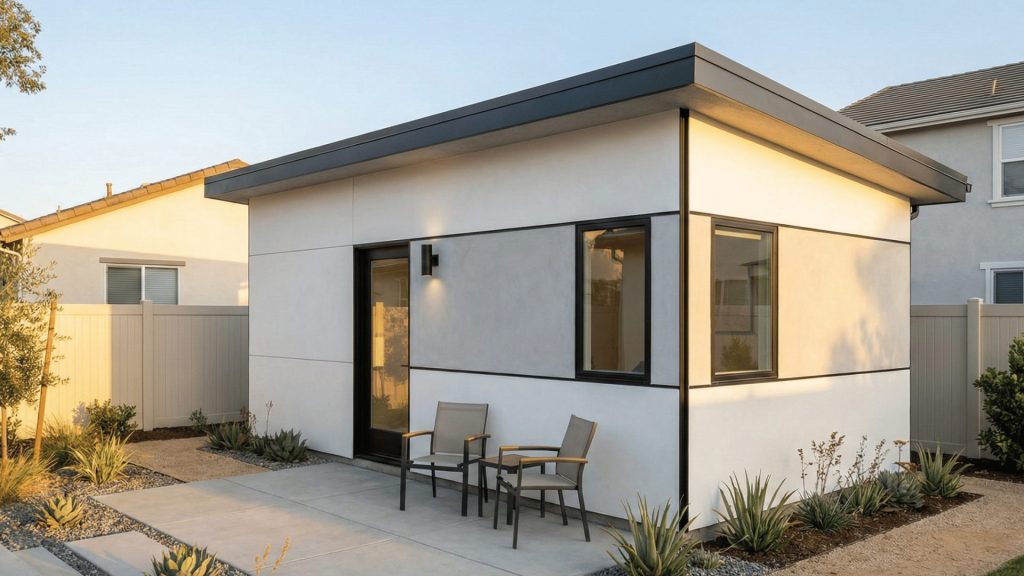
The key thing to understand is that modular ADUs are not the same as mobile homes or manufactured housing. Modular units must meet the exact same California building codes as any traditionally framed home. They are permanent structures built to the International Residential Code (IRC), not HUD standards used for manufactured homes. Once installed, a modular ADU looks and functions just like any site-built structure.
How Does the Factory-Build Process Work?
The construction process for a modular ADU follows a clear sequence. Here is what it typically looks like from start to finish:
- Design and planning: You work with your ADU builder to choose a floor plan, select finishes, and customize the layout to fit your property and personal style.
- Permitting: Your builder submits plans to the local building department. In California, agencies must approve or deny ADU permits within 60 days of receiving a complete application.
- Factory construction: While your permits are being processed and your site is being prepared, the unit is built indoors at a factory. This is where things speed up because site prep and factory construction can happen at the same time.
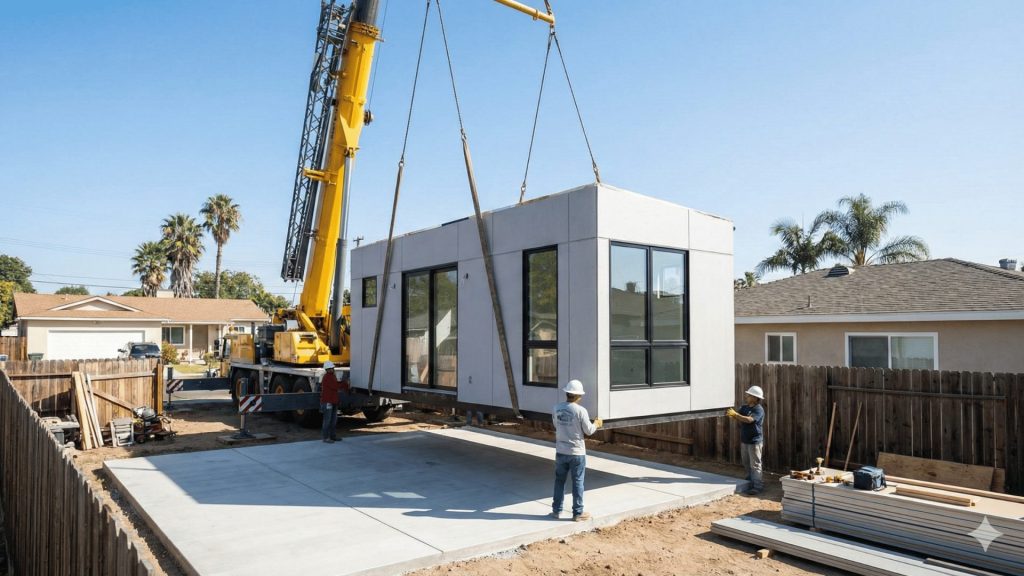
- Delivery and installation: Once the unit is complete, it gets transported via flatbed truck to your property. A crane lifts it onto the foundation, and the crew handles utility hookups, final assembly, and finishing touches.
This parallel workflow is one of the biggest reasons homeowners choose modular. You are not waiting for one step to finish before the next one begins.
Modular vs. Site-Built ADUs: What Is the Real Difference?
This is the question most homeowners ask first. Both types of ADUs can look identical once complete, but the construction process is where the differences show up.
A site-built (or “stick-built”) ADU is framed and constructed entirely on your property using traditional methods. This means your backyard becomes a construction zone for several months, with crews, materials, and noise on-site daily.
A modular ADU, on the other hand, does the heavy lifting in a factory. Here is a quick comparison:
- Timeline: Modular ADUs typically take less time overall because factory work and site work run in parallel. Site-built ADUs may take 7 to 10 months, while modular projects can cut that down significantly.
- Cost predictability: Factory builds tend to have fewer surprise costs since materials are purchased in bulk and processes are standardized.
- Customization: Site-built ADUs offer more design flexibility, while modular units come with a set of floor plans and finish options. That said, many modular builders now offer a solid range of customization.
- On-site disruption: With modular, installation on your property can take just days to a few weeks, compared to months of on-site construction.
At Nestadu, our team helps you weigh these factors based on your property, your budget, and your goals so you can make the right call.
Benefits of Choosing a Modular ADU
There are several practical advantages that make factory-built ADUs attractive to California homeowners.
Faster completion times are the most obvious benefit. Because the factory is building your unit while your foundation and utilities are being prepared on-site, the overall timeline shrinks. Many modular ADU projects are move-in ready months sooner than traditional builds.
Tighter quality control is another big plus. Factory environments are climate-controlled, so there are no weather delays, water damage to exposed framing, or other issues that can pop up with outdoor construction. Every unit goes through standardized inspections at each stage of the build.
Less waste and better efficiency matter too, especially if sustainability is important to you. Factory construction uses precise measurements and pre-cut materials, which means less scrap ending up in a landfill. Many modular builders also incorporate energy-efficient windows, insulation, and appliances into their standard designs.
Finally, there is the reduced disruption to your daily life. Nobody wants their backyard torn up for half a year. Modular construction keeps most of the mess and noise off your property entirely.
California ADU Regulations You Should Know
California has been leading the way on ADU-friendly legislation for years, and the rules keep getting better for homeowners. Here are a few highlights:
- Under AB 68, single-family lots can add one ADU up to 1,200 sq ft and one Junior ADU up to 500 sq ft.
- Owner occupancy requirements have been permanently eliminated thanks to AB 976. You do not have to live on the property to build or rent out an ADU.
- Permitting agencies must approve or deny your ADU application within 60 days.
- AB 1033 now allows ADUs to be sold separately from the primary home as condominiums in participating municipalities.
- Modular and prefab ADUs are exempt from the new solar panel requirement that applies to newly built detached ADUs.
These regulations make it easier than ever to add a modular ADU to your property. Nestadu stays on top of every legislative update so our clients never have to worry about compliance.
Is a Modular ADU Right for Your Property?
Not every lot is a perfect fit for a modular ADU, and that is okay. There are a few things to think about before you commit.
Access is the first consideration. A flatbed truck and crane need to reach your backyard. If your property has narrow driveways, overhead power lines, or tight spaces, installation can get complicated or require extra planning.
Foundation requirements also vary. Your site may need grading, soil testing, or specific foundation work depending on local conditions.
Your goals matter too. Modular ADUs work great for homeowners who want a straightforward build with a predictable timeline. If you need a highly custom design with unusual layouts or architectural features, a site-built ADU might be the better path.
The good news is that Nestadu evaluates all of these factors during the initial consultation. Our team walks your property, reviews the local requirements, and gives you honest guidance on whether modular or traditional construction is the smartest choice for your situation.
Ready to Explore Your Modular ADU Options?
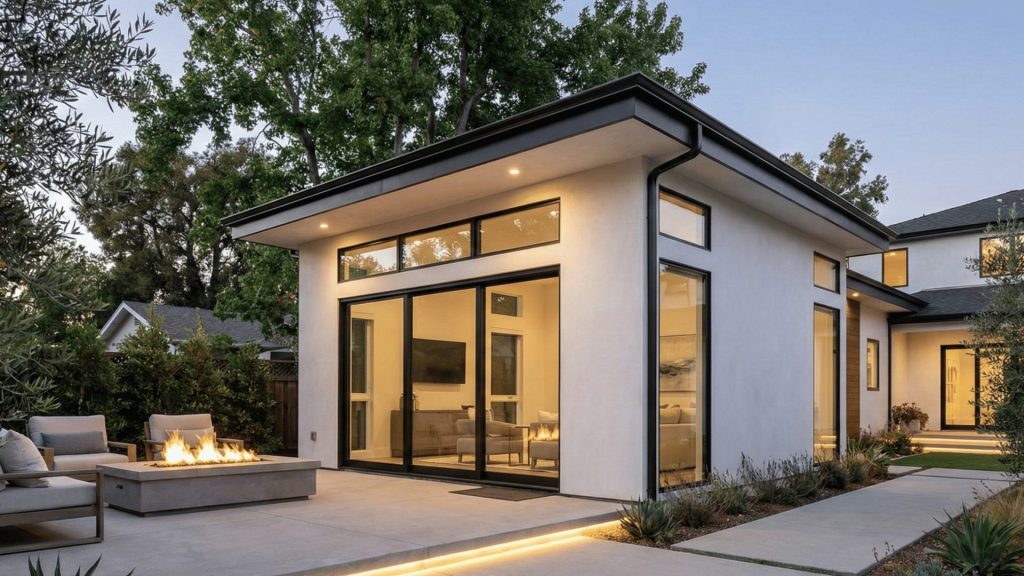
Factory-built ADUs offer a practical, efficient, and high-quality path to adding living space to your California home. Whether you are thinking about rental income, housing for family members, or simply adding value to your property, a modular ADU could be exactly what you need.
At Nestadu, we specialize in making the ADU process simple from concept to completion. Our team of experienced contractors and designers handles everything, including permitting, design, construction, and installation, so you can focus on what matters most.
Contact Nestadu today to schedule a consultation and find out if a modular ADU is the right fit for your property.