
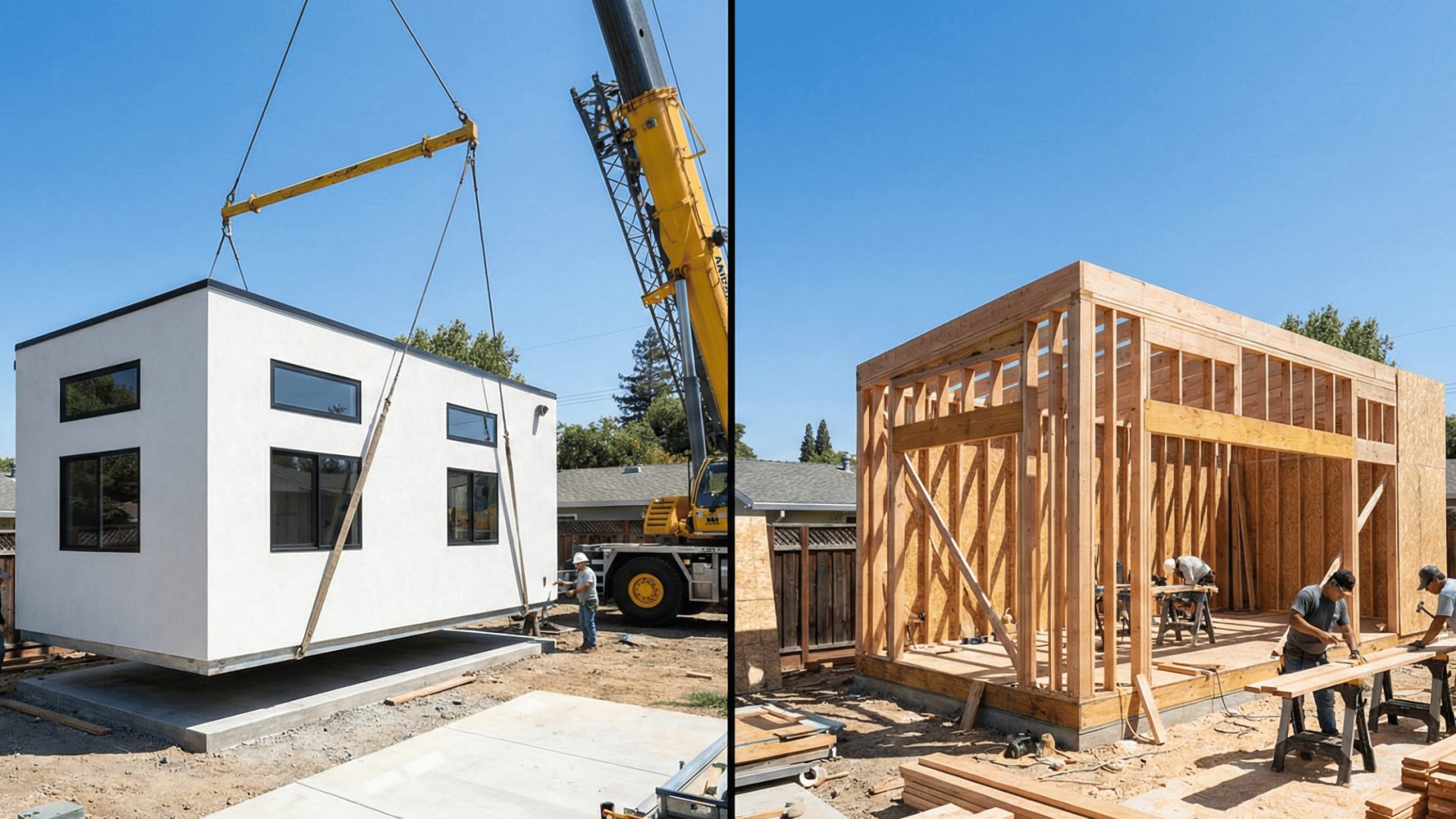
Building an accessory dwelling unit (ADU) on your California property comes with a lot of exciting decisions, but one of the first big ones is choosing how it actually gets built. Should you go with a prefab unit that arrives partially assembled, or a traditional stick built approach where everything is constructed on-site from scratch? Both methods have loyal fans, and both come with real trade-offs.
At Nestadu, we’ve helped homeowners across California navigate this exact decision. So let’s break it down honestly and help you figure out which route makes the most sense for your project.
What Is a Prefab ADU?
A prefab (short for prefabricated) ADU is built off-site in a factory or warehouse. The structure is assembled in sections or modules, then transported to your property and installed on a prepared foundation. Think of it as ordering a high-quality, pre-designed unit that shows up ready to be placed and connected.
There are a few types of prefab ADUs you might come across:
- Modular units that arrive in large sections and are craned into place
- Panelized systems where walls, floors, and roof panels are built in a facility and assembled on-site
- Manufactured units that are fully constructed off-site and delivered as a complete structure
Prefab ADUs have gained traction in California over the past several years, especially among homeowners looking for a faster path to completion.
What Is a Stick-Built ADU?
A stick-built ADU is exactly what it sounds like. It’s built from the ground up, right on your property, using traditional wood-frame construction methods. This is the same approach used for most single-family homes in the U.S.
The process follows a familiar sequence: pour the foundation, frame the walls and roof, run plumbing and electrical, insulate, finish the interior, and complete the exterior. Every phase happens on-site, which gives your builder full control over the design and construction details.
If you’ve ever watched a house go up in your neighborhood, that’s stick-built construction in action.
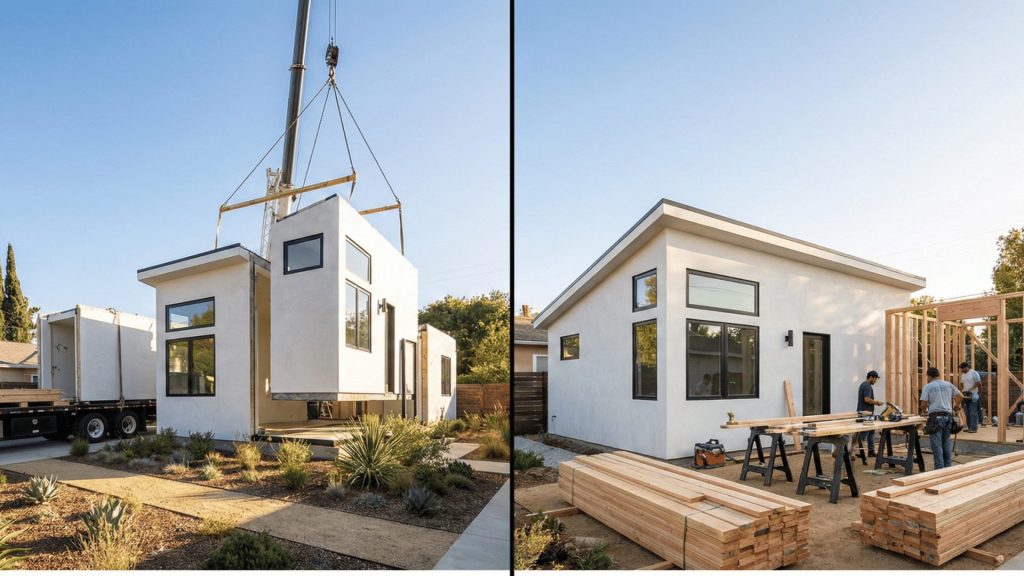
Prefab vs Stick-Built ADU: Quick Comparison
| Factor | Prefab ADU | Stick-Built ADU |
| Build Timeline | 8 to 16 weeks (unit only) | 4 to 8 months (full project) |
| Cost Range | $100K – $200K base + site work | $150K – $350K+ all-inclusive |
| Customization | Limited to pre-set floor plans and finishes | Fully customizable design and layout |
| Design Flexibility | Choose from a set menu of options | Blank canvas, tailored to your property |
| Quality Control | Factory-controlled, consistent environment | Depends on builder skill and oversight |
| Site Access Needs | Requires wide access for truck and crane delivery | Works on tight lots, slopes, and tricky sites |
| Matching Existing Home | Difficult to match unique architectural styles | Easy to blend with your home’s look and feel |
| Budget Predictability | Fixed unit cost, but site extras add up | Full-scope pricing available from experienced builders |
| Permitting | Still required, can take months | Still required, can take months |
Timeline and Speed of Construction
One of the biggest differences between these two methods comes down to how long the project takes.
Prefab ADUs
Prefab units are often marketed as the faster option, and in many cases that’s true. Since the structure is built in a controlled factory environment, there are no weather delays or scheduling gaps between subcontractors. Many prefab ADU companies quote build times of 8 to 16 weeks from order to delivery.
However, that timeline doesn’t always tell the full story. You still need to account for:
- Permitting (which can take months in some California cities)
- Site preparation including foundation work and utility connections
- Delivery logistics, especially if your lot has narrow access or tight turns
Stick-Built ADUs
Stick-built ADUs typically take longer overall, usually somewhere in the range of 4 to 8 months depending on design complexity and local permitting timelines. Weather, inspector availability, and subcontractor schedules can all affect the pace.
That said, stick-built projects offer more flexibility if unexpected issues come up during construction. Your builder can adapt on the fly without waiting for a factory to produce a revised component.
Bottom line: Prefab is generally faster once the unit is ordered, but permitting and site prep still take time regardless of which method you choose.
Cost and Budget Predictability
Money matters, and this is where a lot of homeowners get tripped up by incomplete information.
Prefab ADUs
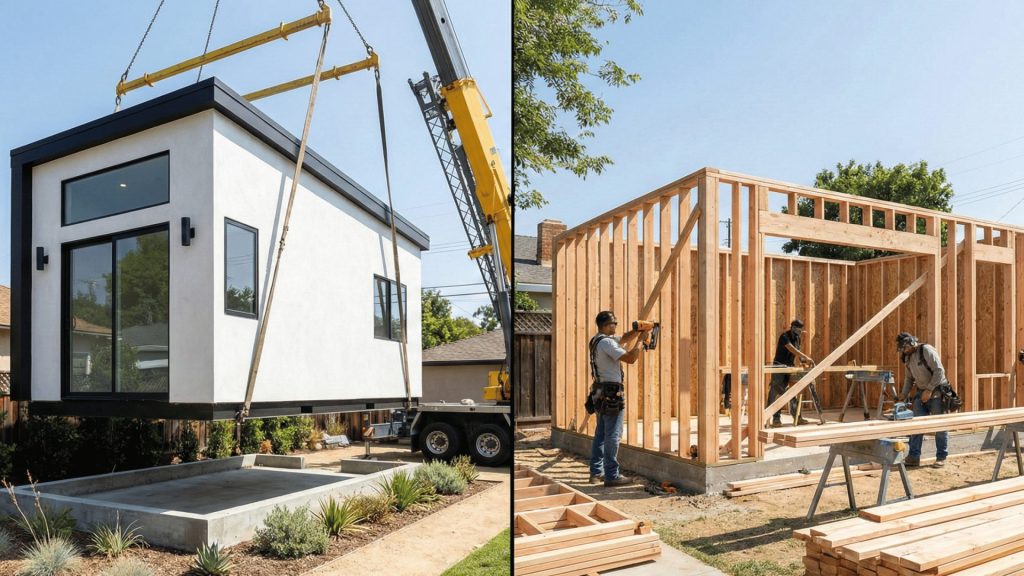
Prefab companies often advertise attractive base prices, sometimes starting around $100,000 to $200,000 for a basic unit. But the final number usually climbs once you factor in additional costs:
- Foundation and site preparation
- Utility hookups (water, sewer, electrical, gas)
- Delivery and crane fees
- Permit fees and engineering reports
- Finish upgrades or customization beyond the standard package
The advantage of prefab is that the manufacturing cost is usually fixed upfront. You know what the unit itself will cost before construction begins.
Stick-Built ADUs
Stick-built ADUs in California typically range from $150,000 to $350,000 or more, depending on size, finishes, and site conditions. While the upfront estimate might seem higher, an experienced builder like Nestadu provides transparent pricing that accounts for the full scope of work from day one.
Stick-built projects can experience cost fluctuations if material prices shift or if change orders come into play. Working with a builder who clearly communicates costs from the start helps keep surprises to a minimum.
Bottom line: Prefab may have a lower base price, but total project costs are often closer than you’d expect once all the extras are included.
Customization and Design Flexibility
This is where the two methods really start to diverge.
Prefab ADUs come with a set menu of floor plans and finish options. Some companies offer a handful of layouts in specific sizes, and you can pick from a selection of cabinets, countertops, and flooring. But if you want something outside of those options, you’re often out of luck or facing significant upcharges.
Stick-built ADUs give you a blank canvas. Want vaulted ceilings? A unique roofline that matches your main house? Custom built-ins or a specific window layout to capture a backyard view? All of that is on the table.
For homeowners who care about their ADU blending seamlessly with the existing home and neighborhood, stick-built construction is hard to beat. Nestadu’s design team works closely with clients to make sure every detail fits the property, from architectural style down to exterior materials and color choices.
Bottom line: If design flexibility and a cohesive look matter to you, stick-built is the clear winner.
Quality and Durability
Both construction methods can produce a high-quality ADU, but the path to getting there looks different.
Prefab units are built in a climate-controlled factory, which means materials aren’t exposed to rain or humidity during construction. Quality control processes in a factory setting can be very consistent. However, the transportation process introduces its own risks. Vibrations, road conditions, and the stress of lifting and placing the unit can sometimes cause cosmetic damage or minor structural settling.
Stick-built ADUs depend heavily on the quality of your contractor. A skilled builder with a solid crew will deliver craftsmanship that rivals or exceeds factory-built quality. The materials are installed on-site and inspected at every phase, giving both the builder and the homeowner full visibility into the construction process.
At Nestadu, our experienced team of ADU contractors takes pride in meticulous craftsmanship at every stage. We believe that hands-on, site-built construction allows us to deliver the level of quality our clients expect.
So Which Method Wins?
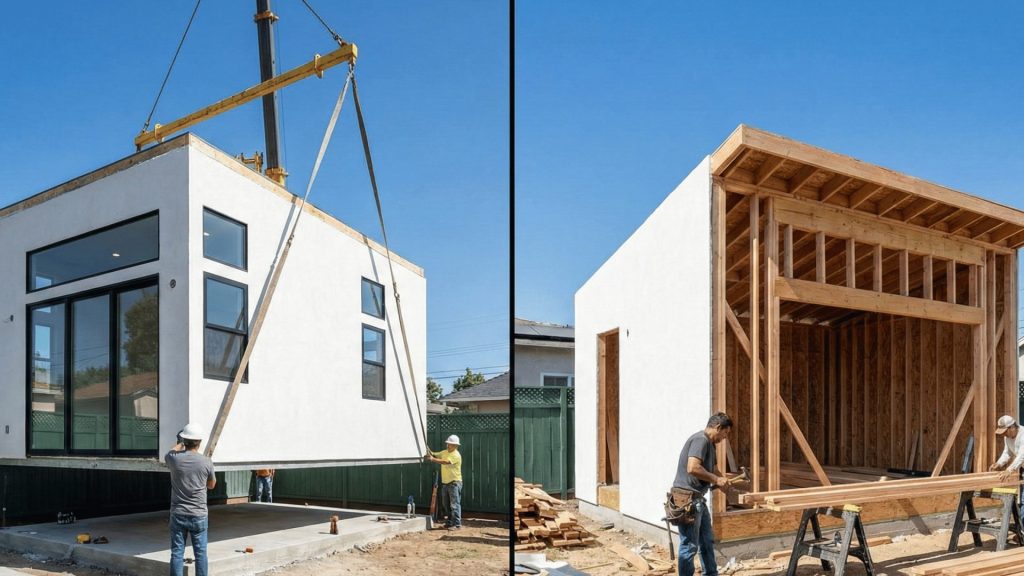
There’s no single right answer here. The best construction method depends entirely on your priorities, property, and budget. Here’s a quick way to think about it:
Prefab might be your best fit if:
- Speed is your top priority and your site has easy access for delivery
- You’re comfortable with a standard floor plan and limited customization
- You want a fixed price for the unit itself and are okay budgeting separately for site work
Stick-built might be your best fit if:
- You want full control over the design and layout
- Matching the ADU to your existing home’s style is important
- Your property has challenging access, slopes, or other site conditions
- You value hands-on craftsmanship and a transparent, full-service building experience
Ready to Build Your ADU the Right Way?
Choosing between prefab and stick-built is just one of many decisions you’ll make during the ADU process. Having the right builder by your side makes all the difference.
Nestadu specializes in crafting high-quality accessory dwelling units that feel like a natural extension of your home. From concept to completion, our team handles design, permitting, and construction with transparent pricing and clear communication every step of the way. If you’re considering an ADU for rental income, flexible living space, or a backyard cottage for family, we’d love to help you explore your options.
Get in touch with Nestadu today and let’s talk about turning your ADU vision into reality.