
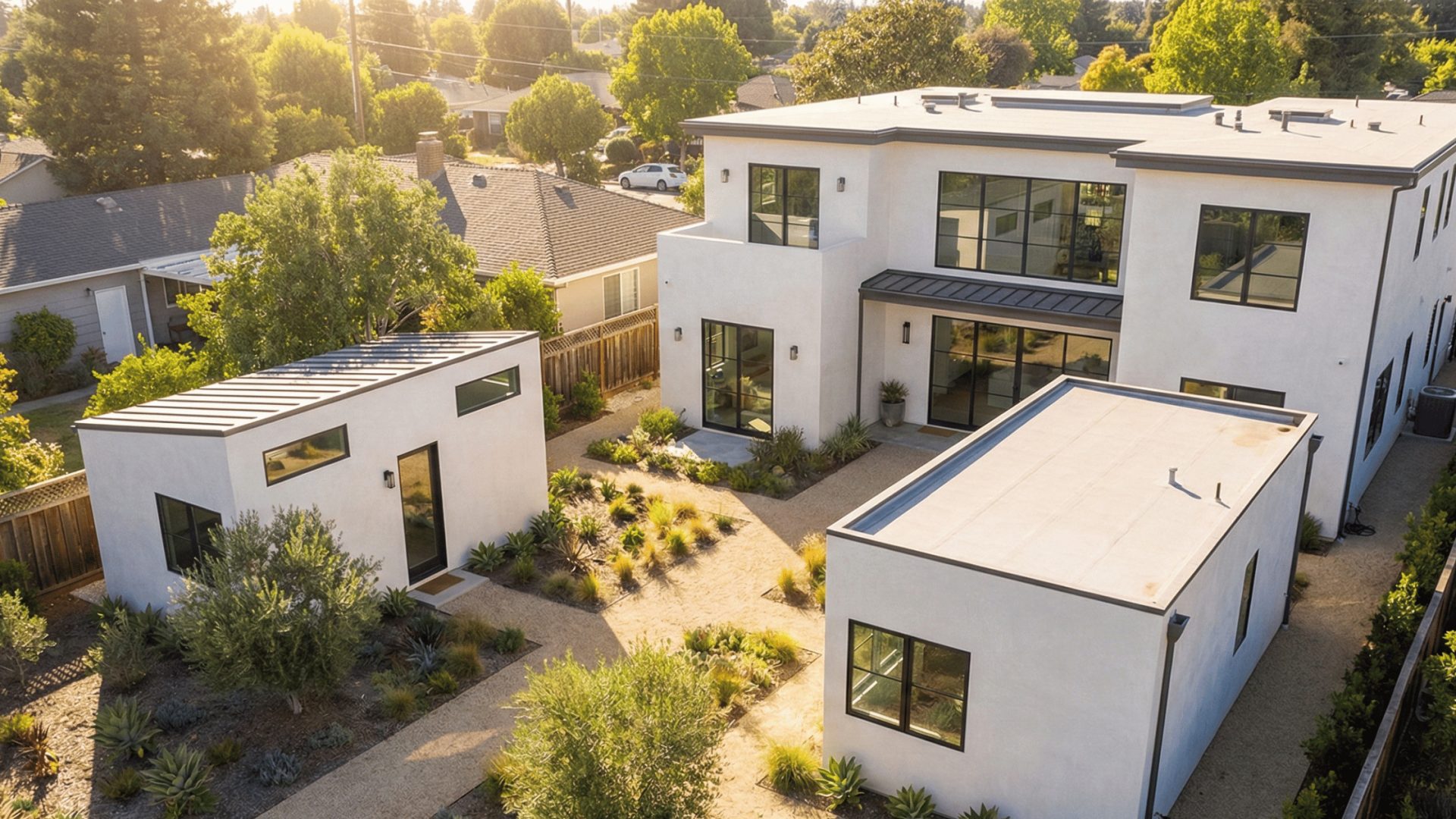
If you have been eyeing that empty space in your backyard and wondering how many tiny homes could fit on your lot, you are not alone. Thousands of California homeowners are asking this exact question right now. The tiny home movement is picking up speed, and with California rolling out some of the most flexible housing laws in the country, the answer might surprise you.
The number of tiny homes or accessory dwelling units (ADUs) you can have on your property depends on zoning regulations, lot size, the type of structures you plan to build, and your city’s local rules. At Nestadu, we help California homeowners navigate these rules every day, so let us break it all down.
How Many Tiny Homes Can You Have On An Acre?
One acre equals 43,560 square feet. If the average tiny home footprint, including yard space and setbacks, runs about 300 to 500 square feet, you could technically fit quite a few units. But real-world numbers look more like this:
- Urban areas: Roughly 8 to 20 tiny homes per acre, depending on density caps and zoning restrictions.
- Rural areas: Up to 30 to 50 per acre, where regulations are more relaxed.
- Suburban lots: Most homeowners can fit 1 to 3 additional units, which is where California’s ADU laws come in.
These numbers account for pathways, utility hookups, setback requirements, and shared green space. Cramming as many structures as possible onto your lot is not practical and typically not legal either.
What California Law Actually Allows in 2025
California has become one of the most ADU-friendly states in the country. If you own a single-family home, current state law permits:
- One standard ADU (detached, attached, or converted from existing space like a garage)
- One Junior ADU (JADU) up to 500 square feet, built within the existing home’s footprint
- Your primary residence
That gives most single-family homeowners up to three livable units on their property. For multifamily properties, Senate Bill 1211 raised the cap on detached ADUs from two to eight units, as long as total ADUs do not exceed the number of existing units in the building.
Other recent changes include the removal of owner-occupancy requirements for standard ADUs, faster permitting timelines (30 days for pre-approved plans), and relaxed parking and setback requirements.
Tiny Homes vs. ADUs: Why the Classification Matters
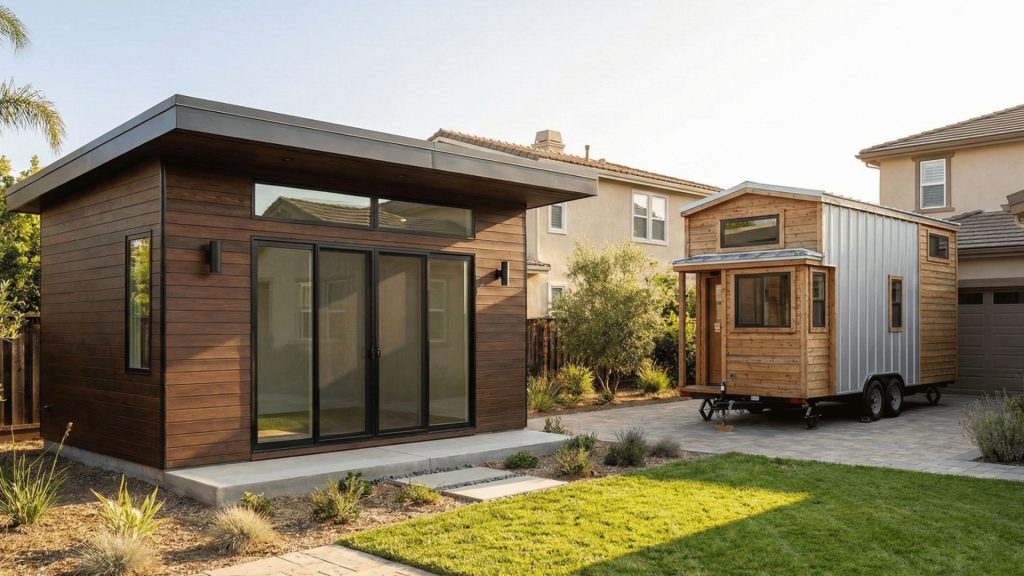
Not all tiny homes are treated equally under the law. Tiny homes on wheels are generally classified as recreational vehicles. You can park one on your property, but in most California cities, you cannot use it as a full-time residence. They do not add property value and cannot be rented out as permanent housing.
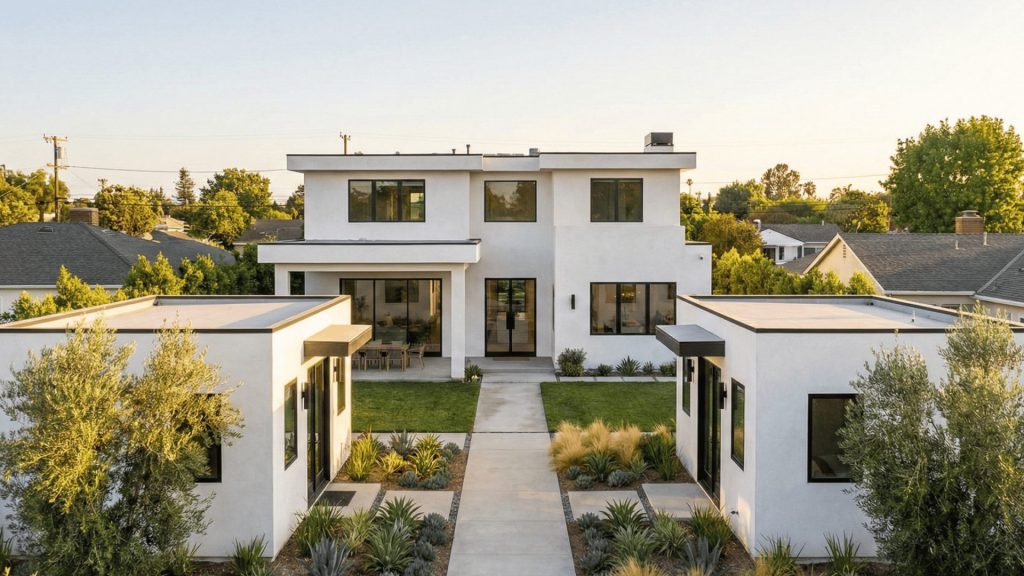
Tiny homes on permanent foundations fall under the same building codes as standard residential construction. When properly permitted, they function as ADUs and count toward your allowable units. This is the route most homeowners take for rental income or flexible living space.
At Nestadu, we specialize in building permitted ADUs that meet all California building codes. A properly built and permitted unit adds real value to your property, something a tiny home on wheels simply cannot do.
Zoning Rules and Local Regulations to Check
California’s state laws set a baseline, but your city or county may have additional rules. Key factors to look into:
- Zoning designation: R-1 and R-2 zones have different density allowances. Check your property’s zoning with your local planning department.
- Setback requirements: California requires just 4 feet from side and rear lot lines for ADUs under 800 square feet.
- Height limits: The standard minimum is 16 feet. Properties near public transit can go up to 18 feet, and attached ADUs may reach 25 feet.
- Utility capacity: Your lot needs adequate sewer, water, and electrical connections. Properties on septic systems may face extra restrictions.
- HOA rules: HOAs in California can set design standards but cannot block you from building an ADU. State law protects that right.
Steps to Figure Out Your Property’s Potential
Ready to explore your options? Here is a simple process to follow:
- Look up your zoning designation through your city’s planning department website.
- Measure your lot and note existing structures, easements, or slope issues.
- Check local ADU ordinances since your city may offer additional allowances or have specific design requirements.
- Consult with an experienced ADU builder who understands both state and local regulations.
- Get a site assessment to determine what your property can realistically support.
Nestadu offers free consultations to help homeowners understand exactly what is possible on their specific lot. Our team handles everything from design through permitting and construction.
Frequently Asked Questions
Can I put multiple tiny homes in my backyard in California? Yes, but they need to be properly permitted as ADUs or JADUs. Most single-family lots can support one ADU plus one JADU in addition to the primary home. Tiny homes on wheels do not qualify as permanent residences in most jurisdictions.
Do I need a permit for a tiny home on my property? If the tiny home sits on a permanent foundation and will be used as a dwelling, yes. California requires ADUs to meet building codes and go through the permitting process. Recent laws have made this faster and more affordable than ever.
Can I rent out my ADU or tiny home? California law allows ADU rentals for long-term housing. However, many cities restrict short-term rentals like Airbnb for ADUs, so check your local ordinances first.
The Bottom Line
The number of tiny homes or ADUs you can have on your California property depends on zoning, lot size, and the type of structures you build. For most single-family homeowners, that means up to three total units: your primary home, one ADU, and one JADU.
California’s 2025 laws have made it easier than ever to add units, with faster permitting, fewer restrictions, and more design flexibility. Whether you want rental income, space for family, or a smarter use of your property, now is the right time to act.
Ready to find out what your property can support? Contact Nestadu today for a free consultation. Our experienced ADU contractors and designers will walk you through everything from zoning to construction, making the process simple from start to finish.