

California homeowners exploring alternative housing solutions often find themselves comparing modular homes vs manufactured homes. These factory-built options sound similar, but they represent fundamentally different construction methods with distinct impacts on property value, financing, and long-term investment potential.
If you’re considering adding an accessory dwelling unit (ADU) to your property or looking for affordable housing alternatives, knowing these differences helps you make informed decisions that align with your goals and budget.
What Are Modular Homes?
Modular homes are residential structures built in sections at a factory facility. These sections, called modules, are then transported to your property and assembled on a permanent foundation. Think of them as puzzle pieces that come together to create a complete home.
The construction process happens indoors, which means weather delays don’t impact your timeline. Each module goes through rigorous quality inspections before leaving the factory. Once the modules arrive at your site, crews use cranes to position them on the foundation and connect all the systems.
Here’s what makes modular homes unique:
- Built to the same local and state building codes as traditional stick-built homes
- Require a permanent foundation
- Cannot be moved once assembled
- Appreciate in value like conventional houses
- Eligible for standard mortgage financing
What Are Manufactured Homes?
Manufactured homes are built entirely in a factory and arrive at your property as a complete unit. These homes are constructed on a permanent steel chassis that remains part of the structure even after installation. The federal government regulates manufactured homes through HUD (Department of Housing and Urban Development) Code rather than local building codes.
You might hear people call them “mobile homes,” though that term technically refers to pre-1976 models. Modern manufactured homes offer better construction quality and design options than their predecessors. They can be single-section or multi-section units, with the latter offering more square footage and floor plan variety.
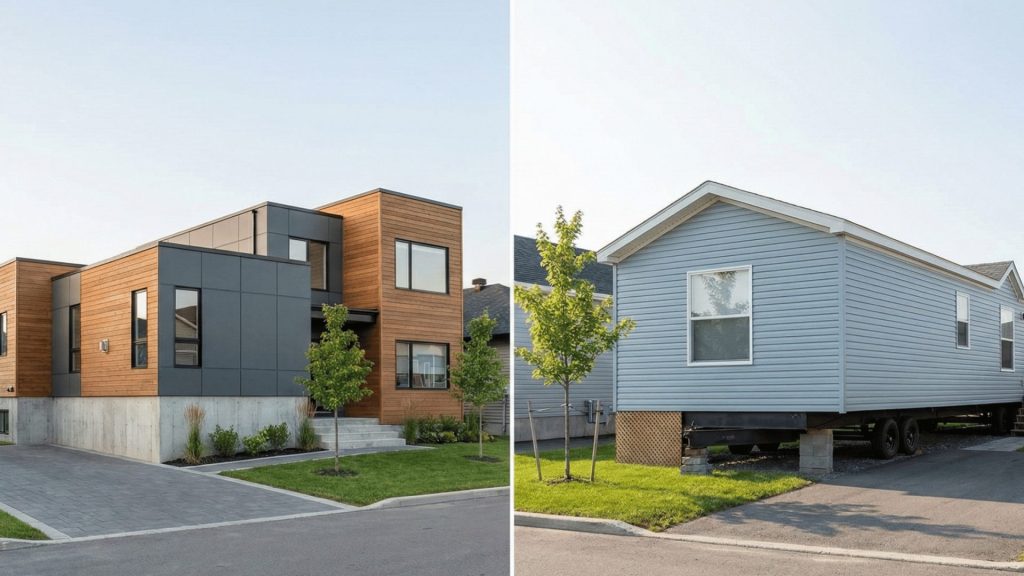
Quick Comparison: Modular vs Manufactured Homes
| Feature | Modular Homes | Manufactured Homes |
| Building Codes | Local/state building codes | Federal HUD Code |
| Foundation | Permanent foundation required | Various foundation types accepted |
| Property Value | Appreciates like traditional homes | Typically depreciates (with exceptions) |
| Financing | Standard mortgage options | May require specialized loans |
| Relocation | Cannot be moved after assembly | Can potentially be relocated |
| Zoning Acceptance | Generally accepted in residential zones | May face placement restrictions |
| Customization | Extensive options available | More limited standard designs |
Key Differences That Matter
Building Standards and Codes
Modular homes must meet the same building codes as any house built on your street. This means they comply with California’s strict seismic requirements and local zoning regulations. Manufactured homes follow HUD Code, which is a federal standard that may or may not align with your local requirements.
Foundation Requirements
A modular home needs a permanent foundation, just like a traditional house. This could be a basement, crawl space, or slab foundation. Manufactured homes can sit on various foundation types, including concrete pads or pier systems, though California often requires more substantial foundations than some other states.
Property Value Considerations
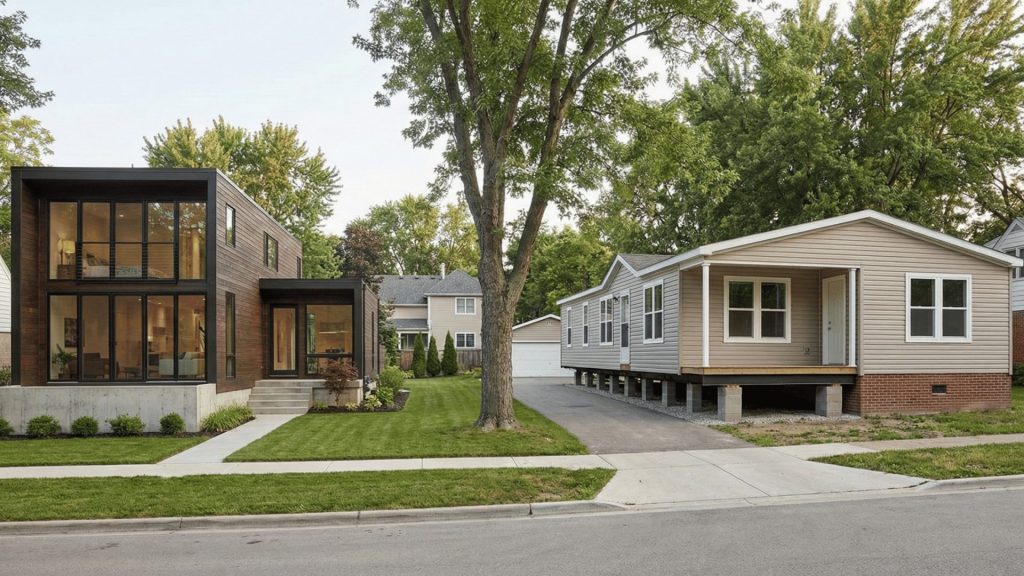
Modular homes typically appreciate over time because they’re considered real property. When you sell your property, the modular home adds value just like a conventional house would. Manufactured homes often depreciate, similar to vehicles, though this isn’t always the case. If placed on owned land with a permanent foundation, some manufactured homes can appreciate.
Financing Options
Getting a mortgage for a modular home works the same way as financing a traditional house. Lenders view them as permanent structures on real property. Manufactured homes may require specialized financing, such as chattel loans, especially if you don’t own the land. These loans often come with higher interest rates and shorter terms than conventional mortgages.
California-Specific Regulations
California has unique considerations for both home types. The state requires all structures to meet earthquake safety standards, which can affect both modular and manufactured home installations. Local zoning ordinances vary significantly across different cities and counties.
Many California municipalities have restrictions on where manufactured homes can be placed. Some areas only allow them in designated mobile home parks. Modular homes face fewer placement restrictions because they meet local building codes.
Which Option Works for ADU Projects?
If you’re planning to add an ADU to your California property, understanding these differences becomes critical. Most ADU projects benefit from modular construction for several reasons.
Modular ADUs integrate seamlessly with existing properties because they meet the same building codes as your primary residence. This matters for both resale value and neighborhood aesthetics. When you work with experienced builders like Nestadu, the modular approach allows for customization that matches your home’s style while maintaining construction efficiency.
The permanent nature of modular construction also aligns better with ADU regulations in most California cities. Local planning departments typically have clearer approval processes for modular structures because they’re treated like conventional additions to your property.
Advantages of modular construction for ADUs:
- Faster construction timeline (factory work continues regardless of weather)
- Higher quality control through factory inspections
- Better integration with existing property value
- Simpler permitting process in most jurisdictions
- More customization options to match your home’s design
Cost Comparison
Initial purchase prices favor manufactured homes, which can cost 20-30% less than comparable modular homes. However, this upfront savings needs context. The total cost of ownership tells a different story when you factor in financing terms, insurance rates, and long-term value retention.
Modular homes qualify for better financing rates and terms. Insurance costs are typically lower because they’re built to local codes. The appreciation potential means your investment grows over time rather than losing value.
Making the Right Choice
Your decision between modular and manufactured construction depends on your specific situation. Consider these questions:
- Do you own the land where the home will sit?
- How important is long-term property value appreciation?
- What are your local zoning regulations?
- What financing options are available to you?
- Are you building an ADU or a primary residence?
For most California homeowners considering ADU projects, modular construction offers the best combination of quality, value, and regulatory compliance. The construction method delivers faster timelines than traditional building while maintaining the standards that protect your property investment.
Working with Experienced Builders
Choosing between modular and manufactured homes involves more than just comparing features and prices. Local regulations, property considerations, and long-term goals all play important roles in making the right decision.
At Nestadu, we specialize in creating high-quality ADUs that add lasting value to California properties. Our team understands the nuances of local building codes, zoning requirements, and construction methods that work best for accessory dwelling units. Whether you’re building a rental unit, in-law suite, or flexible living space, we can guide you through the options that fit your property and budget.
Ready to explore how an ADU can work for your property? Connect with our team to discuss your specific needs and learn more about our approach to quality construction.