
If you’ve started researching ways to add living space to your California property, you’ve probably heard both prefab and modular home tossed around like they mean the same thing. They don’t. While these terms are related, mixing them up could lead you down the wrong path for your accessory dwelling unit project.
Here’s what trips up most homeowners: both construction methods involve building components in a factory instead of entirely on your property. Both promise faster timelines than traditional construction. And yes, both can work beautifully for backyard cottages and in-law suites. But the details matter when you’re investing in permanent living space.
The real question isn’t whether factory-built homes are legitimate. They absolutely are. The question is which type of factory-built construction fits your specific needs, budget, and property. At Nestadu, we’ve guided countless California homeowners through these choices, and we’ve learned that understanding the actual differences saves time, money, and headaches down the road.
Let’s clear up the confusion once and for all. We’ll walk through what each construction method actually means, how they differ in ways that affect your wallet and timeline, and which approach might make the most sense for your ADU project.
Understanding Prefab Construction
Prefabricated construction is the big umbrella term that covers multiple building methods. Think of it like saying “vehicle” when you could be talking about a motorcycle, sedan, or pickup truck. They’re all vehicles, but they work differently.
The common thread is simple: major building components get manufactured in a factory before showing up at your property. That’s it. How much gets built in the factory, what arrives on the trucks, and how it all goes together can vary wildly depending on which prefab method you choose.
Common types of prefab construction include:
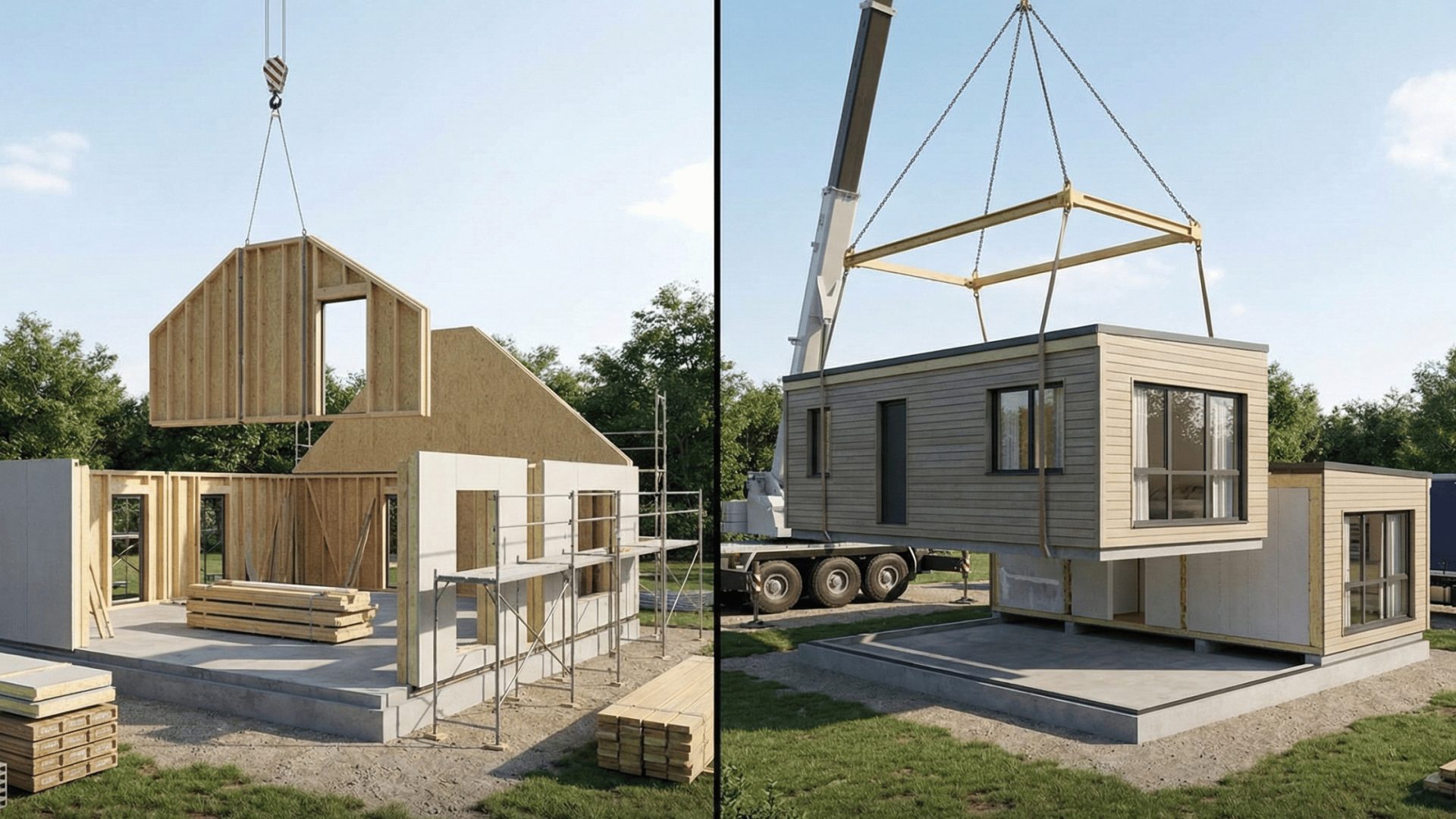
- Panelized homes that arrive as wall sections requiring on-site assembly
- Pre-cut homes with precisely measured materials ready to build
- Modular homes built as complete three-dimensional sections
- Manufactured homes constructed to federal HUD standards
The factory setting offers real advantages. Your building materials aren’t sitting outside getting rained on. Workers aren’t dealing with mud, extreme heat, or frozen ground. Quality control happens in controlled conditions with consistent processes. For homeowners adding an accessory dwelling unit in California, these benefits translate to fewer weather delays and more predictable timelines.
What Are Modular Homes?
Modular homes are one specific type of prefab construction, and they’re probably the most misunderstood. These structures get built as large, box-like sections in a factory. Each module is a complete three-dimensional unit with walls, floors, ceilings, and rough-in plumbing and electrical already installed.
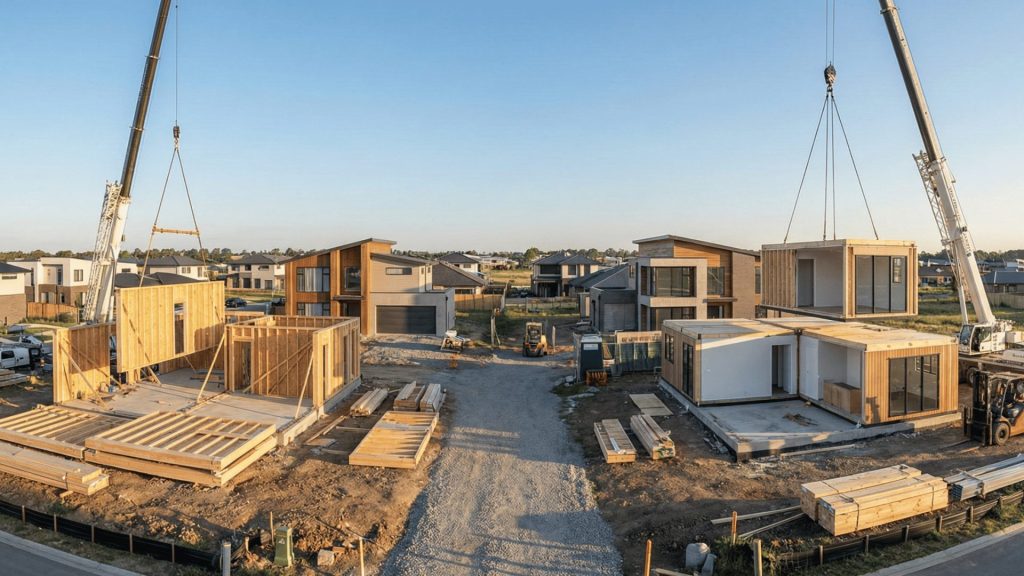
Picture building blocks that happen to be room-sized. Factory workers construct each module with finished interiors, then truck them to your property. A crane lifts each section onto your foundation, workers bolt them together, and the finishing touches get added. The whole process moves fast because 70-80% of the construction happens indoors.
Here’s what separates modular from other prefab methods: these homes must meet the exact same building codes as traditional stick-built houses. In California, that means seismic requirements, energy efficiency standards, and all local zoning rules apply. Your modular ADU isn’t a shortcut around regulations. It’s a permanent structure built to the same standards as any home in your neighborhood.
Nestadu works extensively with modular construction because it delivers quality results on California’s tight timelines. When you’re building a backyard cottage for rental income or an in-law suite for aging parents, every month of construction delay costs you money or family time.
Key Differences Between Prefab and Modular Homes
Construction Process and Assembly
The building process reveals the biggest practical differences. Prefab construction might mean anything from simple wall panels to nearly complete room sections. You won’t know what “prefab” really means until you ask which specific type you’re getting.
Modular construction is more specific. Complete modules arrive at your property with interiors substantially finished. Drywall is up, flooring is down, and systems are roughed in. Compare that to panelized construction, where wall sections arrive and your builder still needs to frame the roof, install all systems, and finish every interior surface on-site.
Assembly differences include:
- Modular: 2-4 weeks typical on-site assembly time
- Panelized: 2-3 months for complete on-site construction
- Pre-cut: 3-4 months depending on builder experience
- Traditional stick-built: 4-6 months or longer
Building Codes and Compliance
This difference affects your financing, insurance, and resale value more than anything else. Modular homes on permanent foundations follow local building codes. The same codes that govern traditional construction apply to your modular ADU.
Other prefab types might follow different standards. Manufactured homes, for example, are built to federal HUD codes instead of local requirements. That changes everything from property valuation to mortgage options. Banks treat HUD-code homes differently than code-compliant modular or traditional homes.
California’s Title 24 energy standards are strict. When Nestadu designs an accessory dwelling unit using modular methods, we ensure every detail meets state and local requirements. Your ADU will pass the same inspections as any traditionally built structure.
Cost and Timeline Considerations
Budget matters, and so does how quickly you can start generating rental income or housing family members. Both prefab and modular construction typically cost less than traditional building, but the savings come from different places.
Modular construction cuts costs through efficiency. Factory workers specialize in specific tasks and waste less material. Weather delays don’t stretch your timeline. The controlled environment means better quality control and fewer callbacks to fix mistakes. Most homeowners save 10-20% compared to traditional construction.
Timeline factors to consider:
- Site preparation time stays the same regardless of building method
- Factory production happens simultaneously with site work
- Weather impacts on-site assembly but not factory construction
- Permit processing follows normal schedules for all methods
Transportation costs can eat into savings if you’re far from manufacturing facilities. Foundation and site work expenses don’t change based on how you build the structure above it. Customization adds costs whether you’re building modular, prefab panels, or traditional stick-built.

Choosing the Right Option for Your ADU Project
Your specific situation should guide this decision. A modular backyard cottage makes sense when you want quality, speed, and code compliance. Panelized construction might work if you have unique design requirements or difficult site access. Pre-cut kits appeal to budget-conscious builders willing to invest sweat equity.
California’s ADU regulations have created opportunities across the state. Whether you’re in Sacramento, Oakland, or San Diego, local codes will shape what’s possible on your property. The good news is that construction method doesn’t limit your options as much as lot size, setbacks, and height restrictions do.
Key factors for your decision:
- How quickly you need the ADU completed and occupied
- Total budget including all site preparation and foundation work
- Intended use as rental income or family housing
- Property access for delivery trucks and crane equipment
- Local design review and neighborhood compatibility requirements
Foundation requirements stay constant across all methods. Your accessory dwelling unit needs proper footings and a permanent foundation whether it’s modular, panelized, or traditionally built. This uniformity is actually good news because it means your ADU appreciates in value like traditional real estate.
Making Your Decision
The distinction between prefab and modular matters less than choosing quality construction that meets your needs. Modular is a type of prefab, built to higher standards than some other prefab methods. For permanent accessory dwelling units in California, modular construction offers the sweet spot of speed, quality, and code compliance.
At Nestadu, we’ve seen homeowners succeed with various approaches. What matters most is working with experienced ADU contractors who understand California’s regulations and can deliver the quality you expect. Your backyard cottage or in-law suite represents a significant investment in your property and your family’s future.
The right construction method is the one that fits your timeline, budget, and quality expectations while meeting all local requirements. Now that you understand the real differences between prefab and modular homes, you can ask better questions and make informed decisions about your ADU project.