
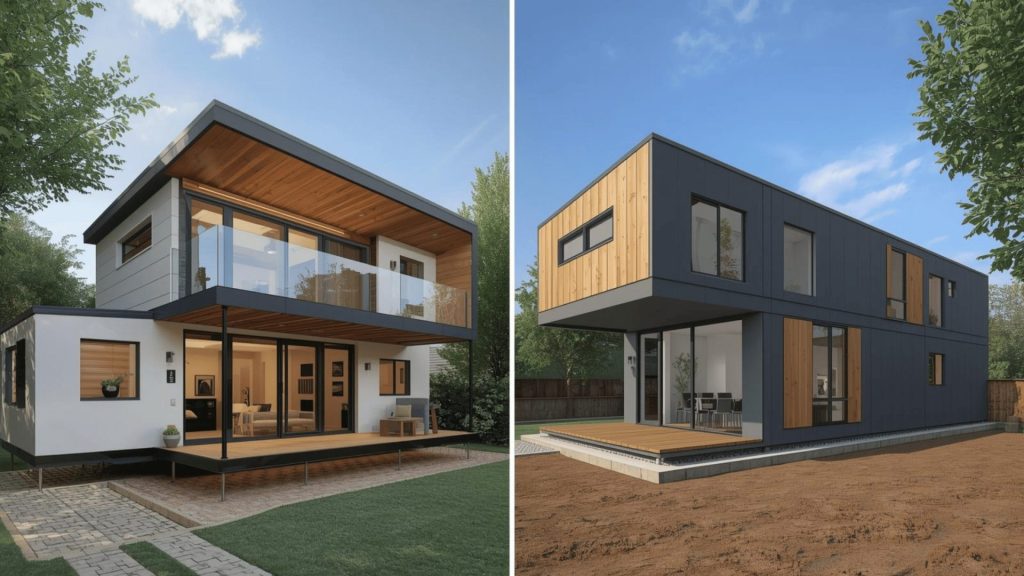
Choosing between a modular prefab ADU vs stick built ADU is one of the biggest decisions California homeowners face when adding an accessory dwelling unit to their property. Both construction methods have their strengths, and the right choice depends on your budget, timeline, and specific property needs.
Understanding the differences between these two approaches will help you make an informed decision that aligns with your goals. Whether you’re building an in-law suite or a backyard cottage for rental income, this guide breaks down everything you need to know.
Understanding the Basics
Modular Prefab ADUs
A modular prefab ADU is constructed in sections at a factory-controlled facility, then transported to your property for final assembly. The modules are built to exact specifications indoors, which eliminates most weather-related delays and quality inconsistencies.
Once the modules arrive at your site, they’re placed on a pre-built foundation using a crane. The assembly process typically takes just a few days, though the entire project from design to completion usually spans 3-6 months when you factor in permits and site preparation.
Stick-Built ADUs
Stick-built ADUs follow the traditional construction method where everything is built on-site from the ground up. Your contractor frames the structure, installs systems, and completes all finishing work directly on your property.
This approach offers complete flexibility in design and materials but requires more time on-site. Weather conditions, material delivery schedules, and contractor availability can all impact the timeline. Most stick-built ADUs take 6-12 months to complete.
Modular Prefab ADU Vs Stick Built ADU: Quick Comparison Table
| Feature | Modular Prefab ADU | Stick-Built ADU |
| Construction Timeline | 3-6 months | 6-12 months |
| Cost Range | $150,000 – $300,000 | $200,000 – $400,000+ |
| Design Flexibility | Limited to preset plans | Unlimited customization |
| Quality Control | Factory standards | Depends on contractor |
| Weather Impact | Minimal delays | Significant delays possible |
| Site Requirements | Crane and truck access | Material storage space |
| Cost Predictability | Fixed pricing typical | More variables |
| Ideal For | Fast timelines, standard designs | Custom designs, difficult sites |
Pros and Cons of Modular Prefab ADUs
Advantages
Faster Construction Timeline
The factory builds your ADU while site prep happens simultaneously. Once the foundation is ready, assembly takes days instead of months. This means you can start generating rental income or housing family members much sooner.
Consistent Quality Control
Factory construction means:
- Climate-controlled building environment
- Standardized construction processes
- Multiple quality inspections before delivery
- Less risk of weather damage to materials
- Experienced assembly teams
Predictable Costs
Most modular ADU builders provide fixed pricing upfront. You’ll know exactly what you’re spending before construction begins, with fewer opportunities for surprise expenses or change orders that can inflate stick-built budgets.

Disadvantages
Limited Design Flexibility
Modular manufacturers typically offer preset floor plans and design templates. While you can make some customizations, you’re working within the constraints of what can be safely transported and assembled.
Site Access Requirements
Your property needs adequate access for large trucks and crane equipment. Narrow driveways, overhead power lines, or tight spaces can create challenges or add costs for special delivery arrangements.
Transportation Costs
Depending on how far the factory is from your property, delivery fees can add significantly to your total cost. This is especially true if you’re in a remote area or require multiple trips.
Pros and Cons of Stick-Built ADUs
Advantages
Complete Customization
Stick-built construction gives you total design freedom. You can match your existing home’s architecture perfectly, create unique layouts, and adjust plans during construction if needed. The only limits are your budget and local building codes.
Better for Challenging Sites
Properties with difficult access, slopes, or unusual lot configurations often work better with stick-built construction. Your contractor can adapt to site conditions without the constraints of pre-built modules.
More Contractor Options
You have a wider pool of general contractors to choose from. This competition can sometimes work in your favor for pricing, though it requires more research to find quality builders.
Disadvantages
Longer Construction Time
Building everything on-site naturally takes longer. Rain delays, material shortages, and scheduling conflicts can push timelines even further. Many stick-built projects face unexpected delays that extend the completion date.
Weather Dependent
Rain, extreme heat, or cold can halt construction for days or weeks. Materials exposed to weather before installation may suffer damage, potentially affecting long-term quality.
Variable Quality
Quality depends heavily on your contractor’s skill and attention to detail. Without factory quality controls, you’re relying entirely on on-site workmanship, which can vary significantly between builders.

Key Factors to Consider
Budget Reality
Modular prefab ADUs typically range from $150,000 to $300,000 depending on size and finishes. Stick-built ADUs often cost $200,000 to $400,000 or more. However, local labor costs, site conditions, and design complexity can shift these ranges considerably.
Timeline Priorities
If you need your ADU completed quickly for rental income or family housing, modular construction’s faster timeline provides a clear advantage. Stick-built makes more sense when you have time flexibility and want extensive customization.
Site Characteristics
Evaluate your property’s access, terrain, and proximity to neighboring homes. Modular requires crane access and delivery truck clearance. Stick-built needs space for material storage and worker parking but handles difficult sites more easily.
Design Goals
Do you want your ADU to perfectly match your main house’s architectural style? Stick-built offers unlimited design possibilities. If you’re comfortable with quality preset designs that blend well with most neighborhoods, modular delivers excellent results faster.
Making Your Decision with Nestadu
At Nestadu, we help California homeowners navigate this decision based on their unique circumstances. Our experienced ADU contractors assess your property, discuss your goals, and recommend the construction method that best fits your needs.
We’ve successfully completed both modular and stick-built ADU projects across California. Our team understands local building codes, permit requirements, and the specific challenges different properties present.
What Sets Nestadu Apart:
- Transparent pricing from day one
- Expert guidance through permit processes
- Quality craftsmanship regardless of construction method
- Dedicated project management from concept to completion
- Focus on designs that enhance your property value
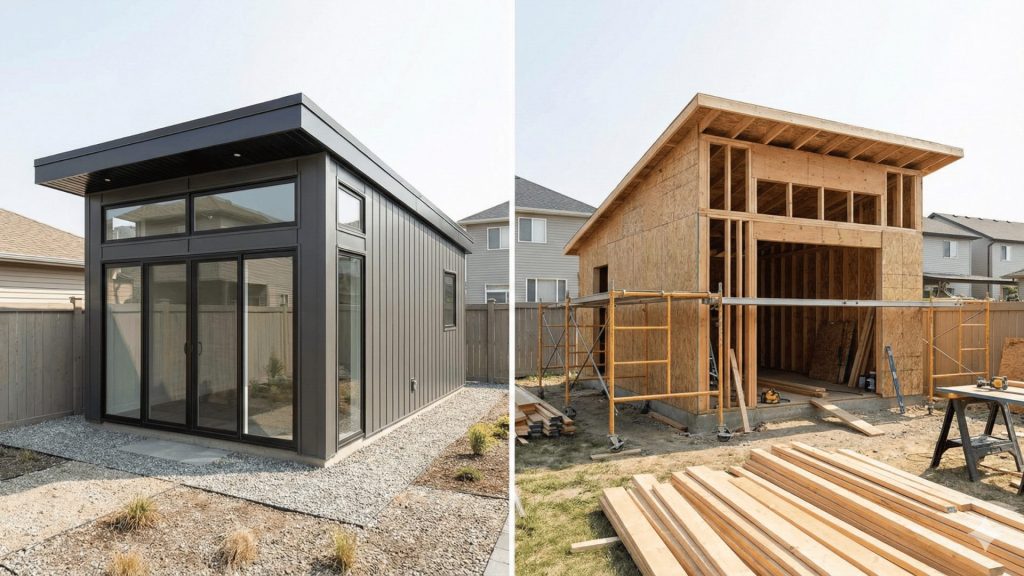
Conclusion
There’s no universally “better” option between modular prefab and stick-built ADUs. The right choice depends on your specific situation, priorities, and property characteristics.
Modular construction excels when speed, cost predictability, and quality control matter most. Stick-built construction shines when customization, challenging sites, or architectural matching takes priority. Both methods can deliver beautiful, functional accessory dwelling units that add value to your property.
Working with experienced ADU builders like Nestadu ensures you choose wisely and execute flawlessly. We bring expertise in both construction methods, helping you build an ADU that perfectly serves your needs while respecting your budget and timeline. Contact Nestadu today to discuss which construction approach makes the most sense for your backyard cottage or in-law suite project.


