
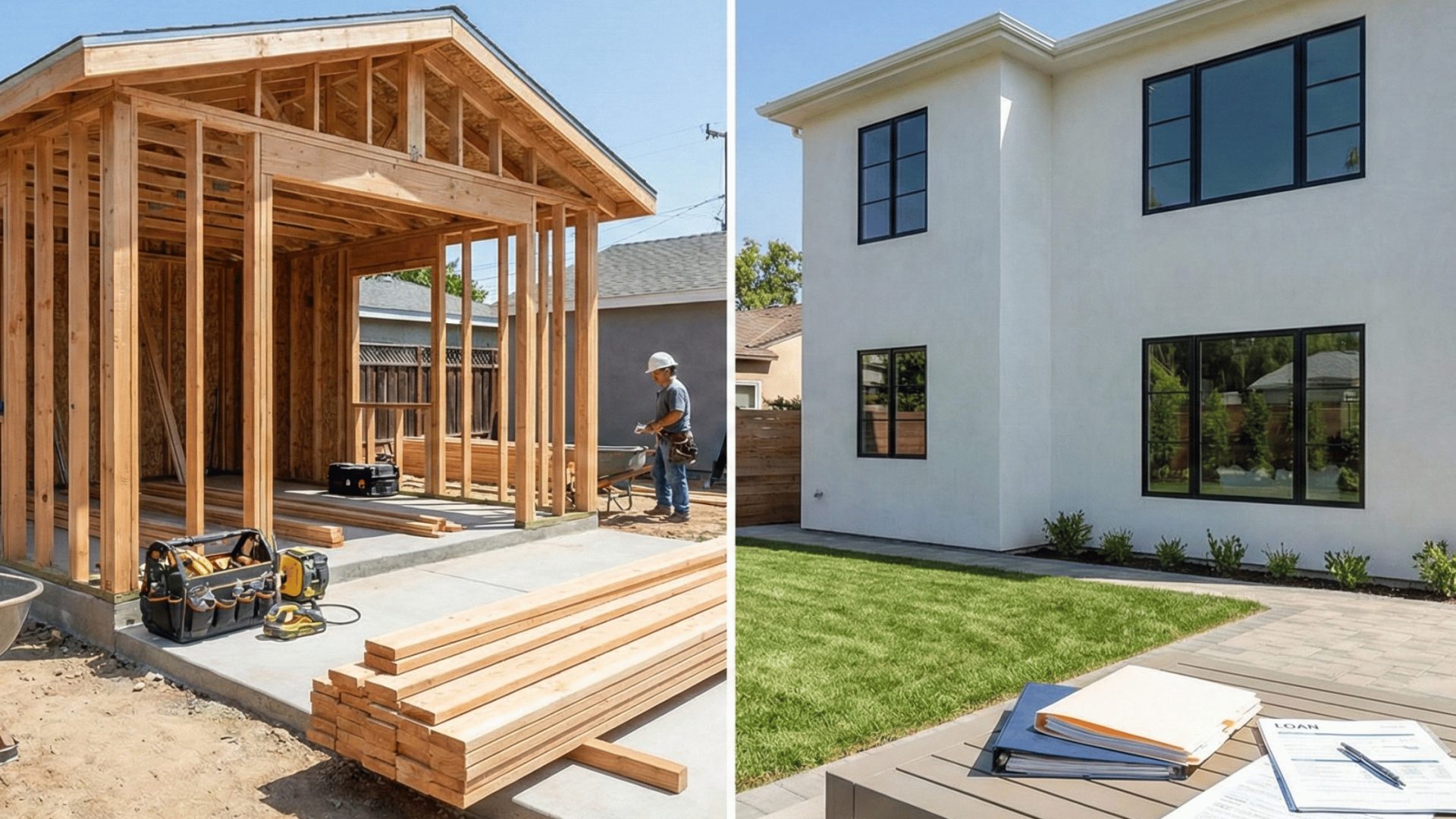
Building an accessory dwelling unit on your California property is one of the smartest investments you can make right now. But figuring out how to pay for it? That part trips up a lot of homeowners. Most people assume they can just use a regular mortgage to fund their ADU project, and that is where confusion sets in.
The truth is, financing an ADU requires a completely different loan product than what you used to buy your home. Understanding the difference between a construction loan and a standard mortgage can save you time, money, and a whole lot of frustration. Let’s break it down.
What Exactly Is a Construction Loan for an ADU?
A construction loan is a short-term financing option designed specifically for building projects. Unlike a traditional mortgage where you receive the full loan amount upfront, a construction loan releases funds in stages as your project hits certain milestones. These stages are commonly called “draws.”
Here is what makes construction loans unique:
- They typically last 12 to 18 months, covering the build timeline
- You only pay interest on the funds that have been disbursed, not the full loan amount
- Your lender will require inspections at each construction phase before releasing the next draw
- A licensed, reputable builder is usually required to qualify
This is one reason why working with an experienced ADU company like Nestadu matters. Lenders want to see detailed construction plans, realistic timelines, and a proven contractor before they approve your loan. Nestadu provides all of that documentation upfront, which makes the financing process significantly smoother for homeowners.
How a Standard Mortgage Works (Quick Recap)
A standard mortgage is what most homeowners are already familiar with. You borrow a lump sum to purchase an existing property, and you pay it back over 15 to 30 years with a fixed or adjustable interest rate. The home itself serves as collateral.
The key difference is that standard mortgages are designed for buying properties that already exist. They are not set up to fund new construction on your lot. That is why a separate loan product is needed when you are building something from the ground up, like an ADU in your backyard.

Key Differences Between ADU Construction Loans and Standard Mortgages
This is where it really pays to understand the details. While both are real estate loans, they work very differently in practice.
Loan Structure and Disbursement
With a mortgage, you get the full amount at closing. A construction loan works on a draw schedule tied to your project’s progress. Your lender sends an inspector to verify work at each stage before releasing the next round of funds.
This phased approach protects both you and the lender. It also means your builder needs to stay on schedule and on budget, which is another reason to choose a reliable ADU contractor like Nestadu.
Interest Rates and Repayment Terms
Construction loans generally come with higher interest rates than standard mortgages. This makes sense because they carry more risk for the lender since the property (your ADU) does not exist yet.
Here is how they typically compare:
- Construction loan rates are usually 1% to 2% higher than standard mortgage rates
- You make interest-only payments during the build phase
- The loan term is much shorter, usually under 18 months
- Once construction is complete, you either pay off the loan or convert it to a permanent mortgage
Qualification and Approval Requirements
Getting approved for a construction loan involves more paperwork than a standard mortgage. Lenders are not just evaluating you as a borrower. They are also evaluating your project.
Expect lenders to require:
- Detailed architectural plans and blueprints
- A comprehensive construction budget with line-item costs
- A realistic project timeline
- Proof that your builder is licensed and insured
- An appraisal based on the projected value of your property after the ADU is completed
This is where having a professional ADU builder makes all the difference. Nestadu prepares detailed project plans, transparent cost breakdowns, and all the documentation that lenders need to move forward with confidence.
Down Payment Expectations
Down payment requirements also differ between the two loan types. Standard mortgages can go as low as 3% to 5% down for qualified buyers. Construction loans typically require more skin in the game.
Most construction lenders ask for 20% to 25% down. However, if you have significant equity in your existing home, some lenders will factor that into your down payment, which can reduce your out-of-pocket costs considerably.
Converting to a Permanent Loan
One of the biggest things homeowners overlook is what happens after the ADU is built. With a standalone construction loan, you will need to refinance into a permanent mortgage once construction wraps up. That means going through another round of closing costs and approvals.
A construction-to-permanent loan (sometimes called a “one-time close” loan) rolls both phases into a single loan product. You close once, build your ADU, and then automatically transition into a standard mortgage. This option can save you thousands in duplicate closing costs.
Other Financing Options Worth Considering
Construction loans are not your only path to funding an ADU. Depending on your financial situation, these alternatives might work better:
- Home Equity Loan or HELOC: If you have built up equity in your home, you can borrow against it. HELOCs offer flexibility since you draw funds as needed during construction.
- Cash-Out Refinance: Replace your existing mortgage with a larger one and use the difference to fund your ADU build.
- California-Specific ADU Programs: The state has introduced several programs and incentive options to encourage ADU construction, including CalHFA’s ADU Grant Program that offers up to $40,000 for qualifying homeowners.
Each option has trade-offs in terms of interest rates, flexibility, and total cost. A conversation with your lender and your ADU builder can help you figure out the best fit.
Setting Yourself Up for Financing Success
No matter which financing route you choose, there are a few things you can do right now to improve your chances of getting approved quickly and at favorable terms.
- Get a clear picture of your existing home equity
- Pull your credit reports and address any issues before applying
- Work with a licensed, experienced ADU builder who can provide the detailed documentation lenders require
- Get multiple quotes from lenders who specialize in construction or ADU financing
- Have your project plans and budget ready before you sit down with a lender
Nestadu helps California homeowners navigate this process every day. From detailed project estimates and transparent pricing to managing the construction timeline that keeps your lender happy, the team at Nestadu makes the financial side of building an ADU far less stressful.

Final Thoughts
Financing an ADU is not as simple as applying for a regular mortgage, but it does not have to be overwhelming either. Once you understand how construction loans work and how they differ from standard mortgages, you are in a much better position to make smart financial decisions for your project.
The right builder paired with the right financing makes all the difference. If you are considering an ADU on your California property, reach out to Nestadu for a consultation. Their team can walk you through the construction process, provide the documentation your lender needs, and help bring your ADU vision to life.